
|
Getting your Trinity Audio player ready...
|
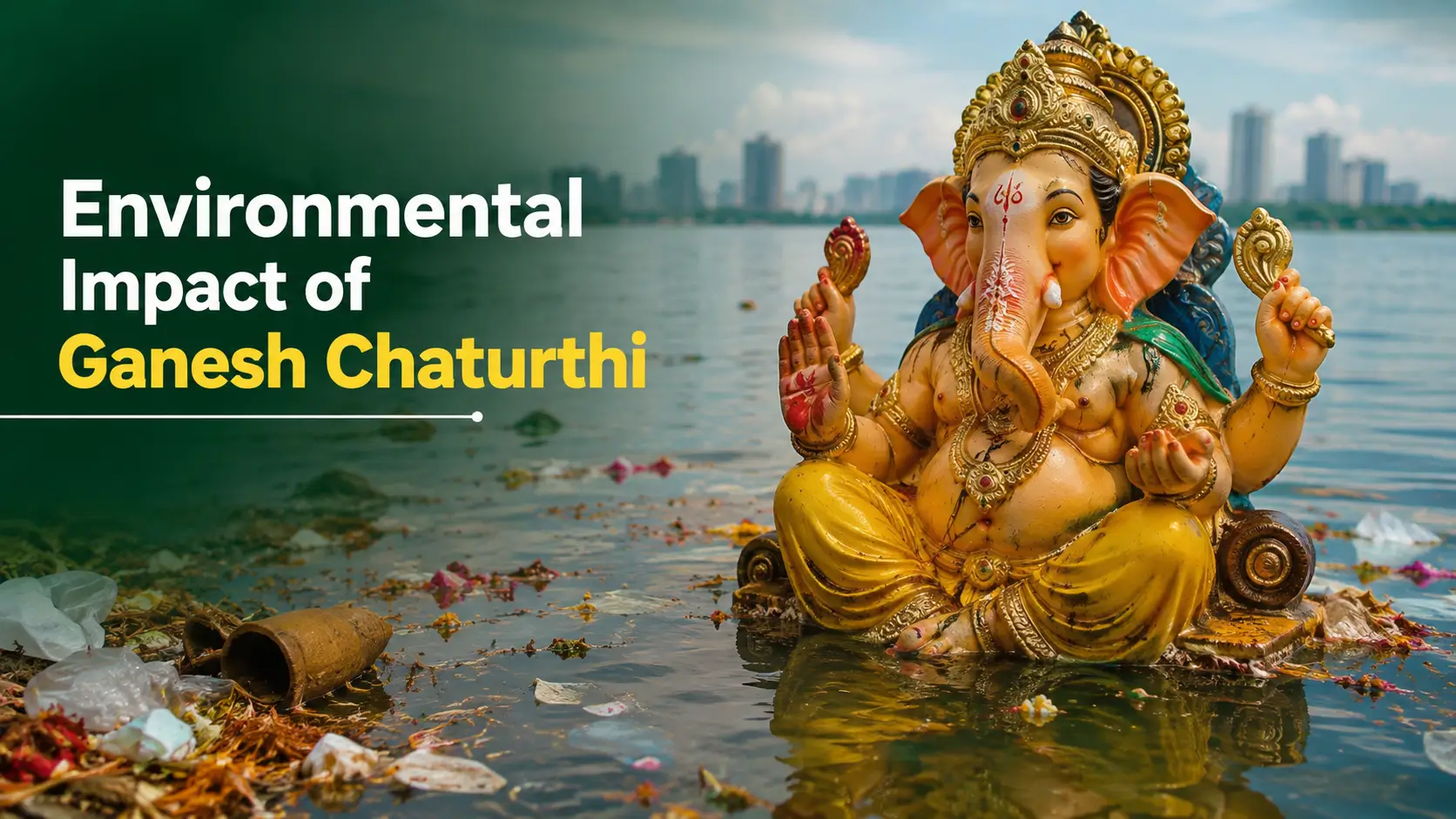
Ganesh Chaturthi, the festival celebrating the birth of Lord Ganesha, is one of India’s most vibrant and widely observed occasions. While the devotion and cultural unity it inspires are remarkable, the environmental impact of Ganesh Chaturthi has become a pressing concern in recent decades. From idol immersion in rivers and seas to the use of non-biodegradable materials, the festival has raised questions about sustainability. Understanding these impacts helps us preserve both tradition and nature.
As a festival expert, I’ve seen how communities are now blending devotion with eco-conscious practices, ensuring that celebrations remain joyful yet responsible.
Key Environmental Impacts
Idol Materials
- Traditionally, idols were made of clay, which dissolved naturally in water.
- Modern idols often use Plaster of Paris (POP), which does not dissolve easily and pollutes water bodies.
- Chemical paints add heavy metals like lead and mercury to rivers.
Water Pollution
- Idol immersion leads to contamination of lakes, rivers, and seas.
- Aquatic life suffers due to reduced oxygen levels and toxic chemicals.
- Drinking water sources in urban areas are affected.
Air Pollution
- Firecrackers and excessive lighting contribute to air pollution.
- Increased carbon footprint during large-scale celebrations.
Noise Pollution
- Loudspeakers, drums, and firecrackers cause noise levels to rise.
- This affects children, elderly people, and animals.
Waste Generation
- Flowers, plastic decorations, and food waste accumulate during the festival.
- Improper disposal leads to clogged drains and unhygienic conditions.
Also Read: Ganesh Chaturthi Ganesh Sthapana Vidhi — Complete Ritual Guide
Traditional vs Modern Practices
| Aspect | Traditional Practice | Modern Practice | Impact |
|---|---|---|---|
| Idol | Clay idols | POP idols with chemical paints | Water pollution |
| Decoration | Banana leaves, flowers | Plastic, thermocol | Non-biodegradable waste |
| Lighting | Oil lamps | Electric lights, firecrackers | Air & noise pollution |
| Immersion | Local ponds, natural clay | Rivers, seas | Aquatic life damage |
Eco-Friendly Alternatives
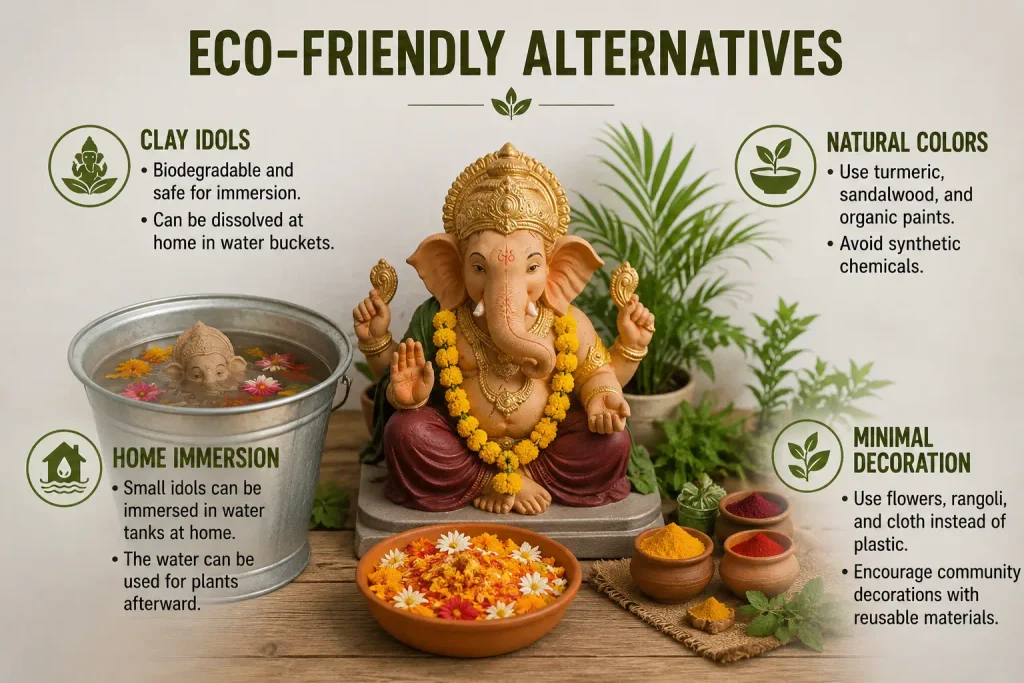
Clay Idols
- Biodegradable and safe for immersion.
- Can be dissolved at home in water buckets.
Natural Colors
- Use turmeric, sandalwood, and organic paints.
- Avoid synthetic chemicals.
Home Immersion
- Small idols can be immersed in water tanks at home.
- The water can be used for plants afterward.
Minimal Decoration
- Use flowers, rangoli, and cloth instead of plastic.
- Encourage community decorations with reusable materials.
Frequently Asked Questions (FAQs)
Que 1: Why is POP harmful for Ganesh idols?
Ans: POP does not dissolve easily and releases harmful chemicals into water.
Que 2: How can families celebrate Ganesh Chaturthi sustainably?
Ans: By using clay idols, natural colors, and eco-friendly decorations.
Que 3: Is home immersion accepted as a tradition?
Ans: Yes, many families now practice home immersion to reduce pollution.
Que 4: What role do communities play in reducing impact?
Ans: Community awareness and collective eco-friendly practices make a big difference.
Personal Insight as a Festival Expert
In my experience, the shift toward eco-friendly Ganesh Chaturthi is inspiring. I’ve seen children making clay idols in schools, families opting for small home immersions, and communities organizing awareness drives. These practices not only protect the environment but also deepen the spiritual essence of the festival — devotion with responsibility.
Conclusion
The environmental impact of Ganesh Chaturthi is significant, but it can be reduced through conscious choices. From clay idols to eco-friendly decorations and home immersions, every step matters. The festival’s true spirit lies in devotion, unity, and respect — not just for Lord Ganesha but also for the environment that sustains us. By adopting sustainable practices, we ensure that Ganesh Chaturthi remains a celebration of joy, wisdom, and harmony for generations to come.

I am Disha Sharma the founder and writer of Great Indian Festival with a passion for storytelling and a dedication to sharing knowledge, I create content that informs, inspires, and connects with readers. My writing reflects creativity, clarity, and a commitment to delivering valuable insights across topics that matter.
3 thoughts on “Environmental Impact of Ganesh Chaturthi — Challenges & Eco-Friendly Solutions”