
|
Getting your Trinity Audio player ready...
|
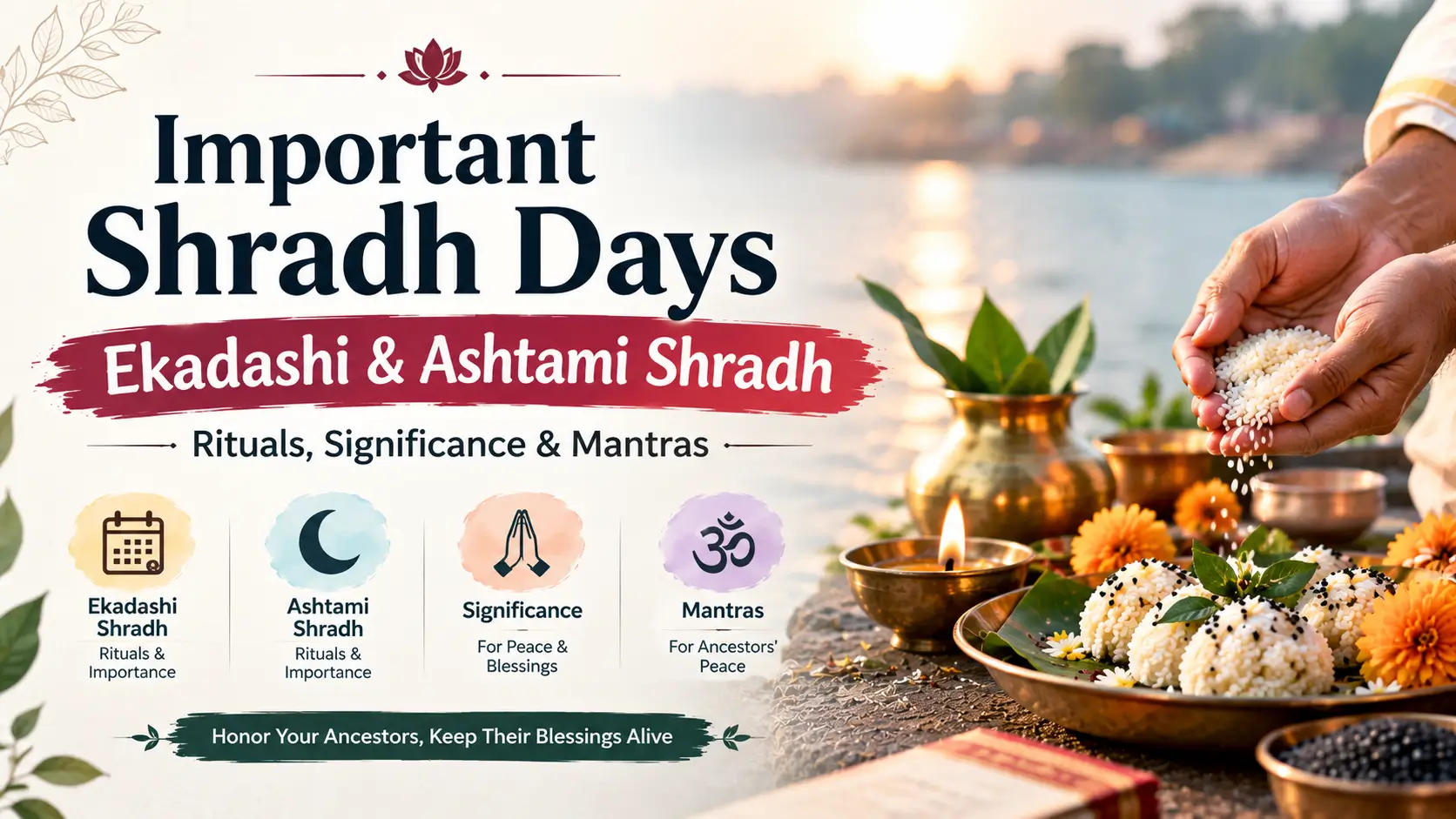
Shradh, also known as Pitru Paksha, is a sacred fortnight in Hindu tradition dedicated to honoring ancestors. Each day of Pitru Paksha holds significance, but some tithis (lunar days) are considered especially important. Among them, Ekadashi Shradh and Ashtami Shradh stand out for their spiritual depth and ritual importance. These days are believed to bring immense blessings when rituals are performed with devotion, ensuring peace for departed souls and prosperity for descendants.
As a festival expert, I’ve observed how families prepare differently for these days, with special offerings, mantras, and fasting practices. Let’s explore the meaning, rituals, and rules of Ekadashi and Ashtami Shradh in detail.
Ekadashi Shradh
Significance
- Dedicated to Lord Vishnu and ancestors.
- Considered highly auspicious for those who passed away on Ekadashi tithi.
- Performing Shradh on this day is believed to free souls from worldly bondage.
Rituals
- Tarpan: Offering water mixed with sesame seeds and kusha grass.
- Pinda Daan: Rice balls offered to ancestors.
- Satvik Food: Prepared without onion, garlic, or grains.
- Charity: Food and clothes offered to Brahmins and the needy.
Mantras
- “ॐ पितृभ्यः स्वधा नमः”
- “ॐ विष्णवे नमः”
Ashtami Shradh
Significance
- Dedicated to ancestors who passed away on Ashtami tithi.
- Considered powerful for maternal ancestors (Matru Shradh).
- Rituals performed on this day are believed to bring peace to mothers’ souls and blessings to children.
Rituals
- Tarpan: Performed facing south, invoking maternal ancestors.
- Pinda Daan: Rice balls offered with devotion.
- Havan: Fire ritual with ghee, barley, and sesame.
- Panchbali: Feeding cows, dogs, crows, ants, and Brahmins.
Mantras
- “ॐ मातृभ्यः स्वधा नमः”
- “ॐ सर्वेभ्यः पितृभ्यः स्वधा नमः”
Ekadashi vs Ashtami Shradh
| Aspect | Ekadashi Shradh | Ashtami Shradh |
|---|---|---|
| Deity | Lord Vishnu | Maternal ancestors |
| Focus | Liberation of souls | Peace for mothers’ souls |
| Rituals | Tarpan, Pinda Daan, Satvik food | Tarpan, Pinda Daan, Havan, Panchbali |
| Mantras | Vishnu & Pitru mantras | Matru & Pitru mantras |
FAQs
Que 1: Why is Ekadashi Shradh important?
Ans: It is believed to liberate souls and grant blessings from Lord Vishnu.
Que 2: What is the focus of Ashtami Shradh?
Ans: It emphasizes maternal ancestors and their blessings.
Que 3: Can Shradh be performed at home?
Ans: Yes, with guidance from a priest, though pilgrimage sites like Gaya are considered highly auspicious.
Que 4: What food is offered during Shradh?
Ans: Rice, fruits, milk, and satvik dishes without onion or garlic.
Personal Insight
In my experience, Ekadashi and Ashtami Shradh are observed with deep devotion. Families often prepare special satvik meals and gather to perform rituals together. I’ve seen how these days bring a sense of emotional connection, reminding us of the eternal bond with our ancestors.
Conclusion
Important Shradh Days – Ekadashi & Ashtami Shradh highlight the depth of Pitru Paksha rituals. Ekadashi Shradh focuses on liberation and blessings from Lord Vishnu, while Ashtami Shradh emphasizes maternal ancestors and their peace. Observing these days with devotion ensures spiritual fulfillment, ancestral blessings, and harmony within families.

I am Disha Sharma the founder and writer of Great Indian Festival with a passion for storytelling and a dedication to sharing knowledge, I create content that informs, inspires, and connects with readers. My writing reflects creativity, clarity, and a commitment to delivering valuable insights across topics that matter.