
|
Getting your Trinity Audio player ready...
|
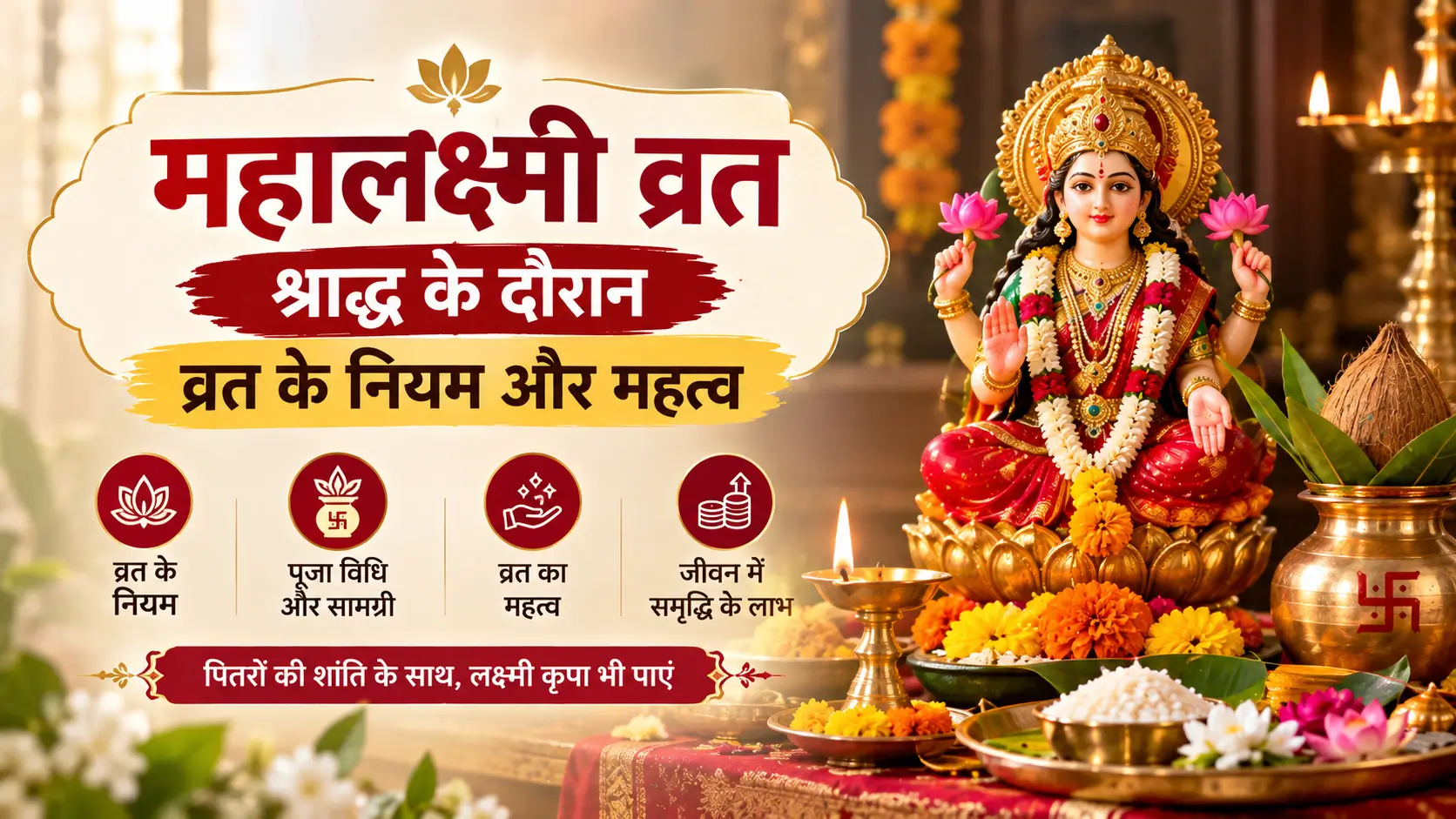
Shradh, or Pitru Paksha, is a sacred fortnight in Hindu tradition dedicated to honoring ancestors. Within this period, certain days hold special spiritual importance. One such day is the Mahalaxmi Vrat / Mahalaxmi Day in Shradh, observed with devotion to Goddess Mahalaxmi. This fast is believed to bring prosperity, remove obstacles, and ensure blessings from both ancestors and the goddess of wealth.
As a festival expert, I’ve seen how families combine ancestral rituals with devotion to Mahalaxmi, creating a unique blend of reverence and prosperity worship. Let’s explore the meaning, rituals, and significance of Mahalaxmi Vrat during Shradh in detail.
Significance of Mahalaxmi Fast in Shradh
Spiritual Importance
- Dedicated to Goddess Mahalaxmi, the goddess of wealth and prosperity.
- Observed during Shradh to balance ancestral blessings with divine grace.
- Believed to remove poverty and bring harmony in family life.
Cultural Importance
- Families observe this fast to honor both ancestors and Goddess Mahalaxmi.
- It is considered auspicious for women, especially married women, who pray for family well-being.
- Rituals vary regionally but emphasize devotion, purity, and charity.
Rituals of Mahalaxmi Vrat
- Morning Puja
- Cleanse the puja area and place an idol or image of Goddess Mahalaxmi.
- Light a lamp with ghee and offer flowers, rice, and sweets.
- Fasting
- Devotees observe a fast, consuming only fruits, milk, and satvik food.
- Onion, garlic, and non-vegetarian food are strictly avoided.
- Shradh Rituals
- Alongside Mahalaxmi puja, families perform tarpan and pinda daan for ancestors.
- This dual observance ensures blessings from both ancestors and Goddess Mahalaxmi.
- Charity
- Food, clothes, and donations are offered to Brahmins and the needy.
- Feeding cows, crows, and dogs is considered auspicious.
Shradh Rituals vs Mahalaxmi Vrat
| Aspect | Shradh Rituals | Mahalaxmi Vrat |
|---|---|---|
| Focus | Ancestors’ peace | Goddess Mahalaxmi’s blessings |
| Offerings | Tarpan, Pinda Daan, Satvik food | Flowers, sweets, rice, lamp |
| Food Rules | No onion, garlic, meat | Fruits, milk, satvik food |
| Charity | Feeding Brahmins, animals | Donations, feeding needy |
FAQs
Que 1: Why is Mahalaxmi Vrat observed during Shradh?
Ans: To combine ancestral blessings with divine prosperity, ensuring harmony in family life.
Que 2: What food is allowed during Mahalaxmi fast?
Ans: Fruits, milk, and satvik food without onion, garlic, or meat.
Que 3: Can men observe Mahalaxmi Vrat?
Ans: Yes, though traditionally women observe it, men can also participate.
Que 4: Is Mahalaxmi Vrat mandatory in Shradh?
Ans: Not mandatory, but highly auspicious for prosperity and blessings.
Personal Insight
In my experience, Mahalaxmi Vrat during Shradh is a beautiful blend of devotion and remembrance. Families often prepare satvik meals, offer sweets to Goddess Mahalaxmi, and simultaneously perform Shradh rituals. This dual observance creates a sense of spiritual completeness—honoring ancestors while inviting prosperity into the household.
Conclusion
The Mahalaxmi Fast / Day in Shradh is a unique observance that combines ancestral rituals with devotion to Goddess Mahalaxmi. By performing tarpan and pinda daan alongside Mahalaxmi puja, devotees ensure peace for ancestors and prosperity for the family. Observing this fast with discipline and devotion brings blessings, harmony, and abundance.

I am Disha Sharma the founder and writer of Great Indian Festival with a passion for storytelling and a dedication to sharing knowledge, I create content that informs, inspires, and connects with readers. My writing reflects creativity, clarity, and a commitment to delivering valuable insights across topics that matter.