
|
Getting your Trinity Audio player ready...
|
The Basoda Festival, also known as Sheetala Ashtami, is a Hindu festival dedicated to Goddess Sheetala, revered as the goddess of health, hygiene, and protection against diseases. Celebrated primarily in North Indian states such as Rajasthan, Gujarat, Uttar Pradesh, Haryana, and Madhya Pradesh, Basoda holds immense cultural and spiritual importance.
What is Basoda Festival?
- Basoda is observed on the eighth day (Ashtami) of the Krishna Paksha (waning moon phase) in the month of Chaitra (March–April).
- The festival usually falls eight days after Holi, marking the seasonal transition from spring to summer.
- It is dedicated to Goddess Sheetala, who is believed to protect devotees from diseases like smallpox, measles, and other seasonal ailments.
Significance of Basoda Festival
- Health and Hygiene: The festival emphasizes cleanliness and the importance of consuming safe food during seasonal changes.
- Devotion to Goddess Sheetala: Worshippers seek blessings for protection against diseases and for family well-being.
- Seasonal Transition: Basoda marks the onset of summer, when food preservation and hygiene become crucial.
- Community Bonding: Families and communities come together to celebrate, reinforcing social ties.
Rituals and Traditions of Basoda
- Preparations on Sheetala Saptami (the day before):
- Families cook food a day in advance, as lighting the stove or cooking on Basoda day is prohibited.
- This practice symbolizes respect for Goddess Sheetala, who is associated with coolness and purity.
- Early Morning Worship:
- Devotees wake up early, bathe, and prepare offerings for Goddess Sheetala.
- Temples dedicated to the goddess are visited, and prayers are offered.
- Consumption of Pre-Cooked Food:
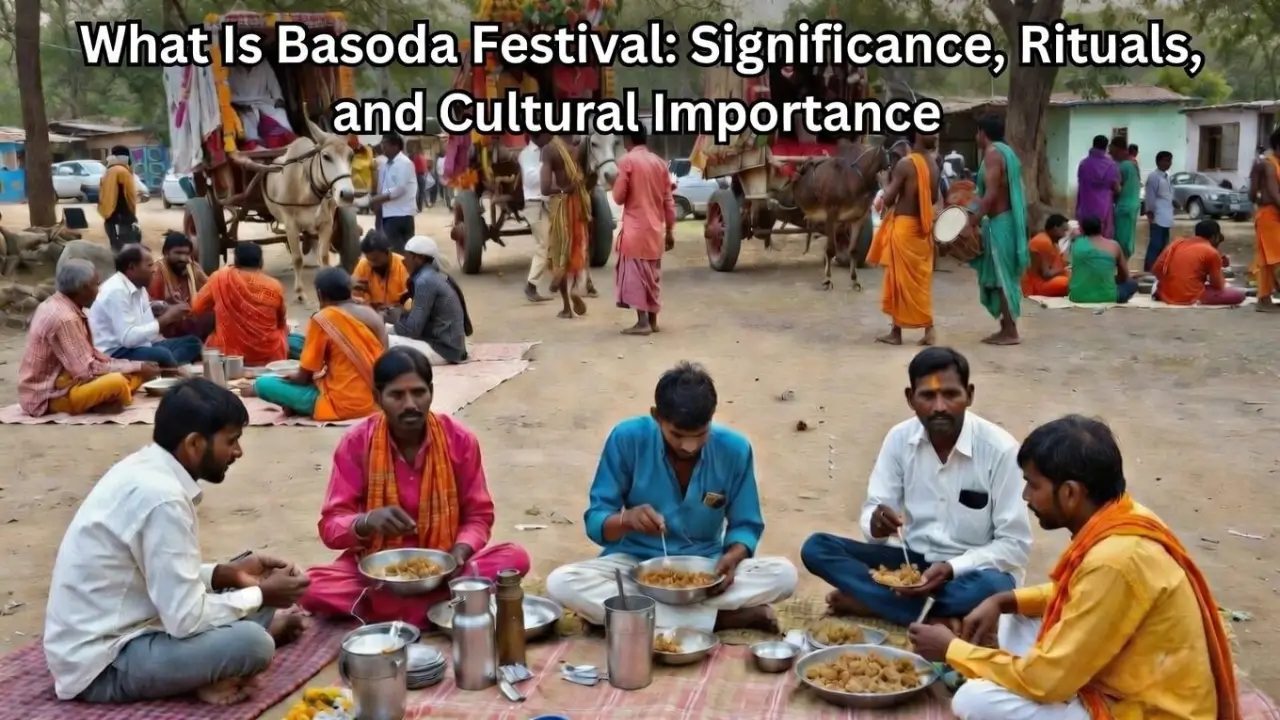
- Families eat only the food prepared the previous day, known as Basoda Bhojan.
- Popular dishes include roti, sabzi, sweet preparations, and curd.
- Sprinkling of Holy Water:
- Holy water is sprinkled around the house to purify the environment.
- Community Celebrations:
- In villages and towns, large gatherings take place where people collectively worship Goddess Sheetala.
Story Behind Basoda Festival
The Basoda Festival story is rooted in mythology:
- Goddess Sheetala is believed to ride a donkey and carry a broom, neem leaves, and a pot of cold water.
- She is worshipped as the goddess who cures diseases and protects children from seasonal illnesses.
- The practice of eating pre-cooked food is symbolic of her association with coolness and avoidance of fire.
Relevance of Basoda in Modern Times
- Health Awareness: The festival highlights the importance of hygiene and disease prevention.
- Cultural Continuity: It preserves traditional practices and connects communities to their heritage.
- Spiritual Significance: Worship of Goddess Sheetala continues to inspire faith and devotion.
- Environmental Awareness: The ritual of avoiding fire for a day reflects sustainable living practices.
Personal Reflection
I recall one Basoda celebration in Haryana where families prepared food a day earlier and gathered at the local temple of Goddess Sheetala. The simplicity of eating cold meals together and the collective prayers created a sense of unity. It reminded me that festivals are not only about rituals but also about values—health, devotion, and community bonding.
Conclusion
The Basoda Festival, or Sheetala Ashtami, is a unique celebration that blends spirituality, health awareness, and cultural traditions. Observed on the eighth day of Krishna Paksha in Chaitra, it honors Goddess Sheetala and emphasizes hygiene, devotion, and seasonal awareness. By celebrating Basoda, communities preserve their heritage while embracing values that remain relevant in modern times.

I am Disha Sharma the founder and writer of Great Indian Festival with a passion for storytelling and a dedication to sharing knowledge, I create content that informs, inspires, and connects with readers. My writing reflects creativity, clarity, and a commitment to delivering valuable insights across topics that matter.