|
Getting your Trinity Audio player ready...
|
Shivratri (literally “Night of Shiva”) refers to monthly observances, while Maha Shivratri is the annual, most important festival celebrated on the 14th night of the waning moon (Krishna Chaturdashi) in the month of Phalguna/Magha. Devotees across India and Nepal observe the night with vigil (jagarana), fasting, and special lingam puja.
Why We Celebrate Shivratri?
- Commemoration of Shiva’s cosmic acts: Many traditions link Maha Shivratri to Shiva’s Tandava (cosmic dance) and his role in the cycle of creation, preservation, and dissolution. The festival honors his power to transform ignorance into wisdom.
- Union of Shiva and Shakti: In several Puranic and folk accounts, Shivratri marks the divine union of Shiva and Parvati (Shakti)—a symbolic reconciliation of consciousness and energy that devotees celebrate as spiritual completeness.
- Spiritual practice and inner awakening: Contemporary teachers emphasize Maha Shivratri as an opportunity for intense sadhana—meditation, self‑inquiry, and silence—aimed at inner transformation. The night is seen as especially conducive to breaking habitual patterns and deepening awareness.
- Ritual remedy and blessing: Traditional beliefs hold that sincere worship on Shivratri removes obstacles, grants mental clarity, and brings blessings for household welfare and spiritual progress.
Common Rituals and Their Meanings
- Fasting (Upavasa): Fasting purifies body and mind and sharpens focus for meditation.
- Jagarana (Night vigil): Staying awake through the night symbolizes vigilance of consciousness and devotion.
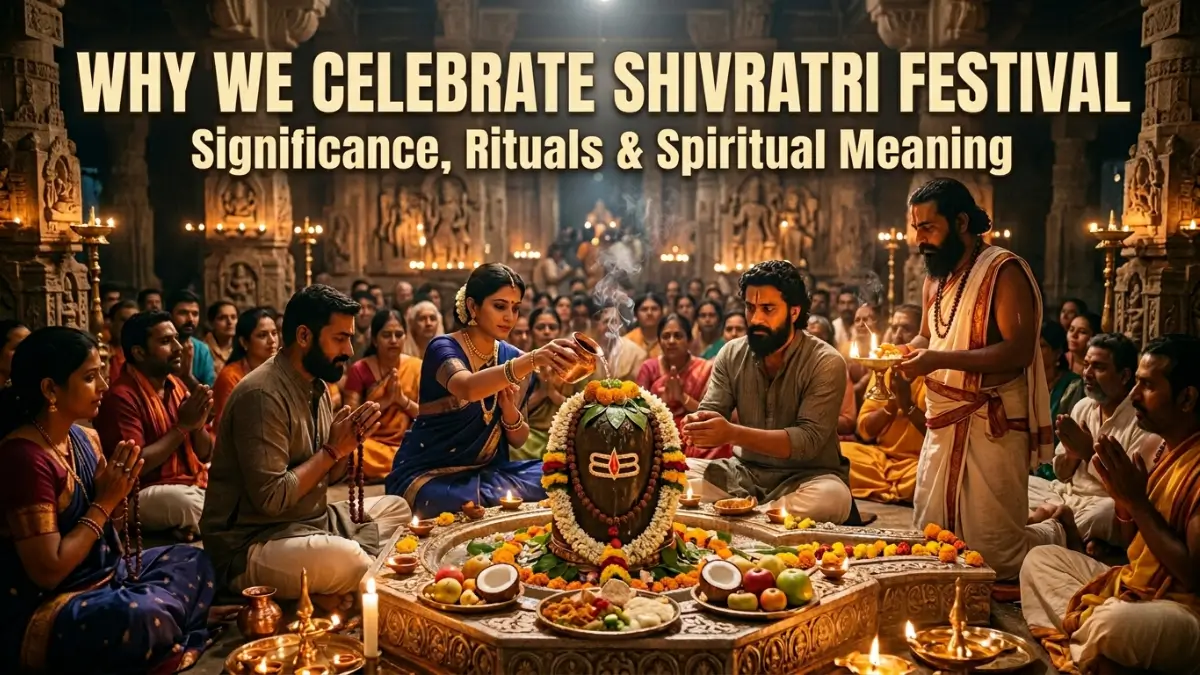
- Lingam puja and abhisheka: Bathing the Shiva lingam with water, milk, honey, and bilva leaves represents purification and devotion; bilva leaves are considered especially sacred to Shiva.
- Chanting and kirtan: Repetition of “Om Namah Shivaya” and singing bhajans cultivates devotion and mental steadiness.
Cultural and Regional Expressions
Maha Shivratri is observed across India and Nepal with temple processions, special pujas at major Shiva shrines (Kedarnath, Kashi, Amarnath, and many local temples), and community gatherings. Regional myths and local customs add diverse flavors to the festival while preserving the central themes of devotion and transformation.
Also Read: Why We Fast on Maha Shivaratri: A Path to Purification and Awakening
Closing note
Maha Shivratri remains both a devotional festival and a spiritual practice—a night when millions pause, fast, chant, and meditate to align inner life with the transformative energy Shiva represents. For those seeking inner stillness or cultural understanding, Shivratri offers a concentrated, time‑tested path.

I am Disha Sharma the founder and writer of Great Indian Festival with a passion for storytelling and a dedication to sharing knowledge, I create content that informs, inspires, and connects with readers. My writing reflects creativity, clarity, and a commitment to delivering valuable insights across topics that matter.