
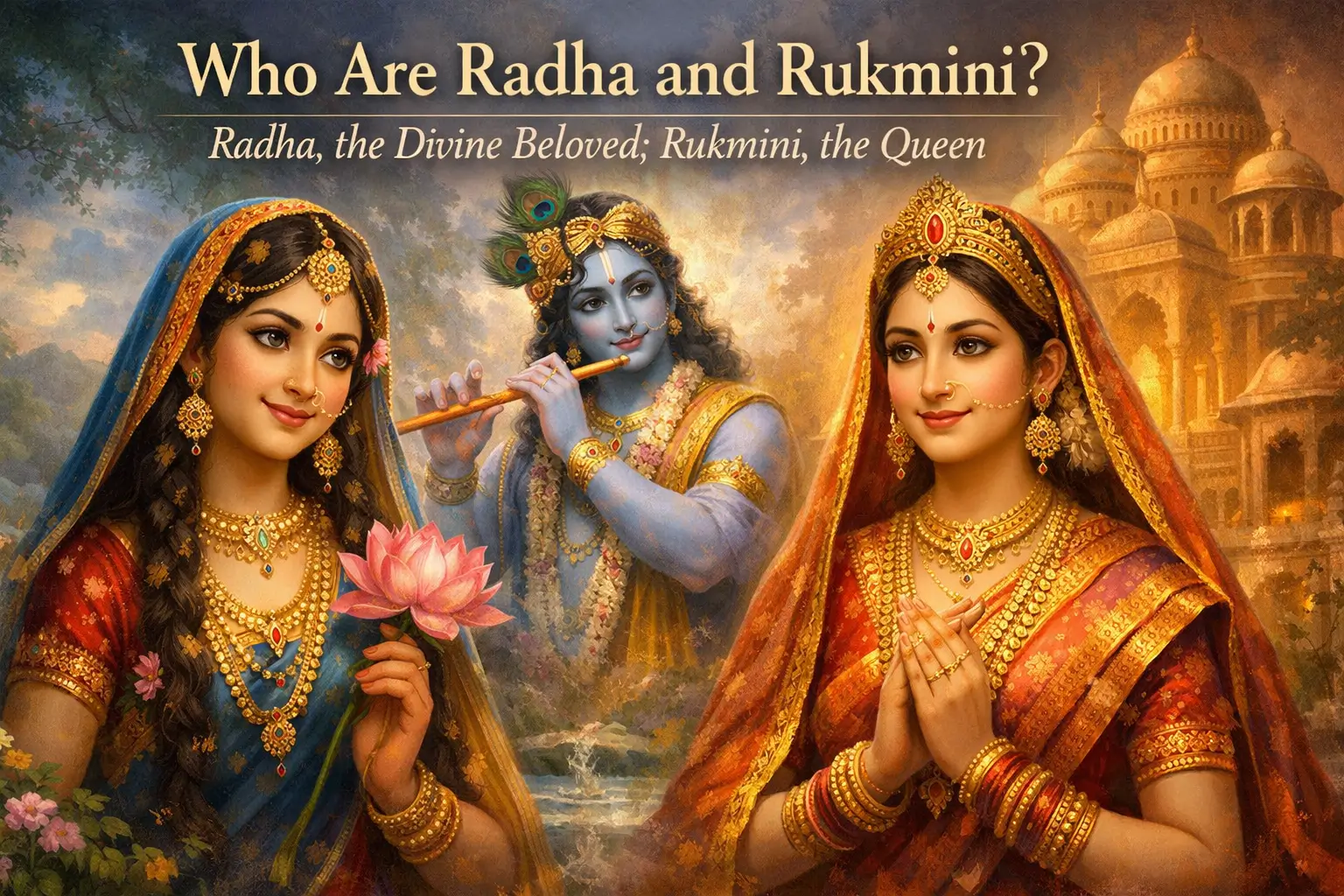
Understanding who Radha and Rukmini are helps clarify two complementary strands of Hindu devotion: the mystical, personal longing for the divine, and the formal, household expression of divine grace. This post explains their origins, roles in scripture and worship, cultural impact, and how devotees relate to each figure today.
Radha — The Archetype of Bhakti
- Who she is: Radha is portrayed in medieval and later devotional literature as the foremost gopi (cowherd maiden) and Krishna’s intimate companion in Vrindavan. She is often read as the personification of the soul’s longing for God rather than a strictly historical figure.
- Textual sources: Radha’s prominence grows in works such as Gita Govinda and later Vaishnava poetry, where her love for Krishna becomes a model for unconditional devotion.
- Spiritual meaning: For many traditions (notably Gaudiya Vaishnavism), Radha symbolizes ecstatic bhakti, the inner, often transgressive love that seeks union with the divine. Her worship emphasizes personal surrender, longing, and devotional practice.
Rukmini — The Royal Consort and Lakshmi Incarnation
- Who she is: Rukmini is described in Purāṇic narratives as the princess of Vidarbha who becomes Krishna’s chief queen after eloping with him; she is widely regarded as an incarnation of Goddess Lakshmi.
- Textual sources: Her story appears in the Bhagavata Purana, Vishnu Purana, and regional retellings; these accounts emphasize duty, devotion, and the social order of household life.
- Spiritual meaning: Rukmini represents marital devotion, prosperity, and the settled, dharmic aspect of divine relationship—the complementary counterpart to Radha’s ecstatic path.
Quick Comparison
| Aspect | Radha | Rukmini |
|---|---|---|
| Primary role | Symbol of ecstatic bhakti | Principal queen; embodiment of Lakshmi |
| Canonical sources | Medieval devotional poetry; later Vaishnava texts | Purāṇas (Bhagavata, Vishnu Purana) |
| Relationship to Krishna | Mystical beloved in Vrindavan | Consort and queen in Dvārakā |
| Spiritual emphasis | Soul’s longing and surrender | Dharma, prosperity, household devotion |
| Worship contexts | Bhakti songs, kirtan, Gaudiya temples | Temple rituals, Rukmini festivals |
Cultural Impact and Contemporary Devotion
Both figures shape art, music, dance, and temple worship across India. Radha’s name features prominently in bhajans and kirtans, while Rukmini is honored in temple rites and festivals such as Rukmini Ashtami. Devotees choose the path—mystical or domestic—that best fits their spiritual temperament.
Also Read: Hare Krishna Quotes: Timeless Wisdom for the Modern Seeker
Conclusion
Radha and Rukmini are not rivals but complementary expressions of the divine feminine in relation to Krishna—one pointing inward to ecstatic union, the other outward to settled grace and duty. Both continue to inspire devotional life, literature, and art across India and the global Vaishnava community. Check our latest article on great Indian festival that can help you.

I am Disha Sharma the founder and writer of Great Indian Festival with a passion for storytelling and a dedication to sharing knowledge, I create content that informs, inspires, and connects with readers. My writing reflects creativity, clarity, and a commitment to delivering valuable insights across topics that matter.