
|
Getting your Trinity Audio player ready...
|
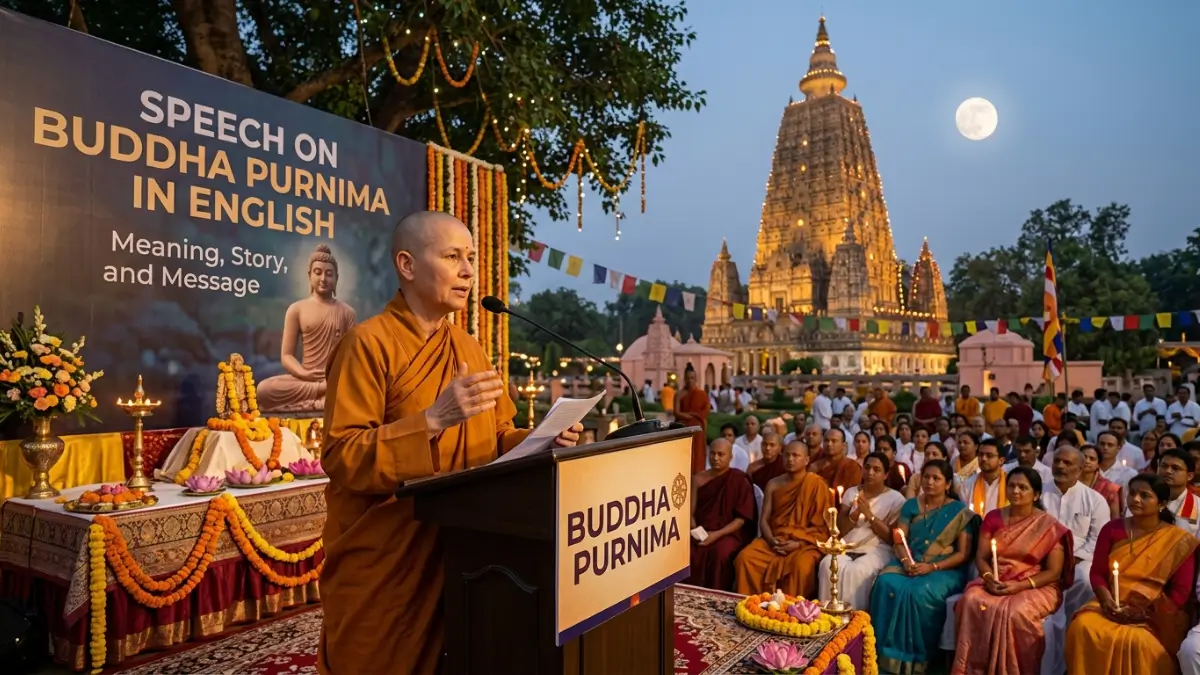
Respected Principal, teachers, distinguished guests, and my dear friends, Today we gather to celebrate Buddha Purnima, the sacred day that marks the birth, enlightenment, and Mahaparinirvana of Siddhartha Gautama — the Buddha. Observed on the full moon of the month of Vaishakha, this festival—also called Vesak or Buddha Jayanti—is a time for reflection, compassion, and renewed commitment to the path of wisdom.
Opening Story to Set the Tone
More than 2,500 years ago, in the garden of Lumbini, a child was born who would change the spiritual landscape of the world. Born into royalty, Siddhartha Gautama left palace comforts in search of a solution to human suffering. After years of searching and deep meditation beneath the Bodhi Tree at Bodh Gaya, he attained enlightenment and became the Buddha — the Awakened One. His life and teachings continue to guide millions toward peace, compassion, and mindful living.
What Buddha Purnima Commemorates
On this single full moon day we remember three pivotal events in the Buddha’s life:
- Birth — the arrival of Siddhartha Gautama in Lumbini.
- Enlightenment — his awakening under the Bodhi Tree at Bodh Gaya, where he realized the nature of suffering and the path beyond it.
- Mahaparinirvana — his peaceful passing at Kushinagar, which teaches us about impermanence and the dignity of a life well lived.
These events are not merely historical; they are invitations to practice the Buddha’s teachings in our daily lives.
Core Teachings to Highlight in a Speech
When speaking about Buddha Purnima, emphasize the practical and universal nature of the Buddha’s message:
- The Four Noble Truths explain the reality of suffering, its origin, its cessation, and the path that leads to its end.
- The Noble Eightfold Path offers a practical framework for ethical conduct, mental discipline, and wisdom: right view, right intention, right speech, right action, right livelihood, right effort, right mindfulness, and right concentration.
- Compassion and nonviolence are central. The Buddha taught that kindness toward all beings is the foundation of a peaceful society.
- Mindfulness and meditation are tools for inner transformation, helping us respond to life with clarity rather than react from habit.
Use simple examples and short anecdotes to make these teachings accessible to students and general audiences.
How People Observe Buddha Purnima
Describe common observances to give listeners a sense of living tradition:
- Temple visits and Dhamma talks where monks and teachers explain the teachings.
- Meditation sessions and silent reflection to cultivate inner calm.
- Acts of charity such as feeding the poor, donating to monasteries, and releasing captive animals.
- Cultural programs and processions that celebrate the Buddha’s life and spread his message of peace.
Mentioning local observances—such as events at Bodh Gaya, Lumbini, or community centers—helps ground the speech in real practice.
Why Buddha Purnima Matters Today
Connect the festival to contemporary concerns to make the speech relevant:
- Mental health — mindfulness and meditation are evidence‑based practices that reduce stress and improve focus.
- Social harmony — the Buddha’s emphasis on compassion and ethical conduct supports peaceful coexistence in diverse societies.
- Environmental care — many communities use Vesak to promote ecological awareness, reflecting the Buddha’s respect for all life.
- Personal transformation — the festival invites each of us to examine our habits and cultivate qualities that lead to lasting happiness.
Encourage listeners to see Buddha Purnima not only as a ritual day but as an opportunity for practical change.
Practical Call to Action for Listeners
Offer clear, achievable steps the audience can take after the speech:
- Practice five minutes of daily mindfulness to begin building awareness.
- Perform one act of kindness this week—small gestures create ripple effects.
- Read a short teaching from the Dhammapada or listen to a Dhamma talk to deepen understanding.
- Volunteer or donate to a local charity in the spirit of compassion.
These actions translate inspiration into habit and make the festival meaningful beyond a single day.
Also Read: Story Behind Buddha Purnima — Birth, Enlightenment & Mahaparinirvana of Gautama Buddha
Closing Lines for Delivery
In closing, let us remember the Buddha’s simple, timeless invitation: cultivate compassion, practice mindfulness, and live with wisdom. On this Buddha Purnima, may we honor his life by making small, steady changes that benefit ourselves and others. Let the light of awareness we kindle today guide our words, actions, and relationships every day of the year.

I am Disha Sharma the founder and writer of Great Indian Festival with a passion for storytelling and a dedication to sharing knowledge, I create content that informs, inspires, and connects with readers. My writing reflects creativity, clarity, and a commitment to delivering valuable insights across topics that matter.