
|
Getting your Trinity Audio player ready...
|
Sheetala Ashtami, also known as the Basoda Festival, is a Hindu observance dedicated to Goddess Sheetala, worshipped as the goddess of health, hygiene, and protection against seasonal diseases. The festival is celebrated mainly in North India, especially in Rajasthan, Gujarat, Uttar Pradesh, Haryana, and Madhya Pradesh. One of the most important aspects of this day is preparing the Sheetala Ashtami puja samagri, which includes all the ritual essentials needed to perform the puja authentically.
Sheetala Ashtami Puja Samagri List
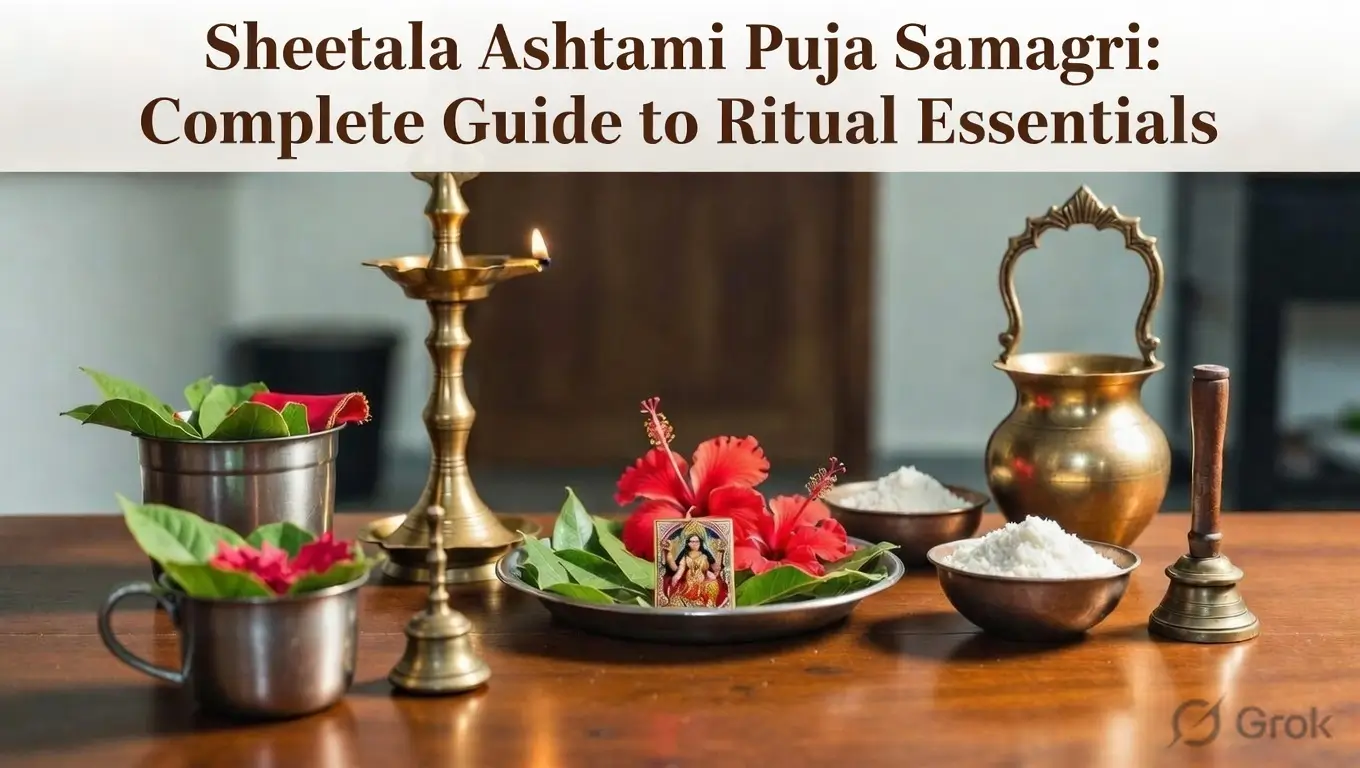
To perform the puja at home or in temples, devotees prepare the following items:
- Kalash (water pot): Represents purity and life.
- Flowers and garlands: Offered to Goddess Sheetala as a symbol of devotion.
- Haldi (turmeric) and Kumkum (vermilion): Used for tilak and auspicious rituals.
- Akshat (rice grains): Symbolizes prosperity and abundance.
- Dhoop and Agarbatti (incense sticks): For purification and fragrance during puja.
- Diya (lamp with ghee or oil): Represents divine light and positivity.
- Neem leaves: Associated with Goddess Sheetala, believed to have medicinal properties.
- Cold food (Basoda Bhojan): Prepared a day earlier, including roti, poori, sabzi, chana, and sweets.
- Curd (dahi): Offered as prasad, symbolizing purity and coolness.
- Offerings of grains (wheat, barley, chickpeas): Signify fertility and prosperity.
- Holy water (Gangajal): Sprinkled for purification.
- Sheetala Mata idol or picture: Central focus of the puja.
Significance of Each Puja Samagri
- Kalash and Holy Water: Purify the environment and invite divine blessings.
- Flowers and Garlands: Symbolize devotion and beauty.
- Haldi and Kumkum: Used for auspiciousness and protection.
- Neem Leaves: Associated with health and healing.
- Cold Food on Sheetala Ashtami: Represents humility, discipline, and respect for the goddess.
- Curd and Grains: Symbolize nourishment, prosperity, and purity.
Rituals of Sheetala Ashtami Puja
- Preparation: Food is cooked a day before (Basoda Festival food traditions) and kept aside for offerings.
- Morning Puja: Devotees wake up early, bathe, and arrange the puja samagri.
- Offerings: Cold food, curd, neem leaves, and grains are offered to Goddess Sheetala.
- Prayers: Devotees chant mantras and perform aarti with diya and incense.
- Consumption of Basoda Bhojan: Families eat the pre-cooked food together after offering it to the goddess.
Cultural Beliefs About Sheetala Ashtami
- Health and Hygiene: Worship of Goddess Sheetala is believed to protect families from seasonal diseases.
- Community Bonding: Families and neighbors share food, reinforcing social ties.
- Spiritual Cleansing: The rituals emphasize purity, humility, and devotion.
- Seasonal Awareness: The practice of eating cold food aligns with the transition from spring to summer.
Personal Reflection
I remember one Sheetala Ashtami when my grandmother carefully arranged the puja samagri—flowers, neem leaves, curd, and cold food prepared a day earlier. She explained that each item carried symbolic meaning, from neem leaves for health to curd for purity. The ritual was simple yet profound, reminding us that devotion lies in discipline and respect for tradition.
Conclusion
The Sheetala Ashtami puja samagri plays a vital role in performing the rituals authentically. Each item, from neem leaves to Basoda Bhojan, carries spiritual and cultural significance. By preparing the samagri with devotion and understanding its meaning, devotees honor Goddess Sheetala and embrace values of health, humility, and community bonding.

I am Disha Sharma the founder and writer of Great Indian Festival with a passion for storytelling and a dedication to sharing knowledge, I create content that informs, inspires, and connects with readers. My writing reflects creativity, clarity, and a commitment to delivering valuable insights across topics that matter.