
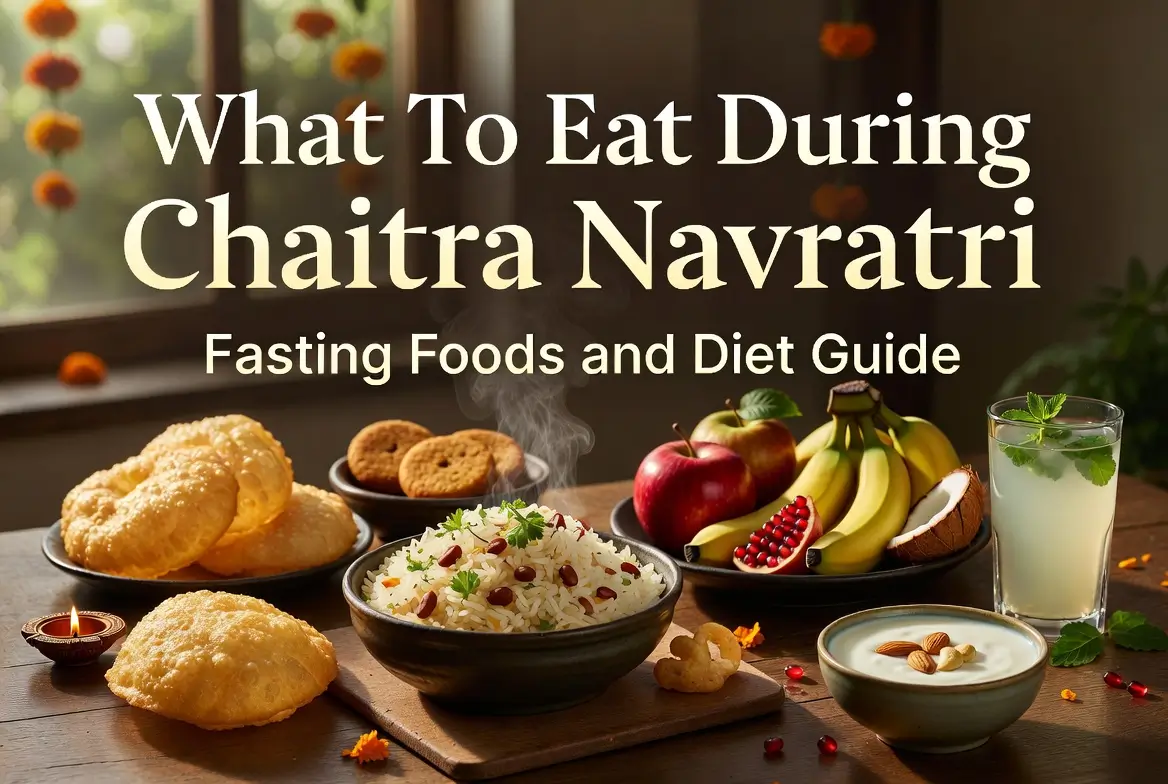
Chaitra Navratri is a nine-day Hindu festival dedicated to Goddess Durga, celebrated in March–April. Devotees observe fasting (vrat) as a spiritual practice to purify the body and mind. Knowing what to eat during Chaitra Navratri ensures that fasting is both spiritually meaningful and nutritionally balanced.
Foods Allowed During Chaitra Navratri
1. Fruits and Dry Fruits
- Fresh fruits like apples, bananas, papaya, and pomegranate.
- Dry fruits such as almonds, cashews, raisins, and dates provide energy.
- Fruit salads and smoothies are popular vrat-friendly options.
2. Flours and Grains (Vrat-Friendly)
- Buckwheat flour (Kuttu atta): Used for making rotis, puris, and pakoras.
- Water chestnut flour (Singhara atta): Ideal for rotis and pancakes.
- Amaranth flour (Rajgira atta): Used for parathas and laddoos.
- Sabudana (tapioca pearls): Commonly prepared as khichdi, vada, or kheer.
3. Vegetables
- Potatoes, sweet potatoes, pumpkin, bottle gourd, and cucumber.
- Tomatoes and spinach are allowed in moderation.
- Avoid onion, garlic, and regular pulses.
4. Dairy Products
- Milk, curd, paneer, and ghee are permitted.
- Lassi and buttermilk help maintain hydration.
5. Spices and Condiments
- Rock salt (sendha namak) replaces regular salt.
- Cumin, black pepper, and green chilies are allowed.
- Lemon juice and fresh herbs enhance flavor.
Foods to Avoid During Chaitra Navratri
- Regular grains: Wheat, rice, and corn.
- Pulses and legumes: Lentils, beans, and chickpeas.
- Onion and garlic: Considered tamasic and avoided during fasting.
- Non-vegetarian food and alcohol: Strictly prohibited.
Sample Vrat-Friendly Meal Plan
| Time of Day | Suggested Foods |
|---|---|
| Morning | Fruits, milk, or lassi |
| Lunch | Kuttu roti with potato curry, curd |
| Evening Snack | Sabudana khichdi or singhara pakora |
| Dinner | Rajgira paratha with pumpkin sabzi, buttermilk |
| Dessert | Sabudana kheer or fruit custard |
Spiritual and Nutritional Significance
- Detoxification: Simple foods help cleanse the body.
- Discipline: Fasting builds self-control and devotion.
- Balanced Nutrition: Fruits, dairy, and vrat flours provide energy and protein.
- Spiritual Purity: Avoiding onion, garlic, and heavy grains maintains sattvic balance.
Conclusion
During Chaitra Navratri, devotees eat fruits, dairy, vrat-friendly flours, sabudana, and light vegetable dishes, while avoiding regular grains, onion, garlic, and non-vegetarian food. This vrat diet is not only spiritually significant but also nutritionally balanced, helping devotees maintain energy and devotion throughout the nine days.

I am Disha Sharma the founder and writer of Great Indian Festival with a passion for storytelling and a dedication to sharing knowledge, I create content that informs, inspires, and connects with readers. My writing reflects creativity, clarity, and a commitment to delivering valuable insights across topics that matter.