|
Getting your Trinity Audio player ready...
|
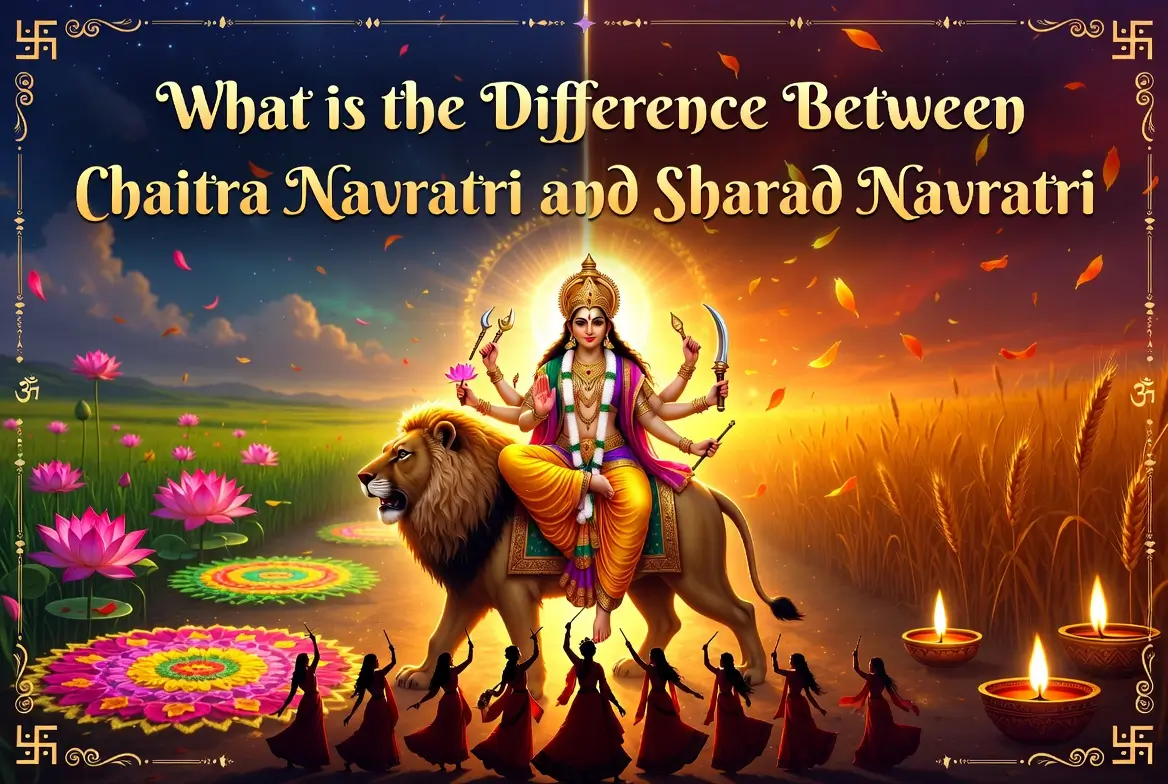
Navratri, meaning “nine nights,” is observed twice a year—Chaitra Navratri in spring and Sharad Navratri in autumn. Both festivals honor the nine forms of Goddess Durga (Navdurga) and emphasize fasting, devotion, and spiritual renewal. However, their significance, timing, and cultural practices vary, making each unique in its own way.
Key Differences Between Chaitra Navratri and Sharad Navratri
| Aspect | Chaitra Navratri | Sharad Navratri |
|---|---|---|
| Timing | Celebrated in March–April (spring season, month of Chaitra) | Celebrated in September–October (autumn season, month of Ashwin) |
| Religious Significance | Marks the beginning of the Hindu lunar calendar year; culminates in Rama Navami (birth of Lord Rama) | Celebrates Goddess Durga’s victory over Mahishasura; culminates in Dussehra/Vijayadashami |
| Regional Prominence | More popular in North India, Maharashtra, and South India (coincides with Gudi Padwa and Ugadi) | Widely celebrated across India, especially in West Bengal, Gujarat, and Northern states |
| Cultural Practices | Focus on fasting, puja, and new beginnings; overlaps with regional New Year festivals | Known for Durga Puja in Bengal, Garba/Dandiya in Gujarat, and grand processions across India |
| Seasonal Context | Associated with spring harvest and renewal | Associated with autumn harvest and victory of good over evil |
| Scale of Celebration | Observed with devotion but less grandeur compared to Sharad Navratri | Considered the most prominent Navratri, celebrated with large-scale rituals, fairs, and cultural events |
Spiritual Significance
- Chaitra Navratri: Symbolizes renewal, purity, and new beginnings. Devotees seek blessings for prosperity and spiritual growth at the start of the year.
- Sharad Navratri: Symbolizes strength, courage, and victory of good over evil. It is considered the most auspicious time to invoke Goddess Durga’s energy.
Cultural Significance
- Chaitra Navratri:
- Coincides with Gudi Padwa (Marathi New Year) and Ugadi (South Indian New Year).
- Emphasis on fasting, puja, and family traditions.
- Sharad Navratri:
- Famous for Durga Puja in West Bengal, where idols of Goddess Durga are worshipped with grandeur.
- In Gujarat, Garba and Dandiya dances are performed nightly.
- In North India, Ramlila performances and Dussehra processions mark the culmination.
Conclusion
The difference between Chaitra Navratri and Sharad Navratri lies in their timing, cultural practices, and spiritual focus. While Chaitra Navratri emphasizes new beginnings and Rama Navami, Sharad Navratri highlights Durga’s victory and Dussehra celebrations. Both festivals, however, share the common essence of devotion, fasting, and worship of Goddess Durga, making them integral to Hindu tradition.

I am Disha Sharma the founder and writer of Great Indian Festival with a passion for storytelling and a dedication to sharing knowledge, I create content that informs, inspires, and connects with readers. My writing reflects creativity, clarity, and a commitment to delivering valuable insights across topics that matter.