
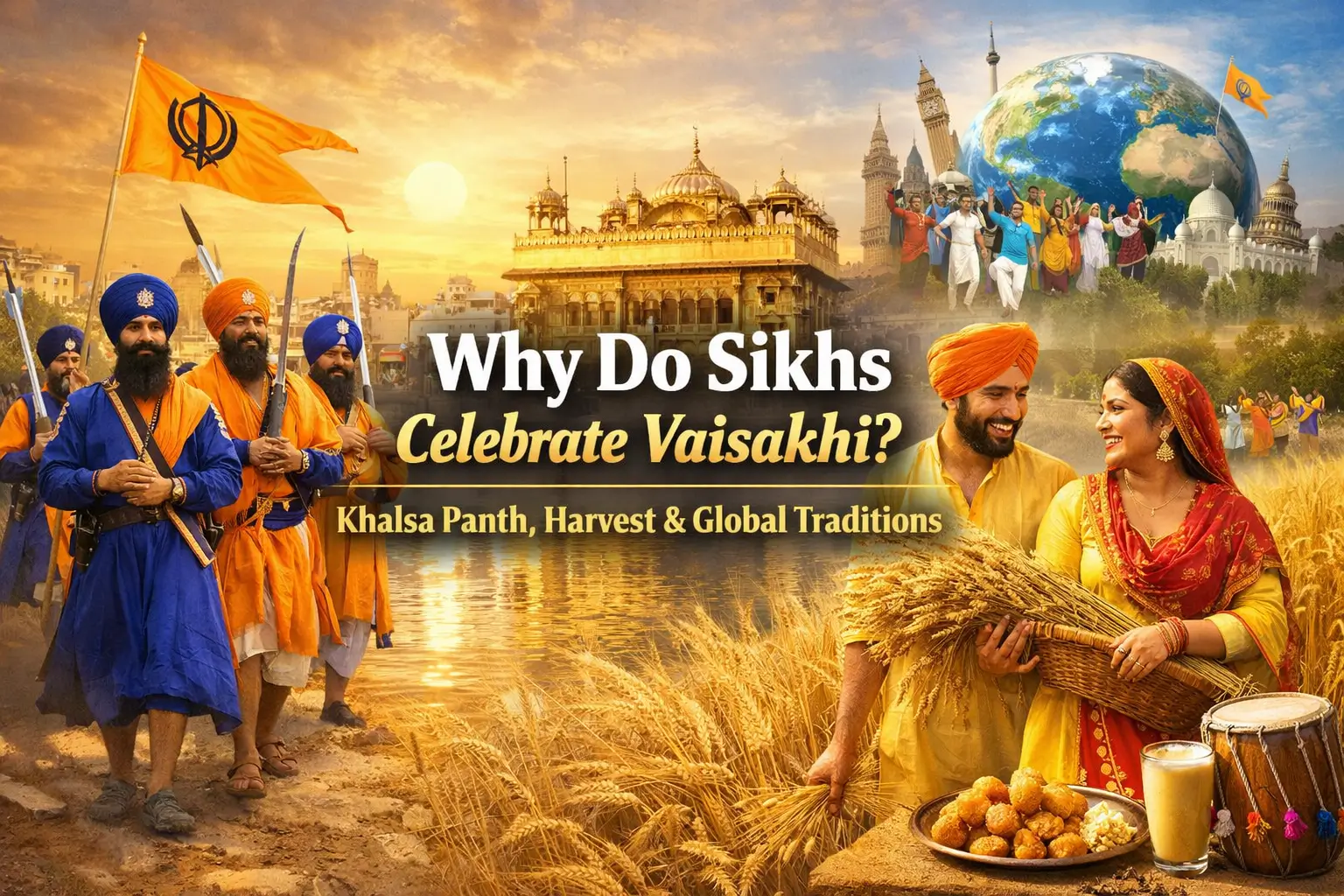
Vaisakhi (or Baisakhi), celebrated on 13 or 14 April, is one of the most important festivals for Sikhs worldwide. While it is widely known as a spring harvest festival in Punjab, its deeper significance lies in its religious and cultural meaning. For Sikhs, Vaisakhi commemorates the formation of the Khalsa Panth in 1699 by Guru Gobind Singh, marking a turning point in Sikh history.
This blog explores why Sikhs celebrate Vaisakhi, its historical roots, spiritual importance, and how it is observed today.
Historical Background of Vaisakhi
- Harvest Festival: Traditionally, Vaisakhi marked the ripening of wheat crops in Punjab, celebrated with fairs, dances, and community gatherings.
- Religious Transformation: On Vaisakhi in 1699, Guru Gobind Singh established the Khalsa Panth, a collective body of initiated Sikhs committed to upholding justice, equality, and faith.
- The Five Beloved Ones (Panj Pyare): Guru Gobind Singh baptized five volunteers, known as the Panj Pyare, and introduced the Amrit Sanchar (baptism ceremony). This event gave Sikhs a distinct identity and code of conduct.
Why Do Sikhs Celebrate Vaisakhi?
1. Formation of the Khalsa Panth
The most important reason Sikhs celebrate Vaisakhi is to honor the day Guru Gobind Singh created the Khalsa, giving Sikhs a unique identity and spiritual discipline.
2. Symbol of Courage and Unity
The Khalsa was formed to defend righteousness and protect the oppressed. Vaisakhi reminds Sikhs of their duty to uphold justice, equality, and courage.
3. Religious Renewal
On Vaisakhi, many Sikhs undergo the Amrit ceremony to join the Khalsa, reaffirming their commitment to Sikh values.
4. Community and Service
Vaisakhi emphasizes seva (selfless service) and langar (community meals), reinforcing Sikh principles of equality and fraternity.
5. Harvest Thanksgiving
For farmers, Vaisakhi is also a time to thank nature for the harvest and pray for prosperity.
Also Read: What is the Meaning of Vaisakhi – Harvest Festival & Sikh Religious Significance
How Sikhs Celebrate Vaisakhi
- Gurdwara Prayers: Special kirtans, ardas (prayers), and Amrit ceremonies.
- Nagar Kirtans: Processions with hymns, martial arts displays, and decorated floats.
- Langar: Free community meals served to all, symbolizing equality.
- Cultural Festivities: Traditional dances like Bhangra and Gidda, fairs, and folk music.
- Global Celebrations: From the Golden Temple in Amritsar to parades in London, Toronto, and California, Sikh communities worldwide celebrate Vaisakhi with devotion and pride.
Conclusion
Sikhs celebrate Vaisakhi not only as a harvest festival but more importantly as the day Guru Gobind Singh created the Khalsa Panth, giving Sikhs their distinct identity and spiritual mission. It is a festival of faith, courage, equality, and community service, reminding Sikhs of their duty to uphold justice and humanity. From Punjab’s villages to Sikh communities across the globe, Vaisakhi continues to unite people in celebration of prosperity and spiritual renewal.

I am Disha Sharma the founder and writer of Great Indian Festival with a passion for storytelling and a dedication to sharing knowledge, I create content that informs, inspires, and connects with readers. My writing reflects creativity, clarity, and a commitment to delivering valuable insights across topics that matter.