|
Getting your Trinity Audio player ready...
|
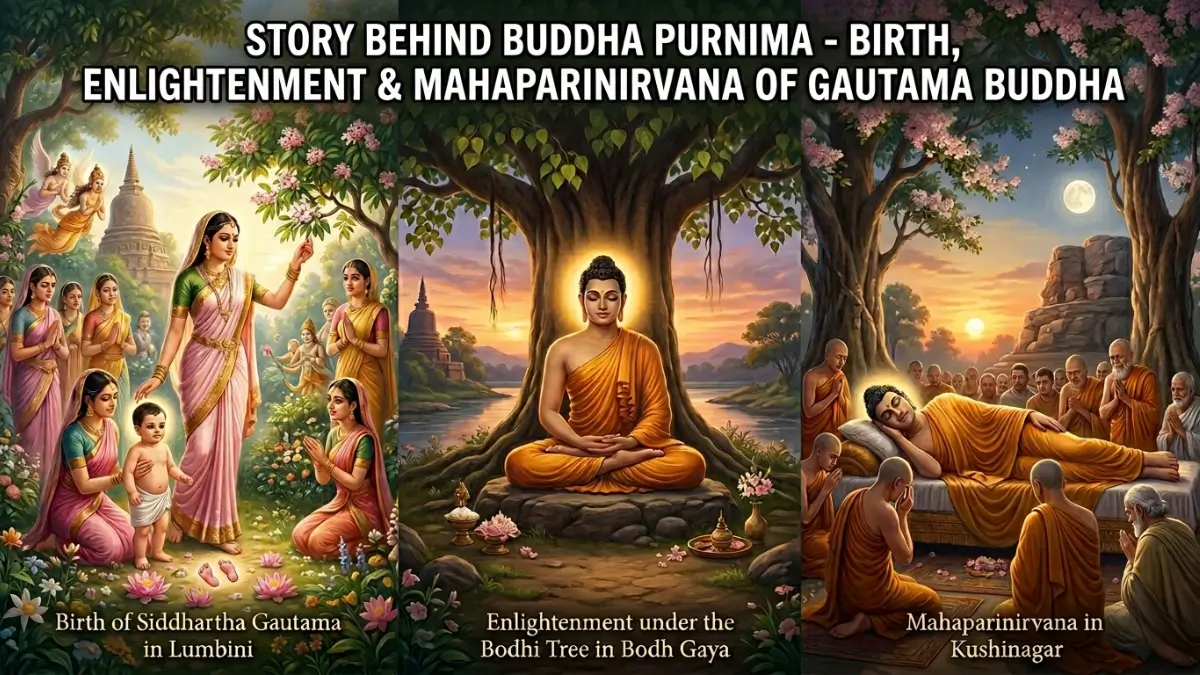
Buddha Purnima (also called Vesak or Buddha Jayanti) is the most important festival in the Buddhist calendar. It falls on the full moon (Purnima) of the month of Vaishakha and marks three pivotal events in the life of Siddhartha Gautama: his birth, his attainment of enlightenment under the Bodhi tree, and his Mahaparinirvana (final passing away). The day is observed with prayer, meditation, charity, and community gatherings across India, Nepal, Sri Lanka, Southeast Asia, and East Asia.
The Story Behind Buddha Purnima — Key Episodes
- Birth of Siddhartha Gautama: Born in Lumbini (present‑day Nepal) to Queen Maya and King Suddhodana, Siddhartha’s birth is celebrated as the beginning of a life that would transform spiritual thought in Asia.
- Enlightenment at Bodh Gaya: After years of renunciation and meditation, Siddhartha attained Bodhi (awakening) while meditating beneath the Bodhi Tree in Bodh Gaya. This moment defines him as the Buddha — “the Awakened One.”
- Mahaparinirvana: Buddha Purnima also commemorates the Buddha’s peaceful passing (Mahaparinirvana), reminding followers of impermanence and the path to liberation.
How People Observe Buddha Purnima
- Temple rituals and pujas: Devotees visit monasteries and stupas for chanting, offerings, and listening to Dhamma talks.
- Meditation and reflection: Many observe silence, meditate, or follow the Eightfold Path teachings for the day.
- Acts of charity: Feeding the poor, releasing captive animals, and donating to monasteries are common practices.
- Cultural events: Processions, lanterns, and community gatherings mark the festival in cities like New Delhi, Bodh Gaya, and Lumbini.
Spiritual Meaning and Contemporary Relevance
Buddha Purnima emphasizes compassion, mindfulness, and the impermanent nature of life. For modern practitioners it is a reminder to cultivate ethical conduct (sila), mental discipline (samadhi), and wisdom (prajna). The festival also fosters interfaith respect and social welfare activities in urban centers such as New Delhi.
Also Read: Speech on Buddha Purnima in English — Meaning Story and Message
Closing note
Buddha Purnima is both a historical commemoration and a living invitation: to practice compassion, deepen awareness, and renew commitment to the Buddha’s path of liberation. For local events in New Delhi and nearby Buddhist centers, check temple schedules and community notices as the date approaches. To know more information visit Greatindianfestival.
I am Disha Sharma the founder and writer of Great Indian Festival with a passion for storytelling and a dedication to sharing knowledge, I create content that informs, inspires, and connects with readers. My writing reflects creativity, clarity, and a commitment to delivering valuable insights across topics that matter.