|
Getting your Trinity Audio player ready...
|
Rang Panchami is a colorful and joyous festival celebrated in India, particularly in Maharashtra, Madhya Pradesh, and parts of North India. While Holi is widely known as the festival of colors, Rang Panchami comes five days later and carries its own cultural and spiritual significance. Understanding why Rang Panchami is celebrated helps us appreciate its deeper meaning beyond just playing with colors.
Rang Panchami Meaning
The word Rang means “color,” and Panchami refers to the fifth day of the lunar fortnight. Thus, Rang Panchami literally means the “fifth day of colors.” It is celebrated to honor the victory of positive energy (sattvagun) over negative energies (rajogun and tamogun). Applying colors is symbolic of invoking divine energy and spreading joy among communities.
Rang Panchami Festival Significance
- Spiritual Cleansing: Colors are believed to purify the environment and invoke divine blessings.
- Community Bonding: The festival brings people together, breaking social barriers.
- Continuation of Holi: While Holi emphasizes rituals like Holika Dahan, Rang Panchami focuses purely on fun, colors, and togetherness.
Holi and Rang Panchami Connection
Rang Panchami is considered the concluding celebration of Holi. Holi marks the burning of evil (Holika Dahan) and the triumph of good, while Rang Panchami emphasizes the joyous spirit of colors. Together, they represent both ritualistic and celebratory aspects of Indian culture.
Rang Panchami Traditions
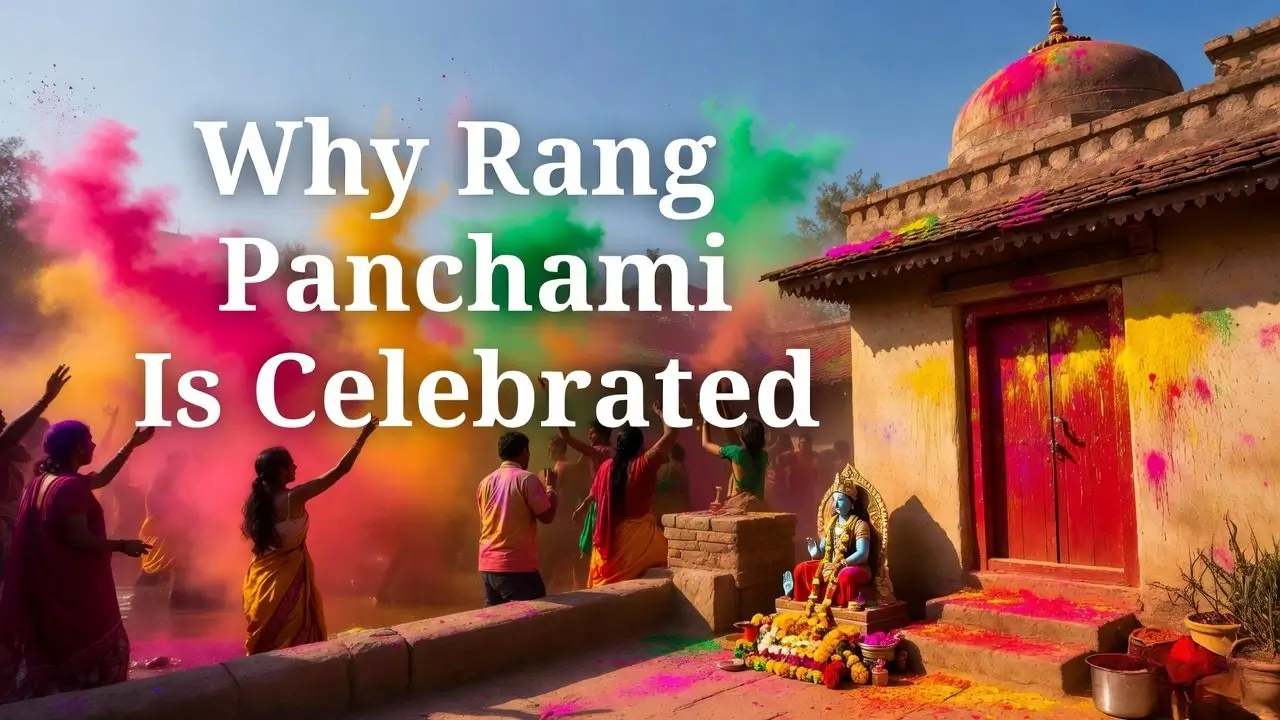
- Throwing gulal (colored powder) and splashing water.
- Folk music, dance, and dhol performances.
- Large processions in cities like Indore and Pune.
- Devotees believe playing with colors invokes divine blessings.
Rang Panchami in Maharashtra
In Maharashtra, Rang Panchami is celebrated with grand processions, temple festivities, and community gatherings. Cities like Pune and Nashik witness vibrant street celebrations with music, dance, and colors.
Rang Panchami in Madhya Pradesh
Indore is particularly famous for its Rang Panchami celebrations. The city organizes massive processions with decorated floats, traditional music, and enthusiastic participation from locals. It is one of the most iconic Rang Panchami events in India.
Personal Experience
Having observed Rang Panchami celebrations, it’s clear that the festival is more than just colors—it’s about unity, joy, and spiritual cleansing. Unlike Holi, which has strong ritualistic roots, Rang Panchami is a celebration of pure happiness and community spirit.
Conclusion
Rang Panchami is celebrated to mark the joyful conclusion of Holi, symbolizing the triumph of positive energy and the divine spirit of colors. It strengthens community bonds, spreads happiness, and reflects the cultural richness of India.
Rang Panchami is not just about playing with colors—it’s about celebrating life, unity, and the divine energy that connects us all.
I am Disha Sharma the founder and writer of Great Indian Festival with a passion for storytelling and a dedication to sharing knowledge, I create content that informs, inspires, and connects with readers. My writing reflects creativity, clarity, and a commitment to delivering valuable insights across topics that matter.