|
Getting your Trinity Audio player ready...
|
No other day on the Islamic calendar carries quite the same emotional weight — the particular mixture of relief, gratitude, spiritual fulfillment, and pure, uncomplicated joy that arrives on the morning of Eid after a full month of fasting. For over 1.8 billion Muslims around the world, this is not simply a holiday. It is the culmination of an entire month of inner transformation, a collective exhale after thirty days of discipline, prayer, and reflection.
Yet for those encountering Eid ul Fitr for the first time — whether as a curious outsider, a new Muslim, or someone reconnecting with their faith — the festival can feel layered, complex, and difficult to fully grasp from the outside. What exactly is being celebrated? Why does the date shift every year? What happens during the Eid prayer? What do people eat? How is it observed differently across the Muslim world?
This is the most comprehensive guide to Eid ul Fitr you will find — covering its religious foundations, historical origins, global traditions, food culture, the spiritual significance of Ramadan’s end, and the practical and devotional elements that make this day one of the most important on earth.
What Is Eid ul Fitr? The Fundamentals
Eid ul Fitr (عيد الفطر) is one of the two major Islamic festivals, the other being Eid ul Adha. Its name translates directly from Arabic as the “Festival of Breaking the Fast” — eid meaning festival or celebration, al-fitr meaning the breaking of the fast.
It is celebrated on the first day of Shawwal, the tenth month of the Islamic lunar calendar, marking the end of Ramadan — the ninth month, during which Muslims fast from dawn to sunset every day.
The festival is sometimes called “Meethi Eid” (Sweet Eid) in South Asian communities — a reference to the sweet dishes traditionally eaten on this day and a contrast to Eid ul Adha, which is associated with sacrifice and savory meat dishes. In Turkey and many other regions, it is called Ramazan Bayramı (Ramadan Holiday). In Indonesia and Malaysia, it is known as Idul Fitri or Hari Raya Aidilfitri. In North Africa, it is often referred to simply as Aid El Fitr or Aid El Seghir (the Small Feast).
By any name, the celebration is the same at its core: a day of gratitude, prayer, feasting, generosity, and community — a sacred pause to acknowledge what the month of Ramadan has built within the individual and collective soul.
When Is Eid ul Fitr? Understanding the Islamic Lunar Calendar
One of the most common questions about Eid ul Fitr is: why does the date change every year?
The Islamic calendar is a lunar calendar of 354 or 355 days — approximately 10 to 11 days shorter than the Gregorian solar calendar used in most of the world. Because of this difference, Eid ul Fitr moves earlier each year relative to the Gregorian calendar, cycling through all the seasons over a period of about 33 years.
The Crescent Moon Sighting
Traditionally, the start of each new Islamic month — and therefore the end of Ramadan and the beginning of Shawwal — is determined by the sighting of the crescent moon (hilal). This is rooted directly in the Hadith, where the Prophet Muhammad instructed Muslims to begin Ramadan upon sighting the crescent and to end it upon sighting the next crescent.
Different countries and communities handle moon sighting in different ways:
- Saudi Arabia and many Gulf nations follow an official moon sighting committee whose announcement is binding for most of the Muslim world.
- South Asian communities (Pakistan, India, Bangladesh) often follow local moon sighting, which can result in Eid falling a day later than in the Gulf.
- Many Western Muslim communities follow either local sighting, Saudi announcement, or astronomical calculation — which can result in Eid being celebrated on different days within the same country.
This is why, in cities like London, New York, or Toronto with diverse Muslim populations, Eid is sometimes celebrated across two consecutive days by different communities. This is not a source of division but of diversity — reflecting the breadth of Islamic jurisprudential traditions on this question.
Eid ul Fitr 2026 Expected Date
Based on astronomical calculation, Eid ul Fitr 2026 is expected to fall on approximately March 20 or 21, 2026, subject to official moon sighting announcements. The exact date will be confirmed upon the sighting of the Shawwal crescent moon.
The Religious and Historical Origins of Eid ul Fitr
The Quranic Foundation
Eid ul Fitr is not simply a cultural tradition that developed over centuries — it has direct Quranic and prophetic sanction.
The Quran speaks of Ramadan as the month in which the Holy Quran was revealed: “The month of Ramadan is the one in which the Quran was sent down as guidance for mankind” (Surah Al-Baqarah, 2:185). The command to fast during Ramadan comes from the same chapter. Eid ul Fitr, as the celebration marking the completion of this sacred month, is therefore deeply rooted in Quranic revelation.
The specific permission — and indeed encouragement — to celebrate Eid comes from the Hadith. When the Prophet Muhammad arrived in Medina after migrating from Mecca, he found the people celebrating two days of festivity inherited from pre-Islamic times. He said: “Allah has replaced them for you with two days that are better than them: Eid al-Adha and Eid al-Fitr.” (Sunan Abu Dawud)
This Hadith is significant because it establishes that joy, celebration, and festivity are not incompatible with Islamic faith — they are, in the correct context, commanded.
The First Eid ul Fitr in History
The first Eid ul Fitr in Islamic history was celebrated in 624 CE (2 AH), the year after the migration of the Prophet Muhammad from Mecca to Medina and the year the fast of Ramadan was first ordained. The Prophet himself led the first Eid prayer in an open field outside Medina — establishing the tradition of the communal Eid prayer that continues to this day in every corner of the world.
Ramadan: The Month That Makes Eid Meaningful
To truly understand Eid ul Fitr, one must understand Ramadan — because without Ramadan, Eid is just a party. With it, Eid is a transformation.
What Is Ramadan?
Ramadan is the ninth month of the Islamic calendar, observed by Muslims worldwide as a month of fasting (Sawm), prayer (Salah), Quranic recitation (Tilawat), charity (Sadaqah), and spiritual reflection. It is one of the Five Pillars of Islam — obligations that every adult, able-bodied Muslim is required to fulfill.
During Ramadan, Muslims abstain from all food, drink (including water), smoking, and marital relations from the Fajr (pre-dawn) prayer until the Maghrib (sunset) prayer. This fast is not merely physical — it is a comprehensive spiritual discipline that also prohibits lying, gossip, anger, and all forms of moral transgression.
The Spiritual Arc of Ramadan
Ramadan is typically divided into three parts — known as Ashras (decades):
The First Ashra (Days 1–10): Rahmat (Mercy) The opening ten days are associated with the mercy of Allah. Muslims begin the month with heightened devotion, adjusting to the fasting schedule, and immersing themselves in Quran recitation and additional prayers (Tarawih).
The Second Ashra (Days 11–20): Maghfirah (Forgiveness) The middle ten days are associated with seeking forgiveness. The momentum of Ramadan deepens. Mosques are full, Quran recitation intensifies, and the spiritual atmosphere reaches a new level of gravity.
The Third Ashra (Days 21–30): Nijat (Salvation) The final ten days are the most sacred of Ramadan. Among them is Laylat ul Qadr — the Night of Power — described in the Quran as “better than a thousand months” (Surah Al-Qadr, 97:3). Muslims search for this night among the odd nights of the last ten days (21st, 23rd, 25th, 27th, 29th), staying up in prayer through the night. The Quran was first revealed on this night. For devout Muslims, a single night of sincere worship on Laylat ul Qadr can, by divine grace, outweigh a lifetime of ordinary worship.
It is after this extraordinary month that Eid ul Fitr arrives — not as an escape from the discipline of Ramadan, but as its reward.
The Night Before Eid: Chand Raat
Before Eid itself, there is Chand Raat — literally “the night of the moon” in Urdu and Hindi. This is the evening when the Shawwal crescent moon is sighted and announced, confirming that Ramadan has ended and Eid begins tomorrow.
Chand Raat is celebrated with particular enthusiasm across South Asia, the Middle East, and their diaspora communities worldwide. Bazaars stay open until midnight or beyond. Women and girls have their hands decorated with mehndi (henna) in elaborate floral and geometric patterns. New clothes purchased specifically for Eid are laid out. Children are kept awake late, buzzing with anticipation. The atmosphere is closer to New Year’s Eve than a religious vigil — joyful, noisy, fragrant with attar (perfume) and the sugar of sweets being distributed among neighbors.
In the Gulf and Arab world, the announcement of the moon sighting is met with the sound of cannons being fired and fireworks lighting the sky. In Indonesia and Malaysia, takbir — the proclamation “Allahu Akbar” (God is Great) — is recited aloud in mosques and streets from the evening before Eid through the night and into the morning.
Chand Raat Mubarak (“Blessed night of the moon”) is the greeting exchanged on this night — the prelude to the morning’s Eid Mubarak.
The Morning of Eid: What Happens Hour by Hour
The morning of Eid ul Fitr follows a beautiful, structured sequence of devotional and communal acts that has remained largely consistent since the time of the Prophet Muhammad.
Before the Eid Prayer: The Sunnah Acts of Eid Morning
1. Performing Ghusl (Full Ritual Bath) The morning of Eid begins with ghusl — a complete ritual purification bath. This is a Sunnah (prophetic practice) of Eid, performed before the prayer to mark the purity and sanctity of the occasion.
2. Wearing New or Best Clothes The Prophet (ﷺ) is reported to have worn his finest garments on Eid. For most Muslim families, Eid morning is when new clothes — purchased or stitched weeks in advance — are worn for the first time. Dressing well on Eid is not vanity; it is gratitude, expressed through the body.
3. Applying Perfume (Attar) Wearing natural fragrance (attar) on Eid is a Sunnah, particularly for men. The fragrance is part of the full sensory experience of the day — along with the sight of dressed families, the sound of takbir, and the taste of sweet food eaten before prayer.
4. Eating Something Sweet Before the Prayer This is among the most distinctive practices of Eid ul Fitr morning. The Prophet Muhammad (ﷺ) would not go to the Eid prayer without first eating an odd number of dates. The breaking of this “mini fast” — eating before the prayer on the day after a month of fasting from dawn to dusk — is a symbolic statement that fasting is now over, and the celebration has begun.
In South Asian households, this pre-prayer sweet is often sheer khurma (vermicelli cooked in milk with dates and sugar) or sewai (sweet vermicelli). In Arab households, tamr (dates) remain the classic pre-prayer food.
5. Paying Zakat ul Fitr (Fitrana) Before the Eid prayer, every Muslim who is financially able is obligated to pay Zakat ul Fitr — a special charity specific to Eid ul Fitr. This is a fixed amount (approximately equivalent to the price of a meal or a small measure of staple grain) paid on behalf of every member of the household, including children.
The purpose of Zakat ul Fitr is explicitly stated in Hadith: to purify the fasting person from any inadvertent shortcomings during Ramadan, and to ensure that even the poorest members of the community have enough to eat and celebrate on Eid. It must be paid before the Eid prayer — making it one of the most time-sensitive obligations in Islamic worship. In most Muslim-majority countries, Zakat ul Fitr organizations collect and distribute this charity on Eid morning so that no family goes without food on this day.
6. Reciting Takbir While Walking to the Prayer Grounds On the way to the Eid prayer, Muslims recite the Eid Takbir aloud:
Allahu Akbar, Allahu Akbar, La ilaha illallah, Allahu Akbar, Allahu Akbar, wa lillahi al-hamd (God is Great, God is Great, There is no god but God, God is Great, God is Great, and all praise belongs to God)
This takbir fills the streets with sound on Eid morning — a public declaration of faith that transforms the urban landscape into something approaching the sacred.
The Eid Prayer (Salat ul Eid)
The Eid prayer is a communal, congregational prayer that is Wajib (obligatory, according to most scholars) or strongly Sunnah. It is performed in a large open field (Eidgah) or a large mosque, to accommodate the maximum number of worshippers.
The Eid prayer has a specific structure that distinguishes it from the five daily prayers:
- It consists of two Rak’ahs (units of prayer)
- It contains additional Takbirs (proclamations of God’s greatness) — six extra Takbirs in the first Rak’ah and five in the second, according to the most widely followed opinion
- It is followed by a Khutbah (sermon) delivered by the Imam
The Eid sermon covers topics relevant to the occasion — the completion of Ramadan, the importance of maintaining the spiritual gains made during the month, reminders about Zakat ul Fitr and other obligations, and general guidance for the Muslim community. Unlike the Friday Khutbah, the Eid Khutbah is delivered after the prayer, not before — a distinction unique to Eid.
The sight of an Eid prayer gathering is one of the most visually striking in the Islamic world. Row upon row of worshippers — dressed in their finest clothes, in every color and style from the world’s diverse Muslim cultures — prostrating together in unison creates a scene of collective devotion that has moved observers across centuries and cultures, Muslim and non-Muslim alike.
After the Eid Prayer: The Social Heart of the Day
After the prayer, Eid transforms from devotion into celebration. Worshippers embrace and exchange greetings of “Eid Mubarak” (Blessed Eid) or “Eid Sa’id” (Happy Eid). Tears are not uncommon — the combination of a month of intense spiritual effort now completed, the collective prayer just concluded, and the embrace of community can be profoundly moving.
Families return home to the central event of Eid day: food, family, and generosity.
Eid ul Fitr Food: The Feast That Marks the End of the Fast
Food on Eid ul Fitr is not mere sustenance — it is a celebration in itself, a tangible expression of gratitude and abundance after a month of restraint. Every Muslim community in the world has its own Eid food traditions, and exploring them reveals the extraordinary cultural breadth of the Islamic world.
South Asian Eid Foods (India, Pakistan, Bangladesh)
Sheer Khurma / Sewai
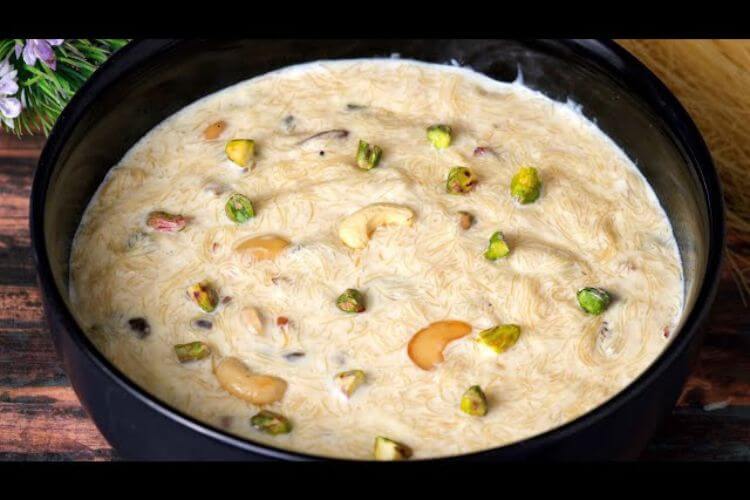
The undisputed queen of South Asian Eid food, sheer khurma is a rich, fragrant vermicelli pudding cooked in full-fat milk with dates (khurma), sugar, cardamom, saffron, rose water, and an array of dry fruits — almonds, pistachios, cashews, raisins. The name literally means “vermicelli with dates.” It is eaten first thing on Eid morning, before the prayer, and continues to be served to every guest who visits throughout the day. No South Asian Eid is complete without the smell of sheer khurma rising from every kitchen in the neighborhood.
Biryani
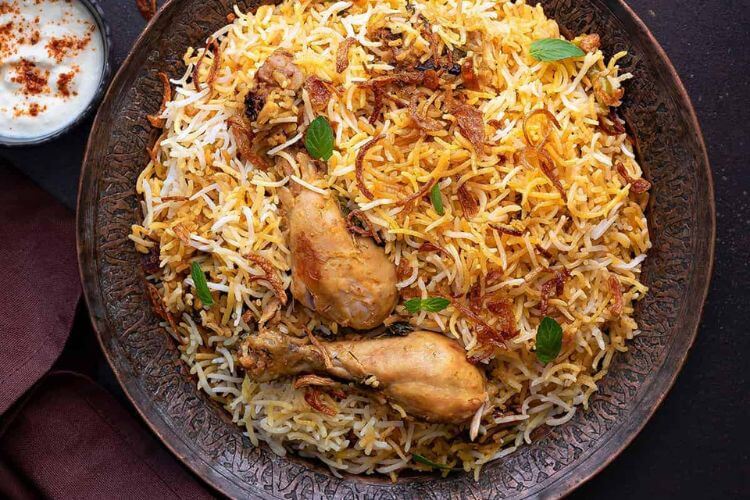
The grand centerpiece of Eid lunch in most South Asian homes. Whether Hyderabadi dum biryani, Karachi-style beef biryani, Lucknawi awadhi biryani, or Bangladeshi chicken biryani — the layered, fragrant rice dish is synonymous with Eid celebration. Families sometimes begin marinating meat the night before to ensure the Eid biryani is at its most flavorful.
Haleem
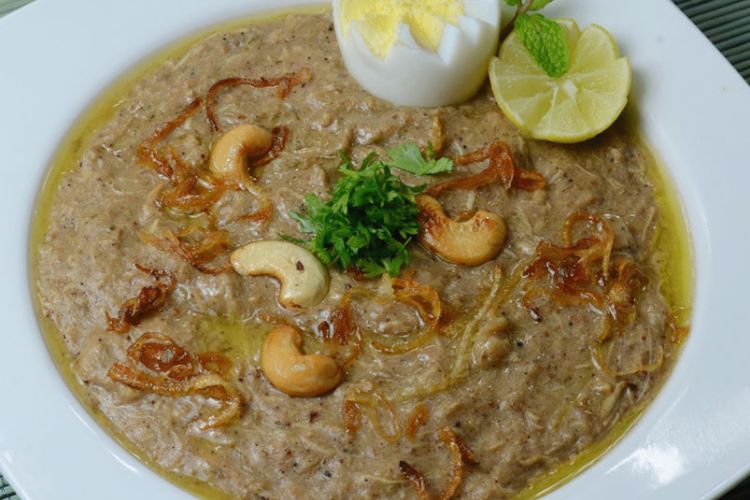
A slow-cooked stew of meat, lentils, and broken wheat, cooked for hours until it reaches a rich, porridge-like consistency. Haleem is deeply associated with Ramadan and Eid across South Asia, particularly in Hyderabad and Karachi, where entire industries emerge around its production during these occasions.
Mutton Korma / Chicken Curry
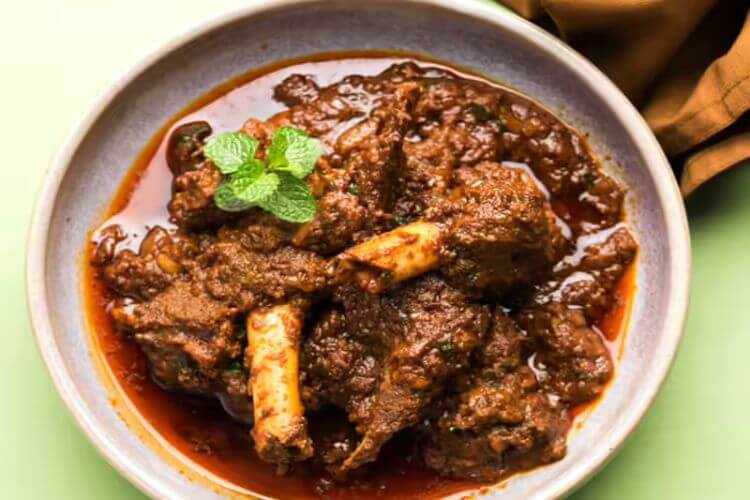
Rich, slow-cooked meat curries — korma, nihari, qorma, or rogan josh — are prepared in large quantities and served with naan, paratha, or rice at the Eid meal.
Phirni and Kheer
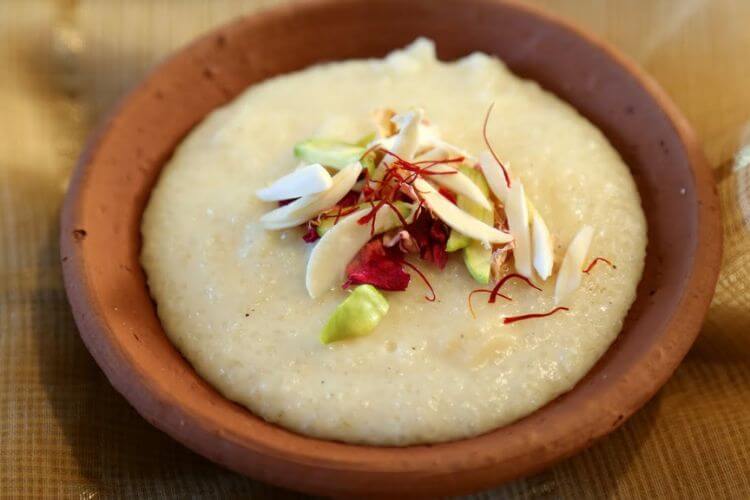
Milk-based rice puddings — phirni is made with ground rice set in earthen cups, while kheer uses whole rice grains — are common Eid desserts, fragrant with cardamom and rose water.
Arab World Eid Foods
Ma’amoul Perhaps the most iconic Eid sweet of the Arab world, ma’amoul are shortbread pastry cookies filled with dates, pistachios, or walnuts, pressed into ornately carved wooden molds that create beautiful geometric patterns on their surface. They are made in enormous quantities in the days before Eid and given as gifts to neighbors, family, and friends. Every household has its own recipe, passed down through generations.
Kahk Egyptian Eid is virtually defined by kahk — round, buttery shortbread cookies dusted with powdered sugar, filled with dates, nuts, or agameya (a honey and nut filling). Cairo’s bakeries work overtime in the days before Eid, and the smell of freshly baked kahk is the scent of Eid in Egypt.
Aseeda and Harissa In North Africa (Libya, Tunisia, Algeria), aseeda — a thick porridge of wheat flour served with honey, butter, or olive oil — and harissa (not the spice paste, but a sweet North African slow-cooked lamb and wheat porridge) are traditional Eid morning foods.
Mansaf In Jordan and parts of Palestine, mansaf — lamb cooked in a sauce of fermented dried yogurt (jameed) and served over rice — is the grand Eid feast dish, often prepared communally and eaten together by large extended families.
Southeast Asian Eid Foods (Indonesia, Malaysia)
In Indonesia and Malaysia, Hari Raya Aidilfitri (as it is known there) comes with its own extraordinary food traditions.
Ketupat The most iconic visual symbol of Eid in Southeast Asia is ketupat — compressed rice cooked inside a woven palm leaf pouch, forming a dense, firm rice cake. Ketupat is served with rendang, satay, or peanut sauce and is found on virtually every Hari Raya table across the region.
Rendang Slow-cooked beef or chicken in a rich, thick coconut milk and spice paste — rendang is one of the most complex and celebrated dishes in Southeast Asian cuisine, and it has a special association with Eid. Families in Indonesia and Malaysia prepare rendang over hours or even days in advance of Eid, the dish deepening in flavor as it sits.
Opor Ayam A mild, coconut milk-based chicken curry served alongside ketupat — a gentler complement to the richness of rendang and a staple of the Indonesian Eid table.
Lontong Sayur Compressed rice served with a vegetable curry in coconut milk — another Eid staple in Java and parts of Sumatra.
Turkish and Central Asian Eid Foods
In Turkey, Ramazan Bayramı is the sweet festival in the most literal sense. Baklava — layers of thin phyllo pastry filled with pistachios or walnuts, soaked in syrup — is the undisputed Eid sweet of Turkey. Pastry shops in Istanbul stay open through the night before Eid filling orders. Families gift boxes of baklava to neighbors, relatives, and employers.
Güllaç — a Ramadan-specific dessert of thin starch wafers soaked in rosewater milk with pomegranate and walnuts — transitions from Ramadan into Eid celebrations in Turkish homes.
In Central Asian countries like Kazakhstan, Uzbekistan, and Kyrgyzstan, samsa (baked meat pastries), plov (rice pilaf with lamb and carrots), and chak-chak (deep-fried dough in honey) are classic Eid celebratory foods.
Eid ul Fitr Traditions Around the World
Gift-Giving and Eidi
One of the most beloved Eid traditions — particularly for children — is Eidi: money or gifts given by elders to younger family members on Eid day. Eidi is not an obligation but a widespread, joyful custom that makes Eid feel like Christmas morning to Muslim children around the world.
In some cultures, adults also exchange gifts of perfume, dates, sweets, or new clothes. The act of giving on Eid is a practical expression of the generosity that Ramadan cultivates.
Visiting Family and Neighbors
On Eid day, Muslims visit the homes of relatives, neighbors, and friends — exchanging greetings, sharing sweets, and spending time together. In many Muslim-majority countries, Eid is a multi-day public holiday precisely to allow for these extensive visiting rituals.
The social dimension of Eid is inseparable from its spiritual one. The Prophet Muhammad (ﷺ) emphasized the importance of maintaining family ties (silat ur rahim) as a core Islamic virtue — and Eid is the day when this virtue is most visibly enacted.
Visiting Graves
In many Muslim cultures, Eid morning includes visiting the graves of deceased family members — to recite prayers (Fatiha) for their souls and to feel their presence woven into the celebration. This tradition reflects the Islamic understanding that the community of believers extends across the boundary between life and death.
New Clothes (Eid ka Jora)
Wearing new clothes on Eid is a near-universal tradition across the Muslim world. In South Asia, the custom of Eid ka jora (Eid outfit) is so deeply embedded in culture that tailors and clothing markets begin receiving Eid orders weeks in advance. The new clothes represent renewal — the person who completed Ramadan is, spiritually speaking, a new person.
Charity and Community Meals
Beyond Zakat ul Fitr, many communities organize public Eid meals, community iftars (now Eid feasts), and charitable distributions on the day of Eid. Mosques in Western countries often host large communal Eid lunches that bring together Muslims of all backgrounds — a particularly beautiful expression of the festival’s spirit in diverse communities.
The Spiritual Meaning of Eid ul Fitr: Beyond the Celebration
For all its joy, Eid ul Fitr is ultimately a spiritual occasion, and its deepest meaning is found not in the food or the clothes but in what the day represents within the life of a practicing Muslim.
Eid as Gratitude
The Arabic word “eid” comes from the root aud (عود), meaning return or recurrence — something that comes back. Eid ul Fitr is the return of joy after sacrifice, abundance after restraint, ease after discipline. The gratitude expressed on Eid is not gratitude for the food or the gifts — it is gratitude for having been given the strength to complete Ramadan at all.
The Quran connects the end of Ramadan explicitly to gratitude: “Allah wants ease for you, not hardship, so that you can complete the prescribed period and glorify Him for having guided you, and perhaps you will be grateful.” (Surah Al-Baqarah, 2:185)
Eid as a Reward
Islamic tradition holds that the night before Eid — the night the moon is sighted — is a night of special divine reward. A Hadith states that Allah says on this night: “O My angels, what is the reward of a worker who has fully done his work? They say: Our Lord, his reward should be given to him in full. He says: My servant has fasted the whole month and prayed, so forgive him.”
For the Muslim who has genuinely engaged with Ramadan — not just abstained from food, but attempted the full spiritual discipline the month demands — Eid is not merely permission to eat again. It is the arrival of a promised grace.
Preserving the Gains of Ramadan
Perhaps the most important spiritual challenge of Eid ul Fitr is what comes after it. Many Muslims feel the weight of the question: will the habits of Ramadan — the prayer, the Quran recitation, the charity, the self-control — survive the month’s end?
Islamic scholars consistently remind their communities that the goal of Ramadan is not to be good for a month but to build the foundations of goodness that sustain a year. The six voluntary fasts of Shawwal (the month following Ramadan) are one Sunnah practice that bridges Ramadan and the rest of the year. The principle, however, extends to all dimensions of spiritual life.
Eid ul Fitr in Non-Muslim Countries: How Muslim Minorities Celebrate
For the approximately 500 million Muslims living as minorities in non-Muslim-majority countries — in Western Europe, North America, China, India, and elsewhere — Eid ul Fitr comes with its own particular texture.
In cities like London, Paris, Toronto, and New York, Eid morning sees thousands of Muslims converging on large prayer venues — sports stadiums, convention centers, parks — for the congregational Eid prayer. The diversity of these gatherings is striking: Muslims from Morocco, Pakistan, Somalia, Indonesia, Turkey, and a hundred other backgrounds praying shoulder to shoulder, the world’s most multicultural religion made visible in a single moment.
The request for Eid as a public holiday has become a political and cultural conversation in many Western countries. As of 2026, several New York City public schools close for Eid ul Fitr — a milestone that reflects the growing recognition of Islam’s place in Western civic life.
For Muslim children in non-Muslim-majority schools, Eid can be a moment of quiet complexity — celebrating a major religious festival that their classmates may not know or understand. Many Muslim parents use Eid as an opportunity to teach their children both the depth of their own tradition and the skills of gentle cultural explanation.
How to Wish Someone Eid Mubarak: Greetings and Etiquette
The most universal Eid greeting is simply “Eid Mubarak” — literally “Blessed Eid” — said to Muslims you know or encounter on Eid day. It is warmly welcomed from non-Muslims as a gesture of respect and acknowledgment.
Common Eid greetings around the world include:
- Eid Mubarak (عيد مبارك) — Universal Arabic; used globally
- Eid Sa’id (عيد سعيد) — “Happy Eid”; common in Arab countries
- Eid Mubarak Ho — South Asian (Urdu/Hindi)
- Selamat Hari Raya — Malaysia and Indonesia
- Bayramınız Mübarek Olsun — Turkey
- Bonne Fête de l’Aïd — French-speaking Muslim communities
- Aid Mabrouk — North Africa
Non-Muslims are entirely welcome to wish their Muslim colleagues, friends, and neighbors Eid Mubarak. It is considered thoughtful and respectful — not an intrusion. The response from a Muslim will almost always be “Eid Mubarak to you too” or “Khair Mubarak” (may goodness be blessed for you).
Frequently Asked Questions About Eid ul Fitr
Que 1: Is Eid ul Fitr the same as Eid ul Adha?
Ans: No. These are two separate Islamic festivals. Eid ul Fitr marks the end of Ramadan (the fasting month) and is called the “Festival of Breaking the Fast.” Eid ul Adha falls approximately 70 days later and commemorates Prophet Ibrahim’s (AS) willingness to sacrifice his son — it is associated with animal sacrifice and the Hajj pilgrimage.
Que 2: Can non-Muslims attend Eid prayers or celebrations?
Ans: Yes. The Eid prayer itself is a religious service, but many mosques and Islamic centers welcome non-Muslim guests to observe or even attend community Eid events. Non-Muslims are asked to dress modestly and respectfully. Many Muslim families also warmly invite non-Muslim friends to Eid meals.
Que 3: Is fasting on Eid day forbidden?
Ans: Yes. It is explicitly haram (forbidden) to fast on the day of Eid ul Fitr. This is one of five days in the Islamic calendar on which fasting is prohibited. The Prophet Muhammad specifically forbade fasting on Eid as a reminder that this is a day of divinely sanctioned feasting and a time for gratitude.
Que 4: What is the difference between Zakat and Zakat ul Fitr?
Ans: Regular Zakat is an annual wealth tax of 2.5% paid by financially eligible Muslims on their savings. Zakat ul Fitr (also called Fitrana or Sadaqat ul Fitr) is a separate, much smaller, obligatory charity paid by every Muslim household before the Eid prayer specifically to ensure the poor can celebrate Eid.
Que 5: How long does Eid ul Fitr last?
Ans: Eid ul Fitr is technically a single day — the first of Shawwal. However, in many Muslim-majority countries, the public holiday extends to two or three days. Culturally, celebrations — visits, meals, and social gatherings — often continue across an entire week.
Conclusion: What Eid ul Fitr Teaches the World
Every year, on a date that shifts with the moon, over a billion people simultaneously pause, gather, pray, and feast. They wear their finest clothes. They feed the poor before feeding themselves. They embrace strangers as brothers and sisters. They forgive old grievances. They call distant relatives. They distribute sweets to neighbors of every faith.
This is Eid ul Fitr.
It is a festival rooted not in mythology or seasonal harvest, but in the deliberate, difficult work of becoming better — the thirty days of Ramadan that precede it. The joy of Eid is earned joy. The feast of Eid is a feast whose meaning is inseparable from the fast that came before it.
In a world that often feels fragmented, Eid ul Fitr offers something quietly radical: the sight of an entire community choosing, together, to be grateful. To celebrate not conquest or wealth, but simply the completion of a sincere effort to be worthy of the life they have been given.
Eid Mubarak to every reader — Muslim and non-Muslim alike — who has taken the time to understand what this extraordinary day means.
I am Disha Sharma the founder and writer of Great Indian Festival with a passion for storytelling and a dedication to sharing knowledge, I create content that informs, inspires, and connects with readers. My writing reflects creativity, clarity, and a commitment to delivering valuable insights across topics that matter.