
|
Getting your Trinity Audio player ready...
|
Sheetala Ashtami, also known as the Basoda Festival, is a sacred Hindu observance dedicated to Goddess Sheetala Mata. She is revered as the goddess of health, hygiene, and protection against seasonal diseases. The festival is unique because devotees prepare food a day earlier and consume it cold on the day of worship. Alongside rituals and offerings, the Sheetala Ashtami Katha is recited, which explains the origin, significance, and blessings associated with this vrat (fast).
Sheetala Ashtami Katha
According to Hindu tradition, the Goddess Sheetala Mata katha is narrated during the puja to highlight her role in protecting devotees from diseases like smallpox, measles, and other seasonal ailments.
The Legend
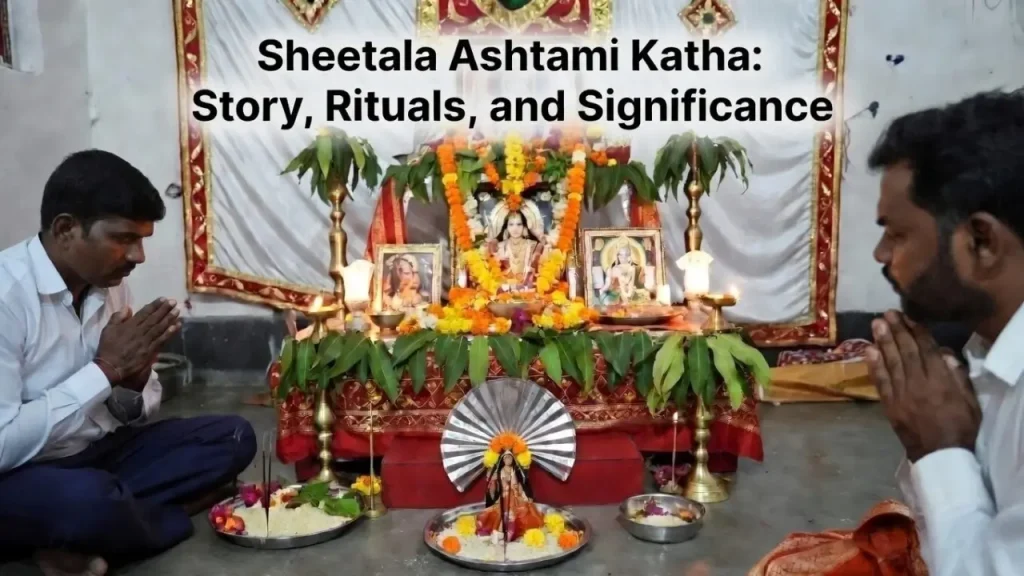
Once upon a time, in a village, people suffered from various contagious diseases. The villagers prayed to Goddess Sheetala Mata, who is depicted riding a donkey and carrying a broom, neem leaves, and a pot of cold water. She blessed them and instructed that on Ashtami Tithi, devotees should prepare food a day earlier, offer it to her, and consume it cold the next day.
The goddess explained that avoiding fire and eating cold food on this day symbolizes purity, discipline, and respect for her divine energy. Those who sincerely observe the vrat and recite the Sheetala Ashtami Katha are protected from diseases, misfortune, and evil influences.
Basoda Festival Story
The Basoda Festival story is closely tied to the Sheetala Mata katha. It emphasizes the importance of preparing food a day earlier, known as Basoda Bhojan, and consuming it cold on Ashtami. This practice is believed to please Goddess Sheetala Mata and ensure protection from ailments.
Rituals Associated with Sheetala Ashtami Katha
- Preparation of Food (Basoda Bhojan):
- Families cook food a day earlier and consume it cold on Ashtami.
- Dishes include poori, aloo sabzi, chana, besan curry, halwa, curd, and pickles.
- Offerings to Goddess Sheetala Mata:
- Devotees offer neem leaves, curd, grains, flowers, and the pre‑cooked food.
- The food is first offered to the goddess before being consumed by the family.
- Recitation of Katha:
- The Sheetala Ashtami Katha is narrated during the puja.
- It emphasizes the goddess’s blessings and the importance of discipline and hygiene.
- Community Sharing:
- Families distribute prasad and share food with neighbors, reinforcing social bonds.
Cold Food on Sheetala Ashtami
Eating cold food on Sheetala Ashtami is the central ritual of the festival. It symbolizes respect for Goddess Sheetala Mata, discipline in following tradition, and awareness of hygiene. The practice also reflects humility and devotion, reminding devotees of the goddess’s protective energy.
Sheetala Ashtami Rituals and Dishes
The Sheetala Ashtami rituals and dishes include preparing poori, aloo sabzi, chana, besan curry, halwa, curd, and pickles. These dishes are cooked a day earlier and offered to the goddess before being consumed by the family.
Basoda Bhojan Significance
The Basoda Bhojan significance lies in its symbolic connection to humility, discipline, and devotion. Eating cold food reflects respect for Goddess Sheetala Mata and emphasizes hygiene and seasonal awareness. It also strengthens community bonding as families share food with neighbors.
Personal Reflection
I remember listening to the Sheetala Mata Katha as a child, narrated by elders in the family. The story was simple yet profound—it taught us that devotion is not only about rituals but also about discipline, hygiene, and compassion. The act of eating cold food together after offering it to the goddess felt deeply symbolic, connecting spirituality with everyday life.
Conclusion
The Sheetala Ashtami Katha is an integral part of the festival, reminding devotees of Goddess Sheetala Mata’s blessings and the importance of health, discipline, and devotion. By reciting the katha, preparing Basoda Bhojan, and observing the rituals, devotees seek protection from diseases and misfortune while strengthening their spiritual and community bonds.

I am Disha Sharma the founder and writer of Great Indian Festival with a passion for storytelling and a dedication to sharing knowledge, I create content that informs, inspires, and connects with readers. My writing reflects creativity, clarity, and a commitment to delivering valuable insights across topics that matter.