|
Getting your Trinity Audio player ready...
|
Holika Dahan, celebrated on the eve of Holi, is one of the most significant Hindu festivals. Known as Chhoti Holi, it symbolizes the victory of good over evil and is deeply rooted in mythology. The ritual of lighting the bonfire is not just a cultural tradition but a spiritual reminder of devotion, courage, and divine protection. Understanding Holika Dahan ki kahani allows us to appreciate the values of righteousness and faith that continue to inspire generations.
Holika Dahan Ki Kahani
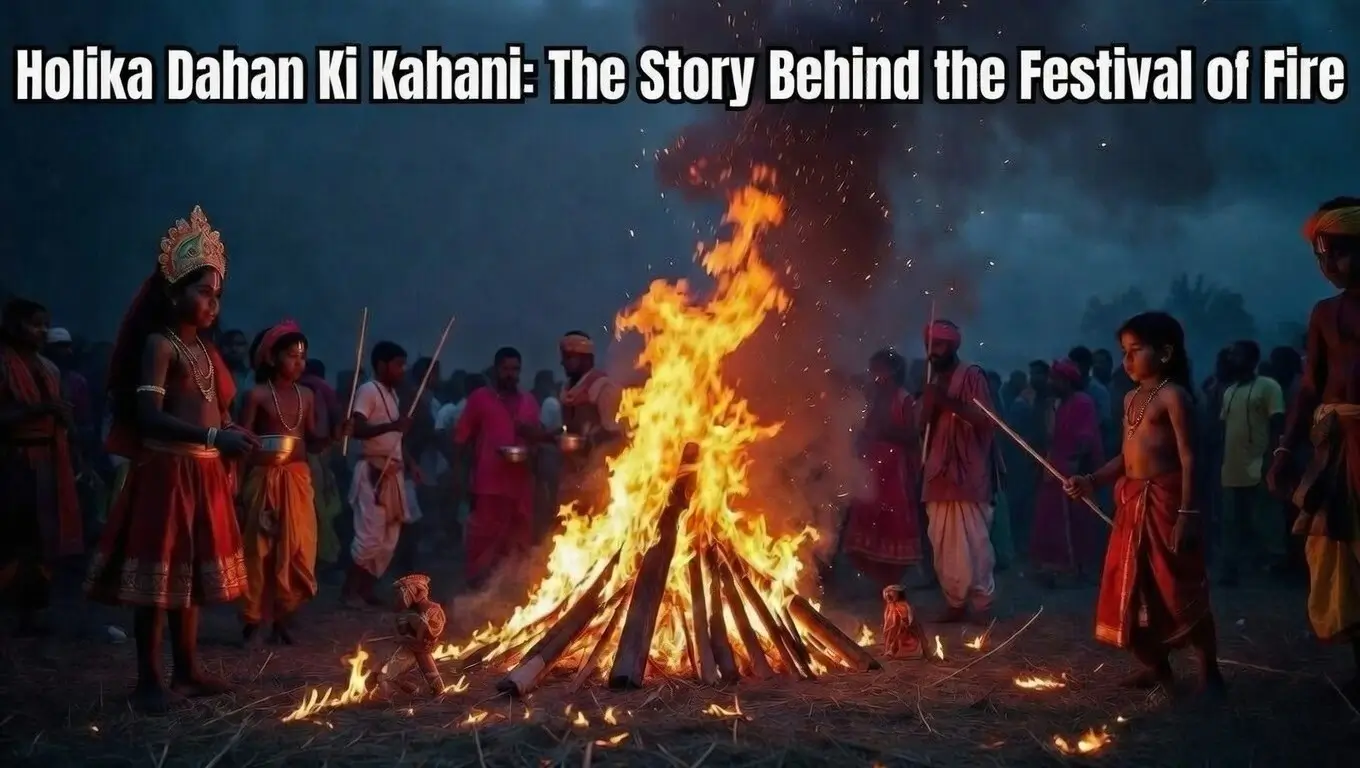
The story of Holika Dahan revolves around the demon king Hiranyakashipu, his son Prahlad, and his sister Holika. Hiranyakashipu wanted everyone to worship him instead of God. However, his son Prahlad was a devout follower of Lord Vishnu and refused to bow before his father.
Angered by Prahlad’s devotion, Hiranyakashipu tried multiple times to kill him but failed due to divine protection. Finally, he sought help from his sister Holika, who had a boon that made her immune to fire. Holika tricked Prahlad into sitting on her lap inside a blazing fire. But due to her misuse of the boon, Holika was burned to ashes, while Prahlad emerged unharmed by the grace of Lord Vishnu.
This story of Prahlad and Holika symbolizes the triumph of truth and devotion over arrogance and evil.
Holika Dahan Rituals and Traditions
- Bonfire Preparation: Wood, cow dung cakes, and dried leaves are collected to build the pyre.
- Effigy of Holika: An effigy symbolizing evil is placed on the pyre.
- Offerings: Grains, coconuts, mustard seeds, and camphor are offered into the flames.
- Circumambulation (Parikrama): Devotees walk around the fire, praying for prosperity and protection.
- Chanting Mantras: Devotional chants and prayers are recited to invoke blessings.
Cultural Beliefs About Holika Dahan
- Victory of Good Over Evil: The ritual commemorates Prahlad’s devotion and Holika’s destruction.
- Community Bonding: Families and neighbors gather together, strengthening social ties.
- Spiritual Cleansing: The fire is believed to burn away negativity, ego, and evil influences.
- Seasonal Transition: Holika Dahan also marks the arrival of spring, celebrated with joy and renewal.
Holika Dahan Ash Significance
The ash collected after the bonfire is considered auspicious:
- Household Use: Sprinkled at the entrance of homes for protection.
- Personal Use: Applied on the forehead as a symbolic blessing.
- Agricultural Use: Farmers scatter ash in fields to purify the soil and invite prosperity.
Holi Festival Story
The Holi festival story is incomplete without Holika Dahan. The bonfire represents the destruction of evil, while the next day—Rangwali Holi—celebrates joy, unity, and the arrival of spring with colors. Together, these traditions remind us that life is a blend of devotion, victory, and celebration.
Personal Reflection
I remember one Holi when my grandmother narrated the Holika Dahan ki kahani to us as we sat around the bonfire. She explained that the fire was not just symbolic but a reminder to burn away our inner negativity—anger, jealousy, and arrogance. That year, I realized that the festival is not only about colors and joy but also about spiritual cleansing and renewal.
Conclusion
The Holika Dahan ki kahani teaches us that truth and devotion always triumph over arrogance and evil. The rituals of lighting the bonfire, offering grains, and collecting ash are deeply symbolic of spiritual cleansing and divine blessings. By remembering this Holi festival story, we celebrate not just a tradition but the eternal values of faith, courage, and righteousness.

I am Disha Sharma the founder and writer of Great Indian Festival with a passion for storytelling and a dedication to sharing knowledge, I create content that informs, inspires, and connects with readers. My writing reflects creativity, clarity, and a commitment to delivering valuable insights across topics that matter.