|
Getting your Trinity Audio player ready...
|
Holika Dahan, celebrated on Phalguna Purnima, is one of the most important rituals of the Holi festival. Known as Chhoti Holi, it symbolizes the victory of good over evil, inspired by the story of Prahlad and Holika. The ritual involves lighting a sacred bonfire, performing puja, and offering prayers. To perform this puja correctly, devotees prepare a set of items known as Holika Dahan puja samagri.
Holika Dahan Puja Samagri List
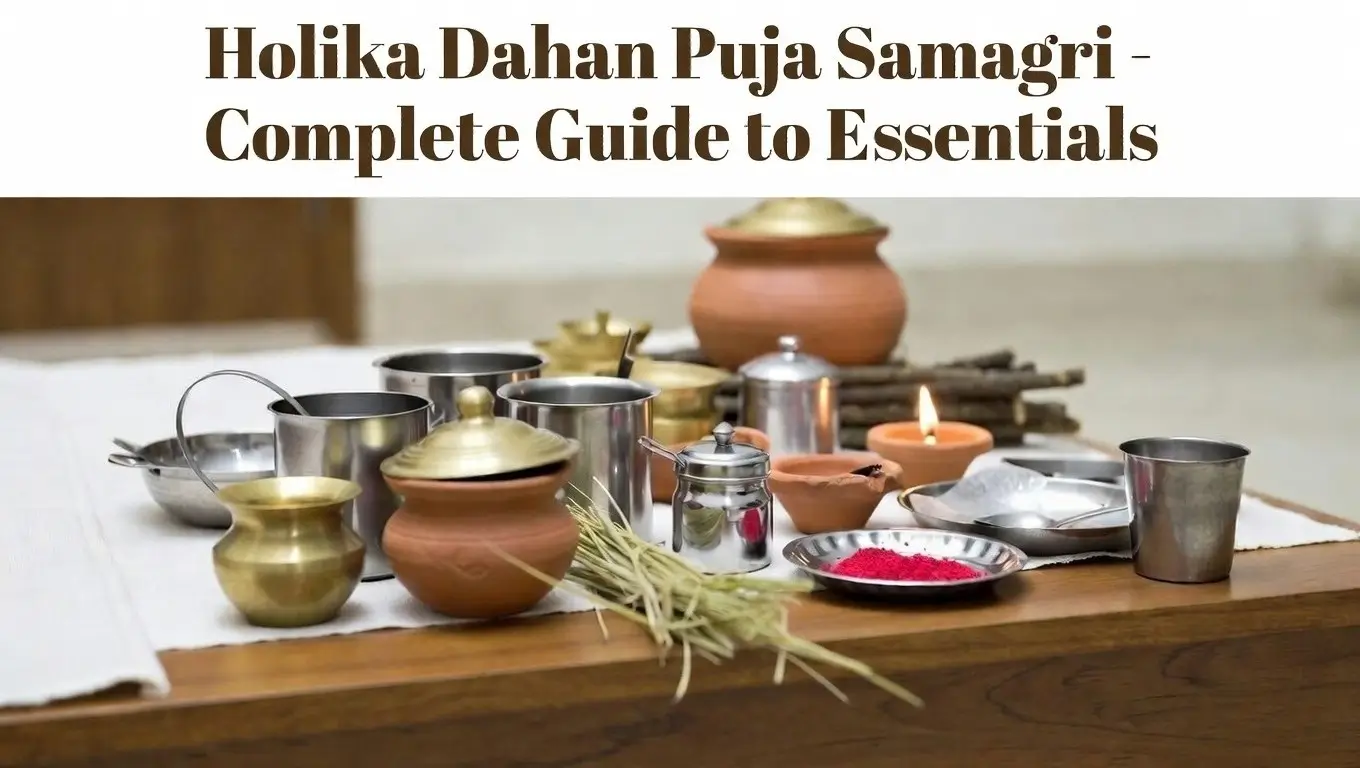
According to traditional practices, the following items are required for Holika Dahan puja samagri:
- Wood and twigs: To build the pyre for Holika.
- Cow dung cakes: Used to purify the surroundings and symbolize tradition.
- Ghee (clarified butter): Offered to the fire for auspiciousness.
- Camphor (kapur): Used to ignite the pyre and ward off negativity.
- Coconut: Offered as prasad, symbolizing purity and devotion.
- Fresh flowers: To honor the deity and add fragrance to the ritual.
- Haldi (turmeric) and Kumkum (vermilion): Applied during puja for blessings.
- Rice grains: Offered as a symbol of prosperity.
- Betel leaves and supari (areca nut): Used in puja offerings.
- Barley and wheat grains: Traditional offerings symbolizing abundance.
- Mustard seeds: Believed to ward off evil influences.
- Water in a kalash (pot): Represents purity and life.
Significance of Each Puja Samagri
- Wood and Cow Dung Cakes: Represent the destruction of negativity.
- Ghee and Camphor: Purify the environment and invoke divine blessings.
- Coconut and Flowers: Symbolize devotion, purity, and prosperity.
- Haldi and Kumkum: Used for auspiciousness and protection.
- Grains (barley, wheat, rice): Represent fertility, abundance, and prosperity.
- Mustard Seeds: Traditionally believed to drive away evil spirits.
- Betel Leaves and Supari: Offered to deities as a mark of respect.
Holika Dahan Rituals and Traditions
- Morning Puja: Devotees worship Holika Mata with offerings before sunset.
- Bonfire Lighting: The pyre is lit during Pradosh Kaal (evening muhurat).
- Offerings into Fire: Grains, coconuts, and mustard seeds are offered.
- Circumambulation (Parikrama): Devotees walk around the fire, praying for prosperity and protection.
- Ash Collection: The ash is considered auspicious and is sprinkled at home for blessings.
Cultural Beliefs About Holika Dahan
- Victory of Good Over Evil: Symbolizes Prahlad’s devotion and Holika’s destruction.
- Community Bonding: Families gather together, strengthening social ties.
- Spiritual Cleansing: The fire is believed to burn away negativity, ego, and evil influences.
- Seasonal Transition: Marks the arrival of spring and renewal of life.
Holika Dahan Ash Significance
- Household Use: Sprinkled at the entrance of homes for protection.
- Personal Use: Applied on the forehead as a blessing.
- Agricultural Use: Farmers scatter ash in fields to purify the soil and invite prosperity.
Personal Tip
I recall one Holi when my grandmother carefully prepared the Holika Dahan puja samagri. She explained the meaning behind each item—how grains symbolize prosperity, camphor drives away negativity, and ash protects the household. That year, I realized that the ritual is not just about tradition but about connecting with deeper spiritual values.
Conclusion
The Holika Dahan puja samagri plays a vital role in performing the ritual authentically. Each item carries symbolic meaning, from purification to prosperity. By preparing the samagri with devotion and understanding its significance, devotees honor the Holika Dahan ki kahani and celebrate the eternal victory of good over evil.

I am Disha Sharma the founder and writer of Great Indian Festival with a passion for storytelling and a dedication to sharing knowledge, I create content that informs, inspires, and connects with readers. My writing reflects creativity, clarity, and a commitment to delivering valuable insights across topics that matter.