
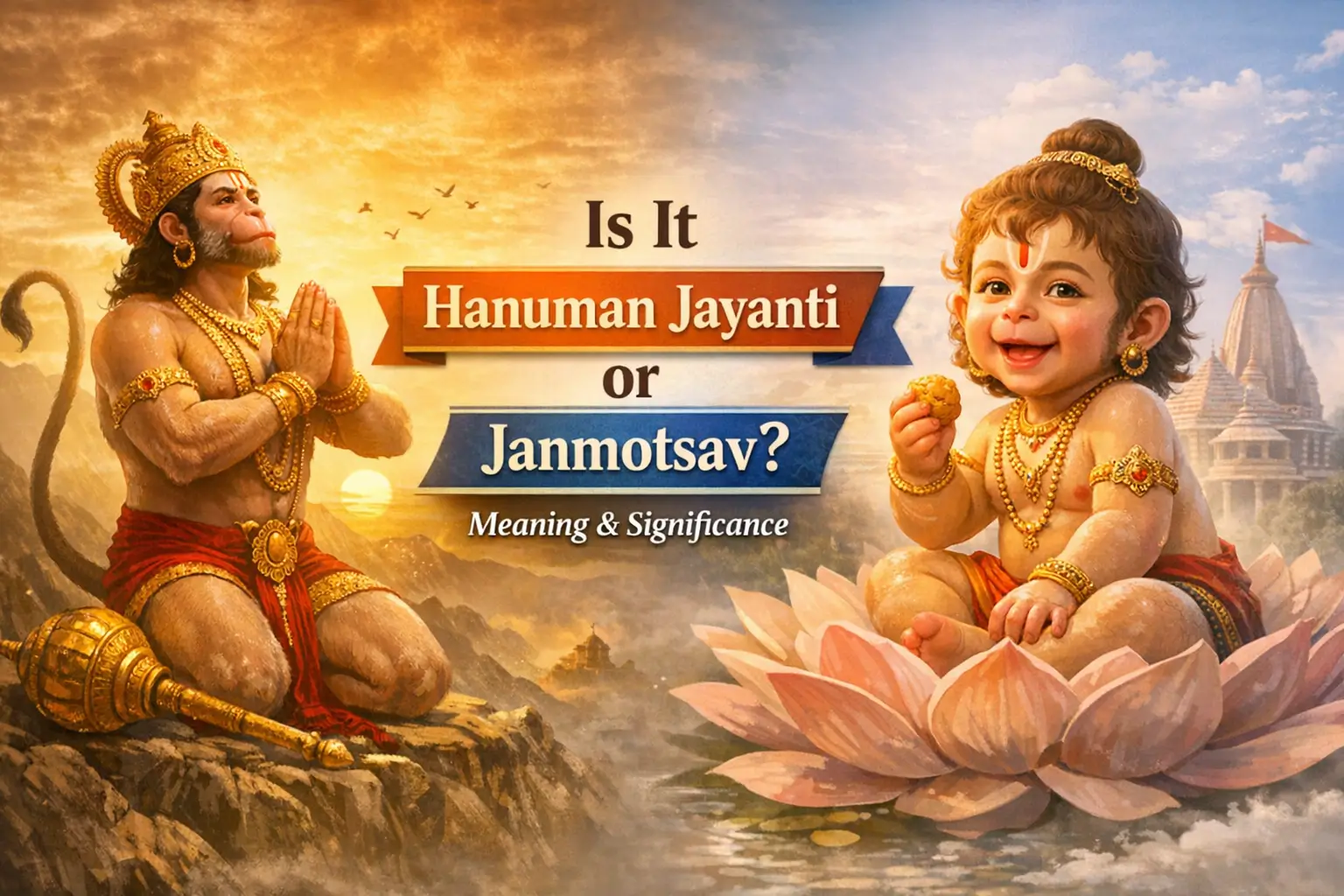
When devotees celebrate the birth of Lord Hanuman, they often hear two terms—Hanuman Jayanti and Hanuman Janmotsav. While both are used interchangeably, there are subtle differences in meaning and usage. Understanding these terms helps devotees connect more deeply with tradition and ensures that rituals are observed with cultural authenticity.
Meaning of Hanuman Jayanti
- Jayanti: In Sanskrit, Jayanti means “birth anniversary.”
- Hanuman Jayanti: Refers to the annual celebration of Lord Hanuman’s birth, observed on Chaitra Purnima in most parts of India.
- Significance: It emphasizes the spiritual rituals—fasting, puja, chanting of Hanuman Chalisa, and temple visits.
Meaning of Hanuman Janmotsav
- Janmotsav: A compound word—Janma (birth) + Utsav (festival).
- Hanuman Janmotsav: Literally means “festival of Hanuman’s birth.”
- Usage: This term is often used in temples and community gatherings where the celebration is more festive, involving bhajans, kirtans, and bhandaras (community feasts).
Read more: Importance of Hanuman Jayanti – Spiritual & Cultural Significance
Are They Different?
- Hanuman Jayanti: Focuses on the ritualistic and devotional aspect of the day.
- Hanuman Janmotsav: Highlights the celebratory and communal aspect of the festival.
- In Practice: Both terms refer to the same occasion—the birth of Lord Hanuman. The choice of term often depends on regional traditions and cultural preferences.
Regional Variations
- North India (Chaitra Purnima): Commonly referred to as Hanuman Jayanti.
- South India (Margashirsha or Vaishakha): Celebrated as Hanuman Janmotsav or Anjaneya Jayanti.
- Maharashtra: Both terms are used, with emphasis on sindoor and laddoo offerings.
Rituals Observed
- Fasting (Vrat): Devotees observe sattvic fasts, consuming fruits and milk.
- Puja Vidhi: Offer sindoor, laddoo, tulsi leaves, and chant Hanuman Chalisa.
- Temple Celebrations: Bhajans, kirtans, and bhandaras are organized.
- Community Spirit: Sharing prasad and food with the needy is integral.
Read more: Hanuman Jayanti Puja Rituals – Vidhi, Offerings & Significance
Conclusion
Whether you call it Hanuman Jayanti or Hanuman Janmotsav, the essence remains the same—celebrating the birth of Lord Hanuman with devotion, discipline, and joy. Jayanti emphasizes the ritualistic aspect, while Janmotsav highlights the festive spirit. Together, they reflect the complete devotion and celebration of Bajrangbali’s birth, inspiring devotees to embrace his qualities of strength, humility, and unwavering faith.

I am Disha Sharma the founder and writer of Great Indian Festival with a passion for storytelling and a dedication to sharing knowledge, I create content that informs, inspires, and connects with readers. My writing reflects creativity, clarity, and a commitment to delivering valuable insights across topics that matter.