|
Getting your Trinity Audio player ready...
|
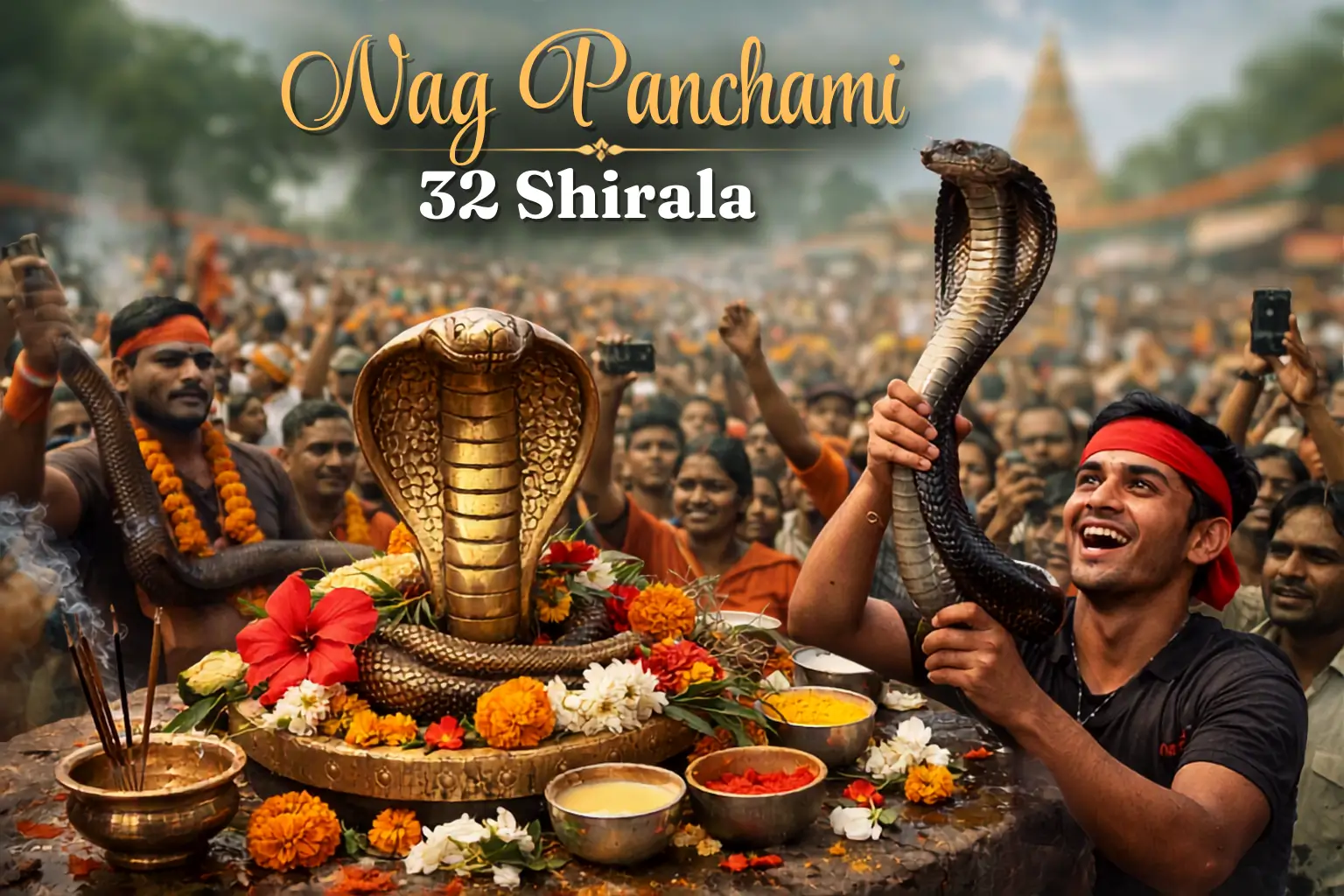
Nag Panchami is celebrated across India, but Nag Panchami 32 Shirala (Battis Shirala) in Sangli district, Maharashtra, has earned worldwide fame for its distinctive rituals. Here, cobras are traditionally worshipped alive, a practice rooted in centuries-old legends. The town is often called Nagbhoomi (land of serpents), and the festival attracts thousands of devotees and tourists.
The celebration is not only about devotion but also about ecology, folklore, and community identity. As a festival expert, I see Shirala’s Nag Panchami as a living example of how myth, ritual, and modern law intersect.
Historical and Mythological Background
- Legend of Gorakhnath: It is believed that Gorakhnath once visited Shirala during Nag Panchami. When a devotee was worshipping clay snakes and delayed offering alms, Gorakhnath manifested a live cobra for worship. This marked the beginning of live snake worship in Shirala.
- Spread of Fame: In the 20th century, freedom fighter Dattajirao Pote invited Shantanurao Kirloskar to witness the festival. Kirloskar published an article in his magazine, giving Shirala’s Nag Panchami national and international recognition.
Rituals and Practices
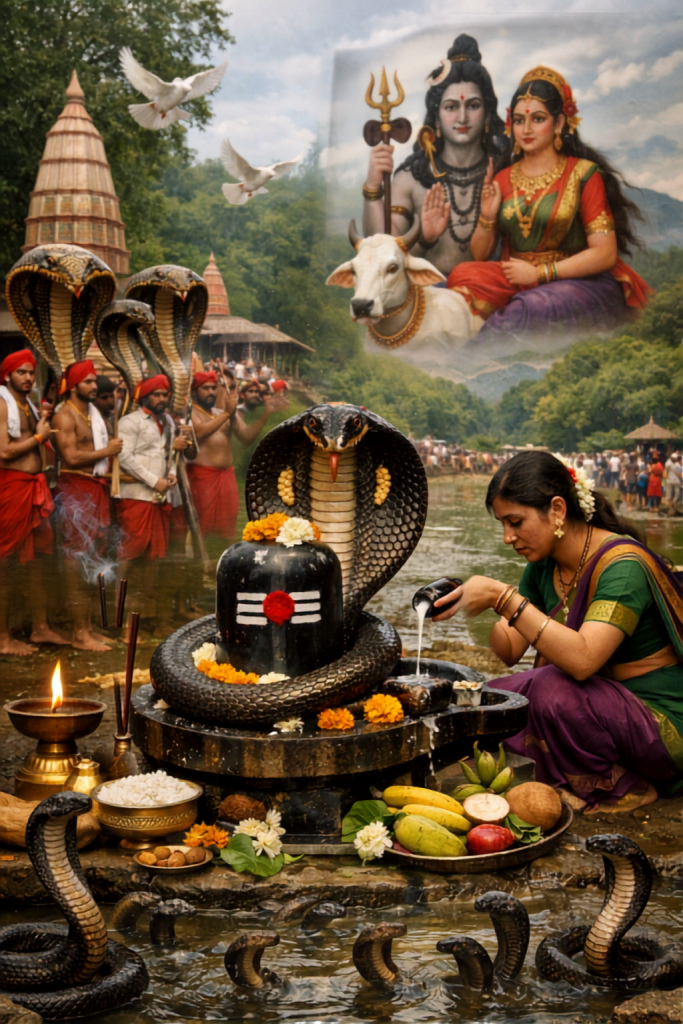
- Traditional Worship: Cobras are caught (earlier by local specialists) and worshipped with milk, turmeric, vermilion, and flowers.
- Community Processions: In earlier times, cobras were paraded in decorated palanquins, accompanied by music and dance.
- Modern Restrictions: Due to wildlife protection laws, live cobra worship and processions have been restricted. Devotees now use symbolic images or clay idols, though the desire for live worship remains strong among locals.
Cultural and Ecological Significance
- Respect for Nature: Worshipping snakes reflects ecological awareness, as snakes control pests and protect crops.
- Symbol of Unity: Shirala’s Nag Panchami is seen as a symbol of communal harmony, with people of different faiths participating.
- Tourism Impact: The festival draws visitors from across India and abroad, boosting local economy and cultural pride.
Comparison Table — Shirala vs Other Nag Panchami Traditions
| Region | Practice | Unique Feature |
|---|---|---|
| Shirala (Maharashtra) | Live cobra worship (historically), processions | Global fame, “Nagbhoomi” identity |
| Kerala (Mannarasala Temple) | Worship in serpent groves (Sarpa Kavu) | Matriarchal priesthood, ecological sanctuaries |
| Uttarakhand (Nag Devta Temples) | Rituals in Nag temples | Strong link to local hill deities |
| Punjab | Drawing snake images at home | Household-based rituals |
Also Read: Nag Panchami Vrat — Rules, Rituals & Spiritual Significance
FAQs – Nag Panchami 32 Shirala
Ques1: Why is Shirala’s Nag Panchami called “32 Shirala”?
Ans: The name comes from the cluster of 32 villages historically associated with the festival.
Ques2: Is live cobra worship still practiced?
Ans: Due to wildlife laws, public live worship and processions are restricted, though symbolic rituals continue.
Ques3: What makes Shirala’s Nag Panchami unique?
Ans: Its origin legend, historical fame, and the tradition of live cobra worship distinguish it from other regions.
Ques4: How do locals feel about restrictions?
Ans: Many express disappointment, but committees are working to preserve traditions within legal frameworks.
Conclusion
Nag Panchami 32 Shirala is more than a festival; it is a cultural identity. Rooted in legend, celebrated with devotion, and recognized globally, it reflects the balance between tradition and modernity. While restrictions have changed its form, the spirit of reverence for snakes and nature continues. For devotees and visitors alike, Shirala remains a living symbol of India’s rich festival heritage.

I am Disha Sharma the founder and writer of Great Indian Festival with a passion for storytelling and a dedication to sharing knowledge, I create content that informs, inspires, and connects with readers. My writing reflects creativity, clarity, and a commitment to delivering valuable insights across topics that matter.