
|
Getting your Trinity Audio player ready...
|
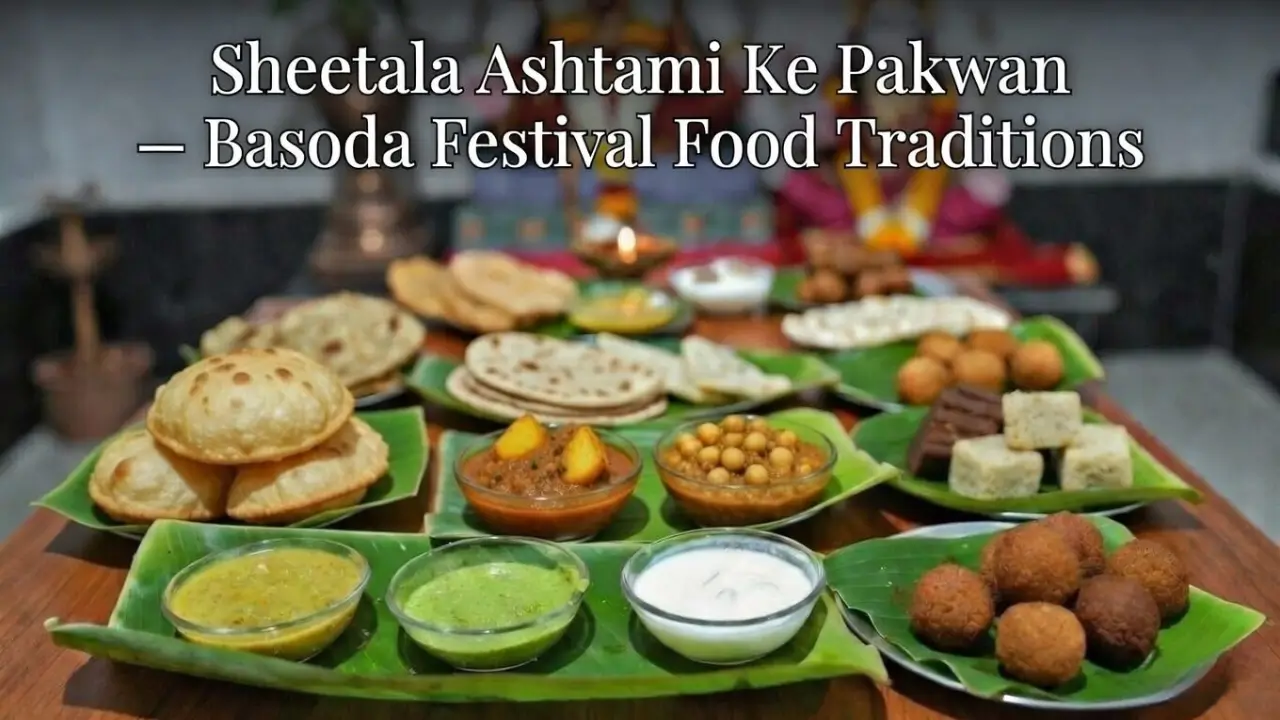
Sheetala Ashtami, also known as the Basoda Festival, is a unique Hindu tradition dedicated to Goddess Sheetala, the deity of health, hygiene, and protection against seasonal diseases. One of the most distinctive aspects of this festival is the preparation and consumption of cold food on Sheetala Ashtami, known as Basoda Bhojan. These dishes, collectively referred to as Sheetala Ashtami ke pakwan, are cooked a day before and offered to the goddess as a mark of devotion.
Sheetala Ashtami ke Pakwan
On this day, families prepare a variety of dishes that are consumed cold. Some popular Sheetala Ashtami rituals and dishes include:
- Roti/Chapati: Simple flatbread prepared a day earlier.
- Poori: Deep-fried bread that remains fresh and is enjoyed with sabzi.
- Aloo ki Sabzi: Potato curry, a staple dish served cold.
- Besan ki Sabzi: Gram flour dumplings cooked in curry, adding protein to the meal.
- Chana (Black Chickpeas): Boiled or lightly spiced, symbolizing strength.
- Dahi (Curd): Consumed for coolness and purity.
- Halwa, Laddoo, or Kheer: Sweet dishes offered to Goddess Sheetala.
- Pickles and Chutneys: Enhance the flavor of the cold meal.
These Basoda Festival food traditions emphasize simplicity, devotion, and respect for the goddess.
Basoda Bhojan Significance
The practice of eating Basoda Bhojan (pre-cooked food) carries deep cultural and spiritual meaning:
- Devotion to Goddess Sheetala: Food is first offered as Goddess Sheetala offerings before being consumed.
- Health Awareness: Eating cold food is believed to prevent seasonal ailments.
- Symbolism of Coolness: Avoiding fire represents purity and respect for the goddess.
- Community Bonding: Families exchange food with neighbors, strengthening social ties.
Cold Food on Sheetala Ashtami
The tradition of consuming cold food on Sheetala Ashtami is not just ritualistic but also symbolic:
- It reflects humility and discipline.
- It emphasizes the importance of hygiene and food safety during seasonal transitions.
- It connects devotees to age-old practices that blend spirituality with health awareness.
Cultural Beliefs and Rituals
- Sheetala Ashtami rituals and dishes highlight the goddess’s role in protecting families from diseases.
- The food prepared is simple, wholesome, and offered with devotion.
- Communities gather at temples dedicated to Goddess Sheetala, reinforcing cultural continuity.
Personal Experience
I remember one Basoda Festival in Rajasthan when my grandmother prepared poori, aloo sabzi, chana, and halwa a day earlier. The next morning, we offered the food to Goddess Sheetala and then shared it with neighbors. The simplicity of eating cold food together carried a deeper meaning—it was about devotion, discipline, and community bonding.
Conclusion
Sheetala Ashtami ke pakwan are more than just festive dishes; they are symbols of devotion, health awareness, and cultural continuity. By preparing food a day earlier and consuming it cold, devotees honor Goddess Sheetala and embrace values of humility, discipline, and community bonding. The Basoda Bhojan significance lies in its ability to connect spirituality with everyday life, reminding us of the importance of health, hygiene, and tradition.

I am Disha Sharma the founder and writer of Great Indian Festival with a passion for storytelling and a dedication to sharing knowledge, I create content that informs, inspires, and connects with readers. My writing reflects creativity, clarity, and a commitment to delivering valuable insights across topics that matter.