|
Getting your Trinity Audio player ready...
|
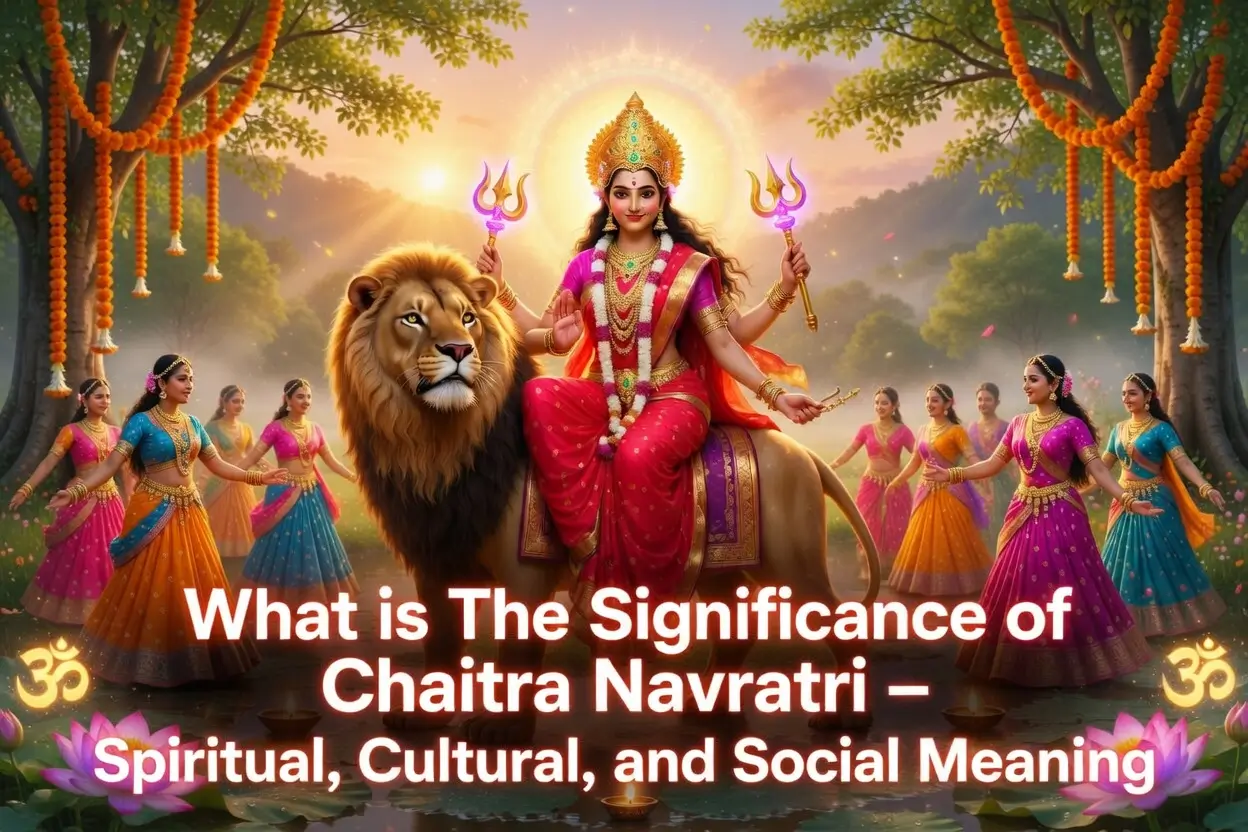
Chaitra Navratri is one of the most important Hindu festivals, celebrated in the month of Chaitra (March–April). It spans nine days and is dedicated to worshipping the nine forms of Goddess Durga (Navdurga). The festival also marks the beginning of the Hindu lunar calendar year and culminates in Rama Navami, the birth anniversary of Lord Rama. Understanding the significance of Chaitra Navratri provides insight into its spiritual, cultural, and social importance.
Religious Significance
- Navdurga Worship: Each day of Chaitra Navratri is dedicated to one form of Goddess Durga, symbolizing different aspects of divine energy—strength, wisdom, compassion, and protection.
- Victory of Good over Evil: The festival commemorates Goddess Durga’s triumph over the demon Mahishasura, reinforcing the eternal message of righteousness.
- Rama Navami: The ninth day celebrates Lord Rama’s birth, linking the festival to ideals of dharma, courage, and devotion.
Spiritual Significance
- Purification of Mind and Body: Fasting and prayers during Navratri help devotees cleanse themselves spiritually and physically.
- Discipline and Devotion: Observing rituals instills self-control, patience, and dedication.
- Connection with Divine Energy: Worshipping Goddess Durga is believed to invoke her blessings for protection, prosperity, and inner strength.
- Renewal of Faith: As it marks the start of the Hindu lunar year, devotees use this time to renew their spiritual commitments.
Cultural Significance
- Regional Variations:
- In North India, rituals include Ghatasthapana (Kalash Sthapana) and recitation of Durga Saptashati.
- In Maharashtra, Chaitra Navratri coincides with Gudi Padwa, the Marathi New Year.
- In South India, it overlaps with Ugadi, the regional New Year.
- Community Bonding: Temples and households organize pujas, bhajans, and cultural programs, fostering unity and shared devotion.
- Traditional Foods: Vrat-friendly dishes like sabudana khichdi, kuttu puri, and singhara atta roti are prepared, adding culinary richness to the festival.
Read more: What to Do in Chaitra Navratri – Rituals, Fasting, and Traditions
Social Significance
- Charity and Service: Acts of kindness, such as offering food, clothes, or donations, are considered highly auspicious.
- Kanya Pujan: On Ashtami or Navami, young girls are worshipped as embodiments of Goddess Durga, symbolizing purity and divine energy.
- New Beginnings: As it marks the start of the Hindu lunar year, many people begin new ventures during Chaitra Navratri, believing it to be an auspicious time.
Conclusion
The significance of Chaitra Navratri lies in its blend of spirituality, culture, and social values. It is a time for worshipping Goddess Durga, celebrating Lord Rama’s birth, practicing discipline through fasting, and embracing new beginnings. Beyond rituals, Chaitra Navratri fosters unity, devotion, and renewal, making it one of the most meaningful festivals in the Hindu tradition.

I am Disha Sharma the founder and writer of Great Indian Festival with a passion for storytelling and a dedication to sharing knowledge, I create content that informs, inspires, and connects with readers. My writing reflects creativity, clarity, and a commitment to delivering valuable insights across topics that matter.