|
Getting your Trinity Audio player ready...
|
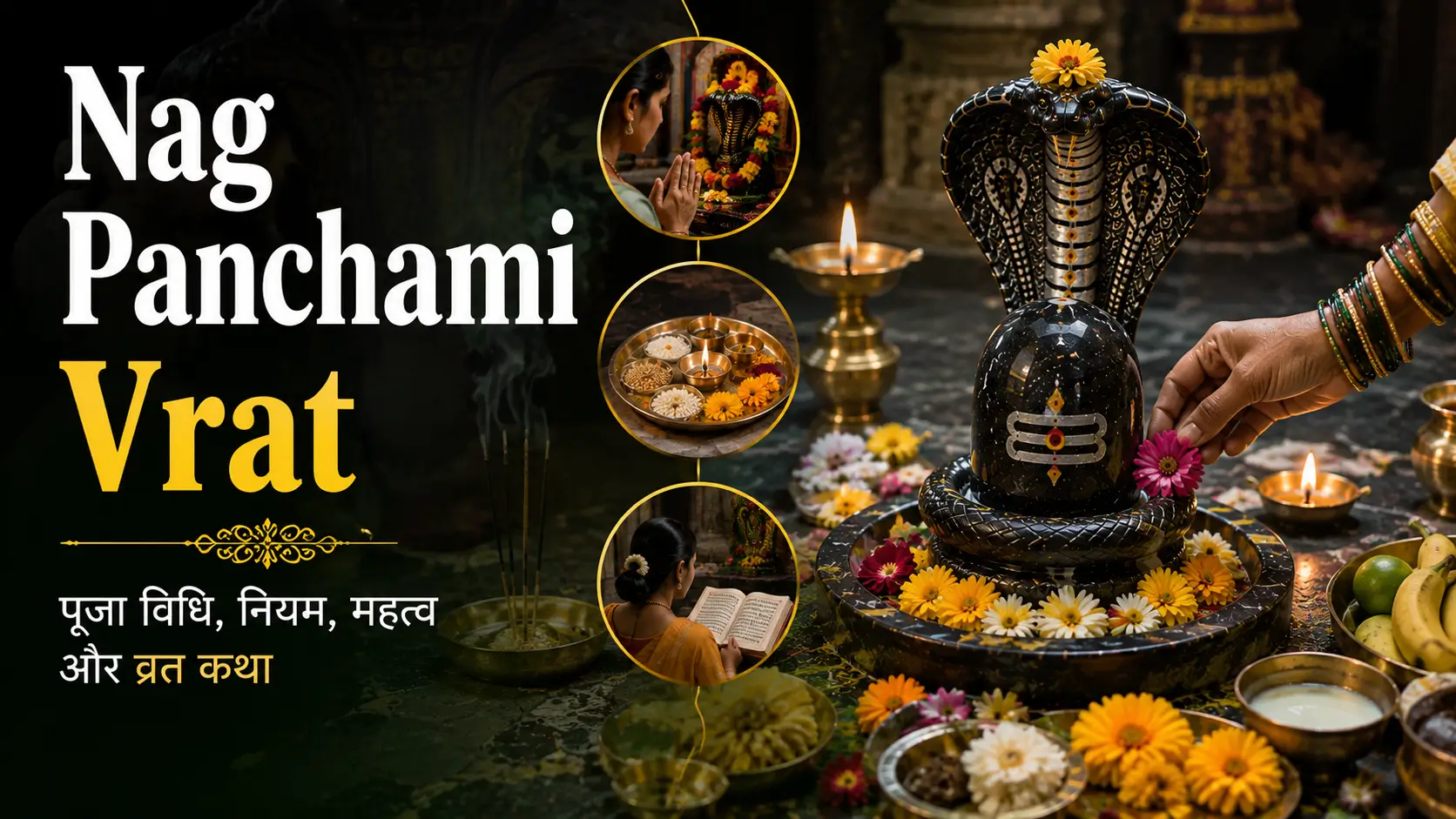
Nag Panchami, observed on the fifth day of the Shravan month, is a sacred festival dedicated to serpent deities, especially Nag Devta. The day is marked by fasting, prayers, and offerings, symbolizing reverence and devotion. Observing the Nag Panchami vrat is considered highly auspicious, as it is believed to remove doshas, shield devotees from negativity, and invite blessings of prosperity and harmony. More than a ritual, the vrat is a spiritual practice that connects worshippers with nature and the divine guardians who protect life and balance in the universe.
As a festival expert, I’ve seen how families prepare for this vrat with devotion — from fasting to offering milk and chanting mantras. The vrat is a blend of discipline, faith, and cultural continuity.
How to Observe Nag Panchami Vrat
1. Preparation
- Wake up early, bathe, and wear clean clothes.
- Clean the puja area and decorate with rangoli.
- Place a serpent idol or draw a symbolic image with turmeric or sandalwood paste.
2. Fasting Rules
- Devotees observe a phalahar vrat — consuming only fruits, milk, and water.
- Avoid grains, pulses, and non-vegetarian food.
- The fast is broken the next morning after puja.
3. Puja Vidhi
- Offer milk, flowers, durva grass, turmeric, and sandalwood to Nag Devta.
- Chant “Om Nagarajaya Namah” and “Om Namah Shivaya.”
- Perform aarti and distribute prasad.
4. Spiritual Significance
- The vrat is believed to remove Kaal Sarp Dosha and Rahu-Ketu effects.
- It symbolizes respect for nature and protection from unseen forces.
- Families pray for fertility, prosperity, and harmony.
Vrat vs Puja
| Aspect | Nag Panchami Vrat | Nag Panchami Puja |
|---|---|---|
| Focus | Fasting, discipline, devotion | Ritual worship, offerings |
| Duration | Sunrise to next morning | Morning puja, aarti |
| Benefits | Relief from doshas, spiritual strength | Divine blessings, prosperity |
Also Read: Nag Panchami Ke Niyam — Rules, Rituals & Spiritual Discipline
FAQs
Q1: Is fasting compulsory on Nag Panchami?
Ans: No, but fasting is recommended for spiritual discipline.
Q2: Can women observe Nag Panchami vrat?
Ans: Yes, women can observe the vrat with equal devotion.
Q3: What foods are allowed during the vrat?
Ans: Fruits, milk, water, and simple phalahar items.
Q4: What is the main benefit of Nag Panchami vrat?
Ans: Relief from doshas, protection from negativity, and blessings of prosperity.
Personal Insight as a Festival Expert
Nag Panchami vrat is more than abstaining from food; it is about discipline and devotion. I’ve seen families divide responsibilities — some chant mantras, others prepare offerings, while elders narrate stories of Sheshnag and Vasuki. This collective observance strengthens bonds and keeps traditions alive.
Conclusion
Nag Panchami vrat is a sacred observance blending fasting, devotion, and puja. It is performed with offerings of milk, flowers, and mantras to Nag Devta. Observing the vrat ensures blessings of peace, prosperity, and relief from doshas. It is a festival that connects spirituality with ecology, reminding us of the eternal guardianship of Nag Devta.

I am Disha Sharma the founder and writer of Great Indian Festival with a passion for storytelling and a dedication to sharing knowledge, I create content that informs, inspires, and connects with readers. My writing reflects creativity, clarity, and a commitment to delivering valuable insights across topics that matter.