
|
Getting your Trinity Audio player ready...
|
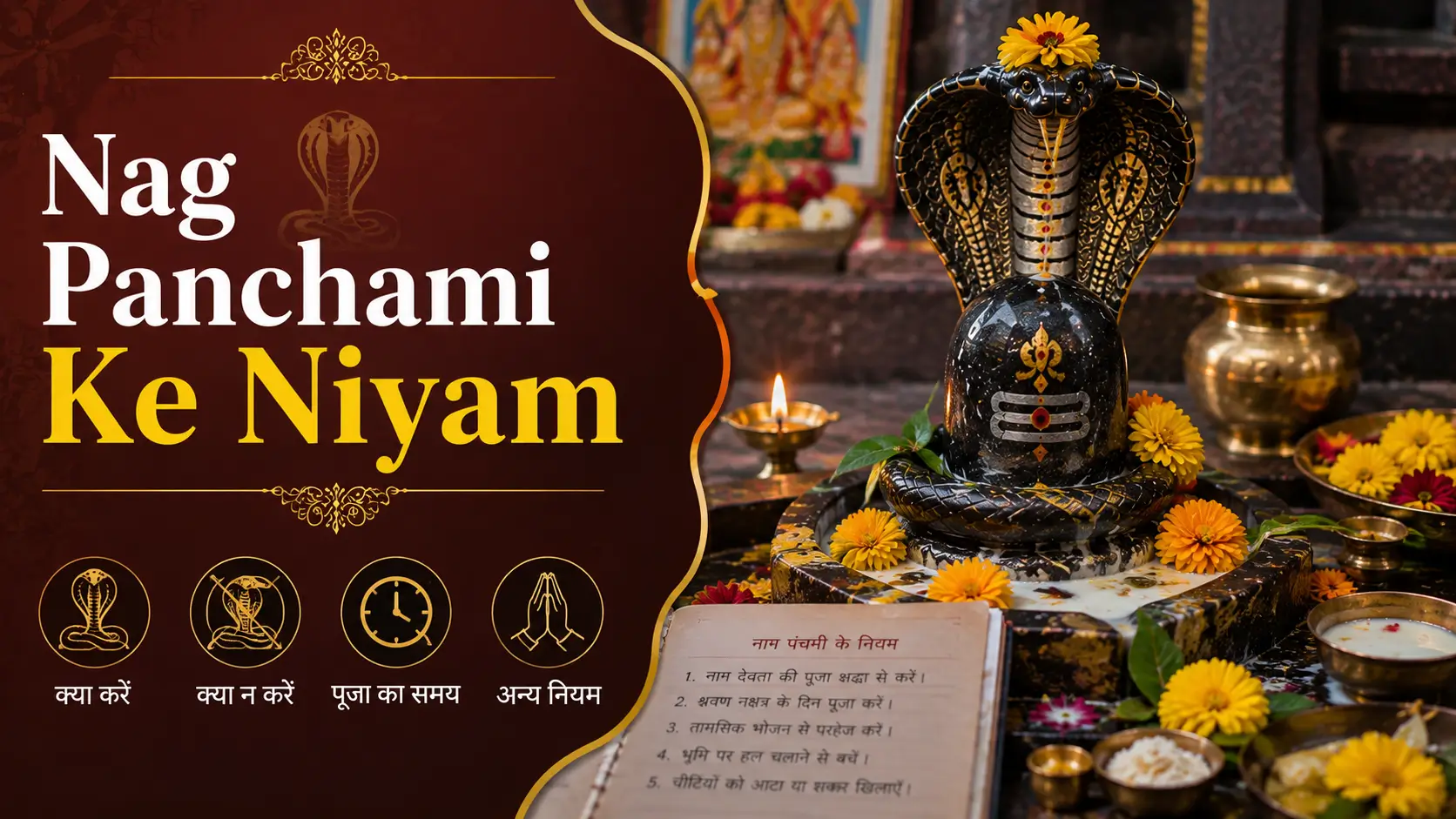
Nag Panchami, observed on the fifth day of Shravan month, is a sacred festival dedicated to serpent deities, especially Nag Devta. It is a day of fasting, prayers, and offerings, where devotees follow certain Nag Panchami ke niyam (rules) to ensure purity, devotion, and spiritual discipline. These niyam are not just ritualistic instructions but cultural practices that preserve harmony between humans and nature. Observing them with sincerity is believed to bring relief from doshas, protection from negativity, and blessings of prosperity.
As a festival expert, I have seen how these rules vary slightly across regions, but the essence remains the same — respect for Nag Devta and devotion to Lord Shiva.
Key Niyam of Nag Panchami
Fasting Rules
- Devotees observe a phalahar vrat — consuming only fruits, milk, and water.
- Avoid grains, pulses, and non-vegetarian food.
- The fast is broken the next morning after puja.
Puja Rules
- Worship Nag Devta idols or symbolic serpent drawings, never live snakes.
- Offer milk, flowers, turmeric, sandalwood, and durva grass.
- Chant mantras like “Om Nagarajaya Namah” and “Om Namah Shivaya.”
Behavioral Rules
- Do not harm snakes or disturb anthills.
- Avoid digging soil on this day, as it may harm serpents.
- Maintain purity in thoughts, words, and actions.
Astrological Rules
- Observing niyam is believed to reduce effects of Kaal Sarp Dosha.
- Chanting Sarpa Sukta and Nag Gayatri Mantra is recommended.
- Devotees pray for relief from Rahu-Ketu influences.
Step-by-Step Observance
- Morning Bath: Begin the day with a purifying bath.
- Clean Puja Area: Decorate with rangoli and place serpent idol or drawing.
- Invocation: Start with Lord Ganesha’s mantra.
- Offerings: Pour milk, offer flowers, turmeric, and sweets.
- Mantra Chanting: Recite Nag Devta mantra 108 times.
- Aarti: Conclude with lamp and incense.
- Prasad: Distribute fruits and sweets among family and devotees.
Also Read: Nag Panchami Puja Kaise Kare — Complete Ritual Guide with Mantras & Offerings
Niyam vs Totke
| Aspect | Nag Panchami Niyam | Nag Panchami Totke |
|---|---|---|
| Focus | Rules of fasting, puja, behavior | Remedies for doshas, prosperity |
| Purpose | Discipline, devotion, purity | Astrological relief, protection |
| Practice | Universal across devotees | Optional, based on belief |
FAQs
Ques1: Are niyam compulsory on Nag Panchami?
Ans: Yes, they are considered essential for observing the vrat with purity.
Ques2: Can women follow Nag Panchami niyam?
Ans: Yes, women observe the same rules with devotion.
Ques3: Why is soil digging avoided?
Ans: To prevent harm to serpents living underground.
Ques4: What is the benefit of following niyam?
Ans: Relief from doshas, protection from negativity, and blessings of prosperity.
Personal Insight as a Festival Expert
In my experience, niyam are the backbone of Nag Panchami. Families follow them with discipline, ensuring that the festival remains pure and spiritually uplifting. I have seen elders narrate stories of serpent deities while children learn the importance of respecting nature. These rules are not restrictions but pathways to devotion and harmony.
Conclusion
Nag Panchami ke niyam are sacred guidelines that ensure the festival is observed with purity, devotion, and respect for nature. They include fasting, puja rituals, behavioral discipline, and astrological remedies. Following these niyam brings peace, prosperity, and divine blessings, making Nag Panchami a festival that blends spirituality with ecological respect.

I am Disha Sharma the founder and writer of Great Indian Festival with a passion for storytelling and a dedication to sharing knowledge, I create content that informs, inspires, and connects with readers. My writing reflects creativity, clarity, and a commitment to delivering valuable insights across topics that matter.