|
Getting your Trinity Audio player ready...
|
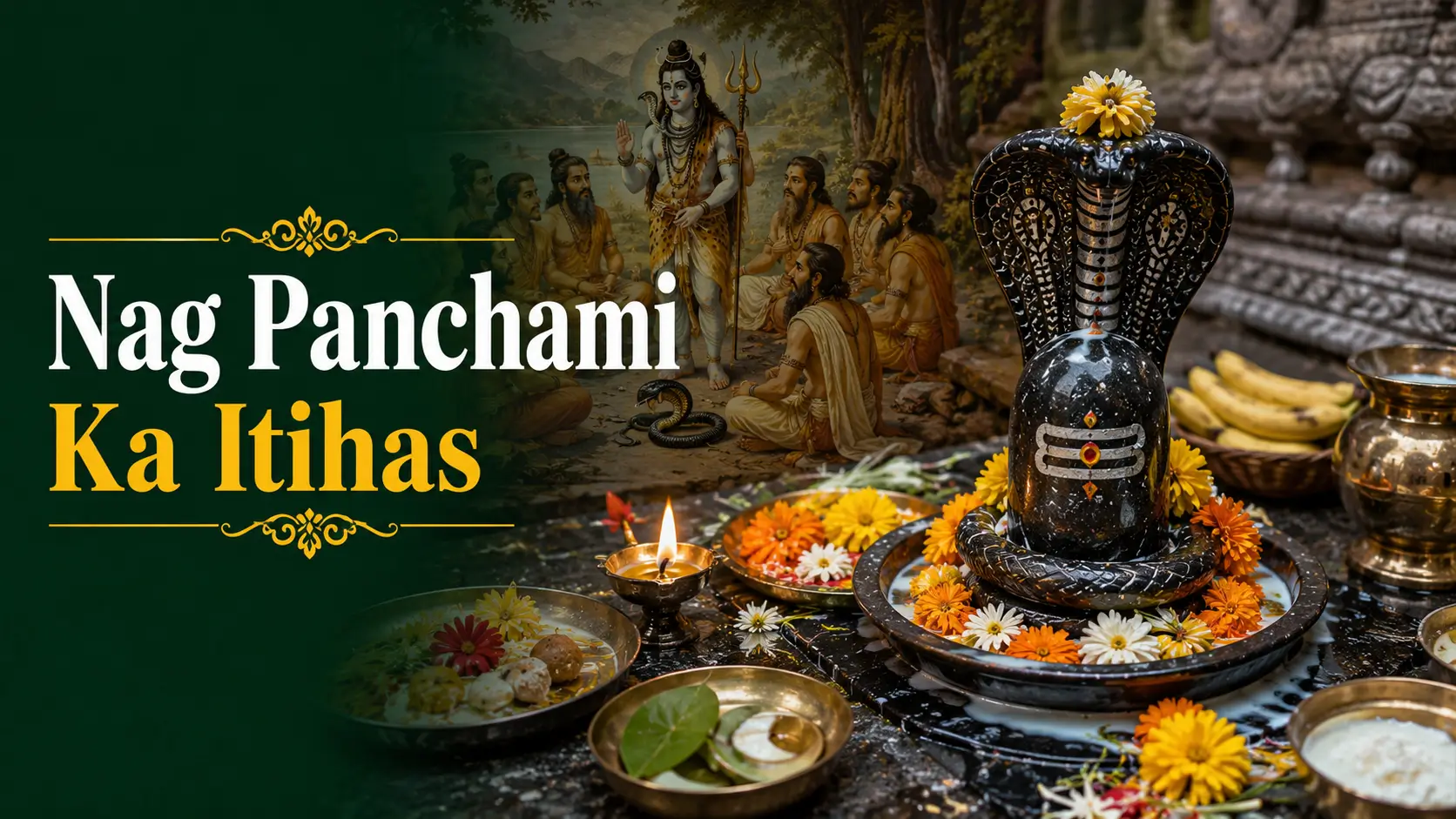
Nag Panchami, celebrated on the fifth day of Shravan month, is one of the most ancient festivals in India. Dedicated to serpent deities, especially Nag Devta, it symbolizes reverence for nature, divine guardianship, and the balance between humans and the environment. The history of Nag Panchami (Nag Panchami ka itihas) is deeply rooted in mythology, folklore, and cultural practices that have evolved over centuries.
As a festival expert, I have seen how this celebration is not just about rituals but about preserving stories and traditions that connect generations. The history of Nag Panchami reflects India’s spiritual depth and ecological wisdom.
Mythological Origins of Nag Panchami
Mahabharata Connection
- The festival is linked to the story of Janamejaya’s snake sacrifice (Sarpa Satra).
- Astika, a Brahmin boy, stopped the sacrifice by invoking Nag Devta, leading to the tradition of worshipping serpents.
Lord Shiva and Serpents
- Serpents are closely associated with Lord Shiva, who wears Vasuki around his neck.
- Worshipping Nag Devta is considered equivalent to honoring Mahadev.
Krishna and Kaliya Naag
- The legend of Krishna subduing Kaliya Naag in the Yamuna river is celebrated during Nag Panchami.
- It symbolizes victory of good over evil and protection of devotees.
Historical Practices
- In ancient times, anthills and serpent burrows were worshipped with milk and flowers.
- Villages drew serpent symbols on walls and performed rituals to honor Nag Devta.
- The festival was seen as a way to respect ecological balance and prevent harm to snakes.
Regional Variations
- North India: Focus on Krishna’s victory over Kaliya Naag.
- South India: Worship of serpent idols in temples and homes.
- Maharashtra: Women draw serpent images on walls and offer turmeric, milk, and flowers.
- Bengal: Rituals linked with fertility and prosperity.
Myth vs Ritual
| Aspect | Mythological Origin | Ritual Practice |
|---|---|---|
| Mahabharata | Astika stopping Sarpa Satra | Worship of Nag Devta |
| Shiva | Serpents as ornaments of Mahadev | Puja with milk and bel leaves |
| Krishna | Subduing Kaliya Naag | Songs and stories of Krishna |
FAQs
Ques1: What is the oldest reference to Nag Panchami?
Ans: The Mahabharata mentions serpent worship linked to Janamejaya’s Sarpa Satra.
Ques2: Why are serpents worshipped?
Ans: They are seen as divine guardians, protectors of fertility, and symbols of ecological balance.
Ques3: Is Nag Panchami only about rituals?
Ans: No, it is also about preserving mythology, respecting nature, and maintaining cultural continuity.
Ques4: How has Nag Panchami evolved?
Ans: From worshipping anthills in villages to digital greetings today, the essence remains devotion and respect.
Also Read: Nag Panchami 32 Shirala — History, Rituals, and Global Fame
Personal Insight as a Festival Expert
Nag Panchami’s history is a living tradition. I have seen families narrate stories of Krishna and Kaliya Naag to children, while elders recall the Mahabharata connection. These stories are not just mythological tales but cultural lessons about respect, protection, and harmony.
Conclusion
Nag Panchami ka itihas is a blend of mythology, devotion, and ecological wisdom. Rooted in stories of Mahabharata, Lord Shiva, and Krishna, the festival has evolved into a cultural practice that continues to inspire devotion and respect for nature. Observing Nag Panchami is not just about rituals but about honoring history, mythology, and the eternal guardianship of Nag Devta.

I am Disha Sharma the founder and writer of Great Indian Festival with a passion for storytelling and a dedication to sharing knowledge, I create content that informs, inspires, and connects with readers. My writing reflects creativity, clarity, and a commitment to delivering valuable insights across topics that matter.