
|
Getting your Trinity Audio player ready...
|
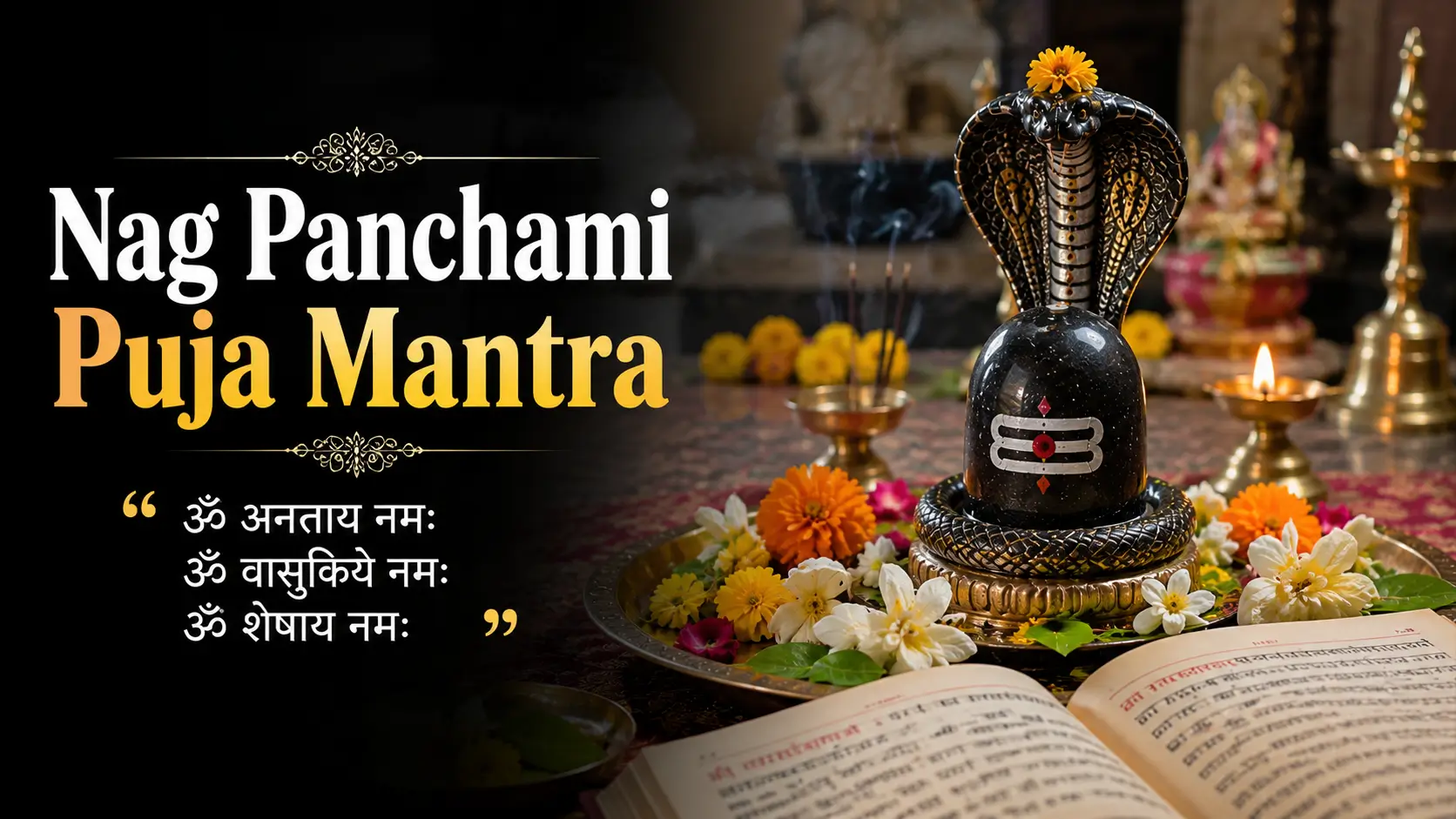
Nag Panchami, celebrated on the fifth day of Shravan month, is a festival dedicated to serpent deities, especially Nag Devta. It is a day of reverence, fasting, and worship, where devotees seek blessings for protection, prosperity, and harmony. Central to the rituals are the Nag Panchami puja mantras, which hold immense spiritual significance. Chanting these mantras during puja is believed to remove doshas, especially Kaal Sarp Dosha, protect against negativity, and strengthen the bond between humans and nature.
As a festival expert, I’ve witnessed how families gather to chant mantras together, creating an atmosphere of devotion and collective energy. These mantras are not just words; they are vibrations that connect devotees with divine guardians.
Importance of Nag Panchami Puja Mantra
- Spiritual Connection: Mantras invoke the blessings of Nag Devta and Lord Shiva.
- Astrological Relief: Chanting mantras is believed to reduce the effects of Rahu-Ketu and Kaal Sarp Dosha.
- Cultural Continuity: They preserve ancient traditions in modern practice.
- Collective Devotion: Families chanting together strengthen community bonds.
Key Nag Panchami Puja Mantras
1. Nag Devta Mantra
“Om Nagarajaya Namah”
- Chanted 108 times during puja.
- Invokes the serpent deity for protection and blessings.
2. Sarpa Sukta
- Ancient Vedic hymn dedicated to serpent deities.
- Recited for harmony and relief from doshas.
3. Nag Gayatri Mantra
“Om Sarpa Devaya Vidmahe, Sarpaya Dhimahi, Tanno Nagah Prachodayat”
- A powerful mantra for invoking divine serpent energy.
- Believed to bring peace and prosperity.
4. Shiva Mantra
“Om Namah Shivaya”
- Continuous chanting throughout the day.
- Strengthens devotion and connects Nag Panchami with Lord Shiva.
Step-by-Step Puja with Mantras
- Preparation: Clean the puja area, place serpent idol or draw symbolic image.
- Invocation: Begin with Lord Ganesha’s mantra to remove obstacles.
- Offerings: Pour milk, offer flowers, turmeric, sandalwood, and durva grass.
- Chanting: Recite Nag Devta mantra, Sarpa Sukta, and Nag Gayatri.
- Aarti: Conclude with lamp and incense, chanting “Om Namah Shivaya.”
- Prasad: Distribute sweets and fruits among family and devotees.
Also Read: Nag Panchami Ke Upay — Remedies, Rituals & Spiritual Significance
Mantras and Their Benefits
| Mantra | Purpose | Benefit |
|---|---|---|
| Om Nagarajaya Namah | Invoke Nag Devta | Protection, blessings |
| Sarpa Sukta | Vedic hymn | Relief from doshas |
| Nag Gayatri | Divine invocation | Peace, prosperity |
| Om Namah Shivaya | Shiva mantra | Spiritual strength, devotion |
FAQs
Ques1: How many times should Nag Devta mantra be chanted?
Ans: Traditionally, 108 times during puja.
Ques2: Can women chant Nag Panchami mantras?
Ans: Yes, women can chant with equal devotion.
Ques3: Are mantras compulsory during puja?
Ans: They are highly recommended, as they enhance the spiritual impact of rituals.
Ques4: What is the most powerful mantra for Nag Panchami?
Ans: Nag Gayatri and Om Namah Shivaya are considered most powerful.
Personal Insight as a Festival Expert
In my experience, chanting mantras during Nag Panchami transforms the atmosphere. Families often divide responsibilities — elders recite Sarpa Sukta, children chant Om Namah Shivaya, while women lead the Nag Gayatri. This collective chanting not only strengthens devotion but also keeps traditions alive across generations.
Conclusion
Nag Panchami puja mantras are the soul of the festival. They invoke divine blessings, remove doshas, and connect devotees with Nag Devta and Lord Shiva. Observing the puja with these mantras ensures peace, prosperity, and spiritual strength. More than rituals, they are vibrations of faith that continue to resonate across time.

I am Disha Sharma the founder and writer of Great Indian Festival with a passion for storytelling and a dedication to sharing knowledge, I create content that informs, inspires, and connects with readers. My writing reflects creativity, clarity, and a commitment to delivering valuable insights across topics that matter.