
|
Getting your Trinity Audio player ready...
|
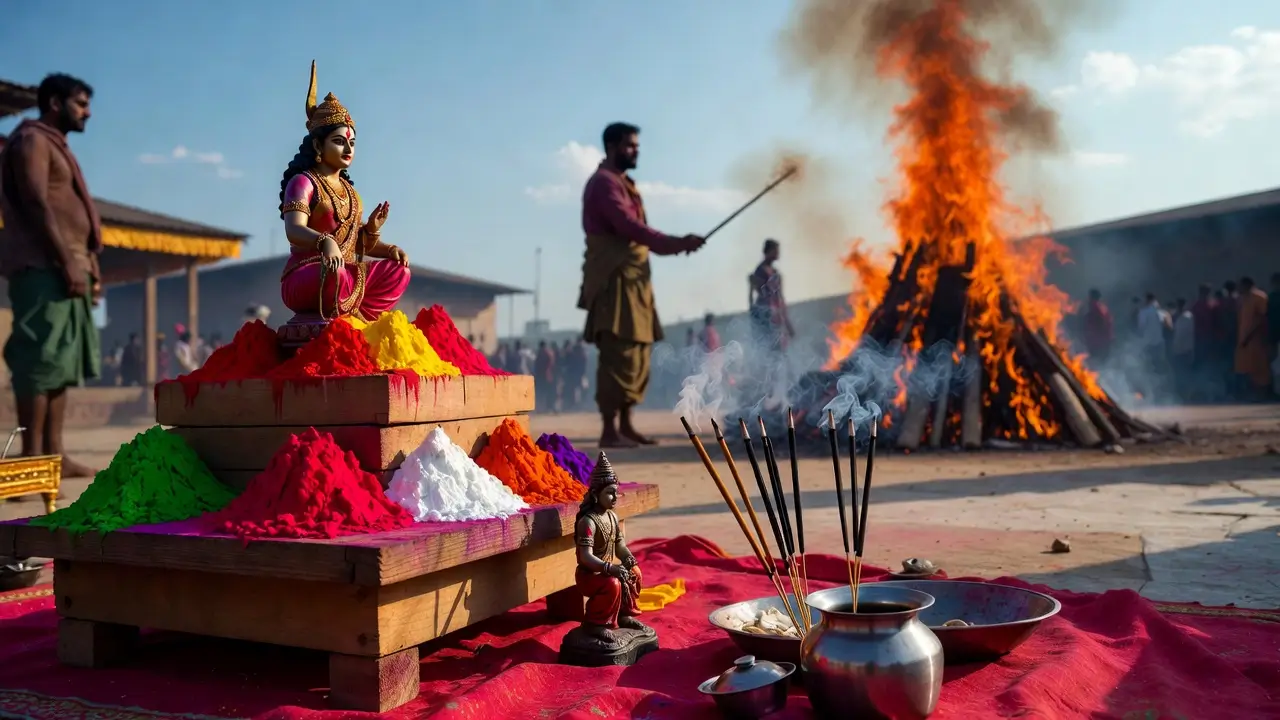
Holika Dahan, celebrated on the eve of Holi, is a sacred ritual symbolizing the victory of good over evil. The bonfire commemorates the story of Prahlad and Holika, reminding devotees of the power of faith and righteousness. To perform this ritual correctly, certain Holika Dahan items are used, each carrying spiritual and cultural importance.
Essential Holika Dahan Items
1. Wood and Twigs
- Used to build the bonfire.
- Symbolize burning negativity, ego, and evil forces.
- Traditionally collected by the community days before the festival.
2. Effigy of Holika
- Made from straw, cloth, or cow dung cakes.
- Represents Holika, the demoness, who was burnt in the fire.
- Placed on the pyre to signify the destruction of evil.
3. Cow Dung Cakes
- Considered pure and eco‑friendly.
- Used as fuel for the fire.
- Symbolize fertility and prosperity.
4. Grains (Barley, Wheat, Lentils)
- Offered into the fire as a symbol of abundance.
- Burning grains is believed to purify and bless the harvest.
5. Coconut
- Represents purity and devotion.
- Offered into the fire to seek blessings for family prosperity.
6. Mustard Seeds and Camphor
- Mustard seeds symbolize protection against evil forces.
- Camphor is used for lighting the fire, representing purity and divine energy.
7. Water and Flowers
- Offered during puja to invoke blessings.
- Flowers symbolize devotion and gratitude.
8. Incense Sticks and Mantras
- Incense purifies the environment.
- Mantras like the Narsimha mantra are recited for spiritual protection.
Cultural Beliefs About Holika Dahan Items
- Each item carries symbolic meaning rooted in tradition.
- Offerings into the fire represent surrendering negativity and inviting positivity.
- Ash collected after the ritual is considered auspicious and used for protection and prosperity.
Holika Dahan Precautions During Pregnancy
- Pregnant women are advised not to attend Holika Dahan due to smoke exposure.
- Elders recommend staying indoors during the ritual for safety.
- Family members can collect the ash and use it symbolically at home.
Holi Rituals and Ash Collection
- Ash is collected after the fire cools down.
- Sprinkled at home entrances for protection.
- Farmers use ash in fields as a natural fertilizer and symbol of prosperity.
Personal Experience
I remember one Holi when our community gathered to prepare the pyre. Each family contributed items—wood, cow dung cakes, grains, and coconuts. My grandmother explained that these offerings were not just ritualistic but symbolic of burning away negativity and inviting blessings. That year, I realized that Holika Dahan items are deeply connected to both spirituality and sustainability.
Conclusion
To perform Holika Dahan, devotees use items like wood, effigies, cow dung cakes, grains, coconuts, mustard seeds, camphor, water, and flowers. Each item carries cultural and spiritual significance, symbolizing purification, protection, and prosperity. By respecting these traditions and using eco‑friendly materials, devotees ensure that Holika Dahan remains both spiritually powerful and environmentally responsible.

I am Disha Sharma the founder and writer of Great Indian Festival with a passion for storytelling and a dedication to sharing knowledge, I create content that informs, inspires, and connects with readers. My writing reflects creativity, clarity, and a commitment to delivering valuable insights across topics that matter.