|
Getting your Trinity Audio player ready...
|
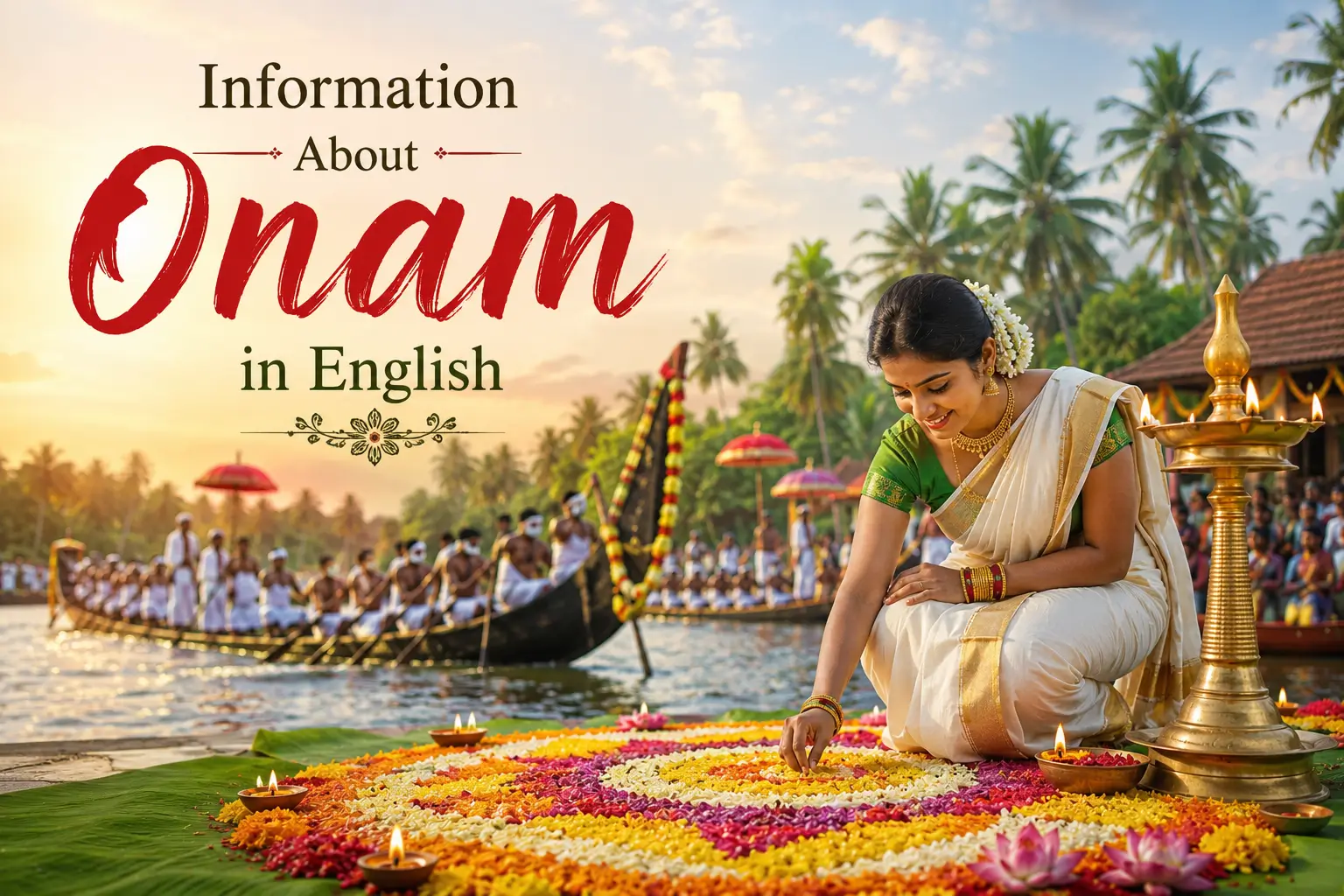
Onam is Kerala’s most celebrated harvest festival, observed annually in the Malayalam month of Chingam (August–September). It is a ten-day festival that blends mythology, agriculture, and cultural traditions. The information about Onam in English reveals its roots in the legend of King Mahabali, its rituals like Sadya and Pookalam, and its cultural practices such as Vallamkali and Pulikali. Onam is not just a festival; it is Kerala’s identity, celebrated across communities with joy and unity.
As a festival expert, I’ve seen how Onam brings families together, inspires cultural programs in schools and offices, and strengthens Kerala’s global cultural presence.
Mythological Background of Onam
King Mahabali
- Mahabali was a benevolent Asura king whose reign symbolized prosperity and equality.
- His popularity worried the Devas, who sought Lord Vishnu’s intervention.
Vamana Avatar
- Vishnu incarnated as Vamana, a dwarf Brahmin.
- He asked Mahabali for three paces of land.
- With cosmic steps, Vamana covered heaven and earth; Mahabali offered his head for the third.
Annual Visit
- Vishnu granted Mahabali’s wish to visit his people once a year.
- This annual visit is celebrated as Onam.
Also Read: Story Behind Onam in Malayalam — King Mahabali & Vamana
Cultural Practices During Onam
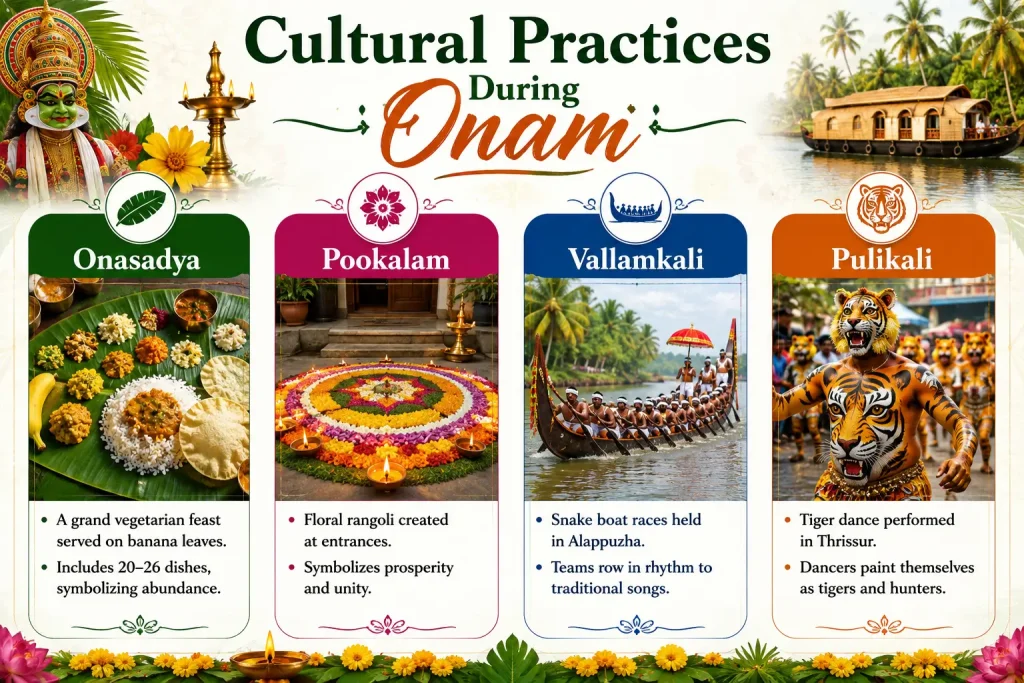
Onasadya
- A grand vegetarian feast served on banana leaves.
- Includes 20–26 dishes, symbolizing abundance.
Pookalam
- Floral rangoli created at entrances.
- Symbolizes prosperity and unity.
Vallamkali
- Snake boat races held in Alappuzha.
- Teams row in rhythm to traditional songs.
Pulikali
- Tiger dance performed in Thrissur.
- Dancers paint themselves as tigers and hunters.
Myth vs Practice
| Aspect | Mythological Story | Onam Practice |
|---|---|---|
| King Mahabali | Golden reign of prosperity | Welcomed annually during Onam |
| Vamana Avatar | Vishnu’s dwarf incarnation | Remembered in rituals |
| Prosperity | Equality and abundance | Sadya feast, floral pookalams |
| Annual Visit | Mahabali’s boon | Ten-day festival celebrations |
FAQs
Ques1: Why is Onam celebrated?
Ans: To honor King Mahabali’s annual visit and Kerala’s harvest season.
Ques2: How long is Onam celebrated?
Ans: Ten days, from Atham to Thiruvonam.
Ques3: Is Onam only a Hindu festival?
Ans: Though rooted in Hindu mythology, it is celebrated across communities as Kerala’s cultural identity.
Ques4: What is the most important day of Onam? Thiruvonam, the tenth day, is considered the most significant.
Personal Insight as a Festival Expert
In my experience, Onam is more than rituals — it is Kerala’s heartbeat. I’ve seen families narrate Mahabali’s story to children, offices organize Sadya for employees, and communities unite in Vallamkali and Pulikali. Onam’s strength lies in its ability to blend mythology, agriculture, and modern celebration seamlessly.
Conclusion
The information about Onam in English reveals its mythological roots, cultural practices, and social significance. From Mahabali’s golden reign to Sadya and Vallamkali, Onam is Kerala’s living heritage. It is a festival of prosperity, unity, and gratitude, celebrated across communities and generations.
I am Disha Sharma the founder and writer of Great Indian Festival with a passion for storytelling and a dedication to sharing knowledge, I create content that informs, inspires, and connects with readers. My writing reflects creativity, clarity, and a commitment to delivering valuable insights across topics that matter.