
|
Getting your Trinity Audio player ready...
|
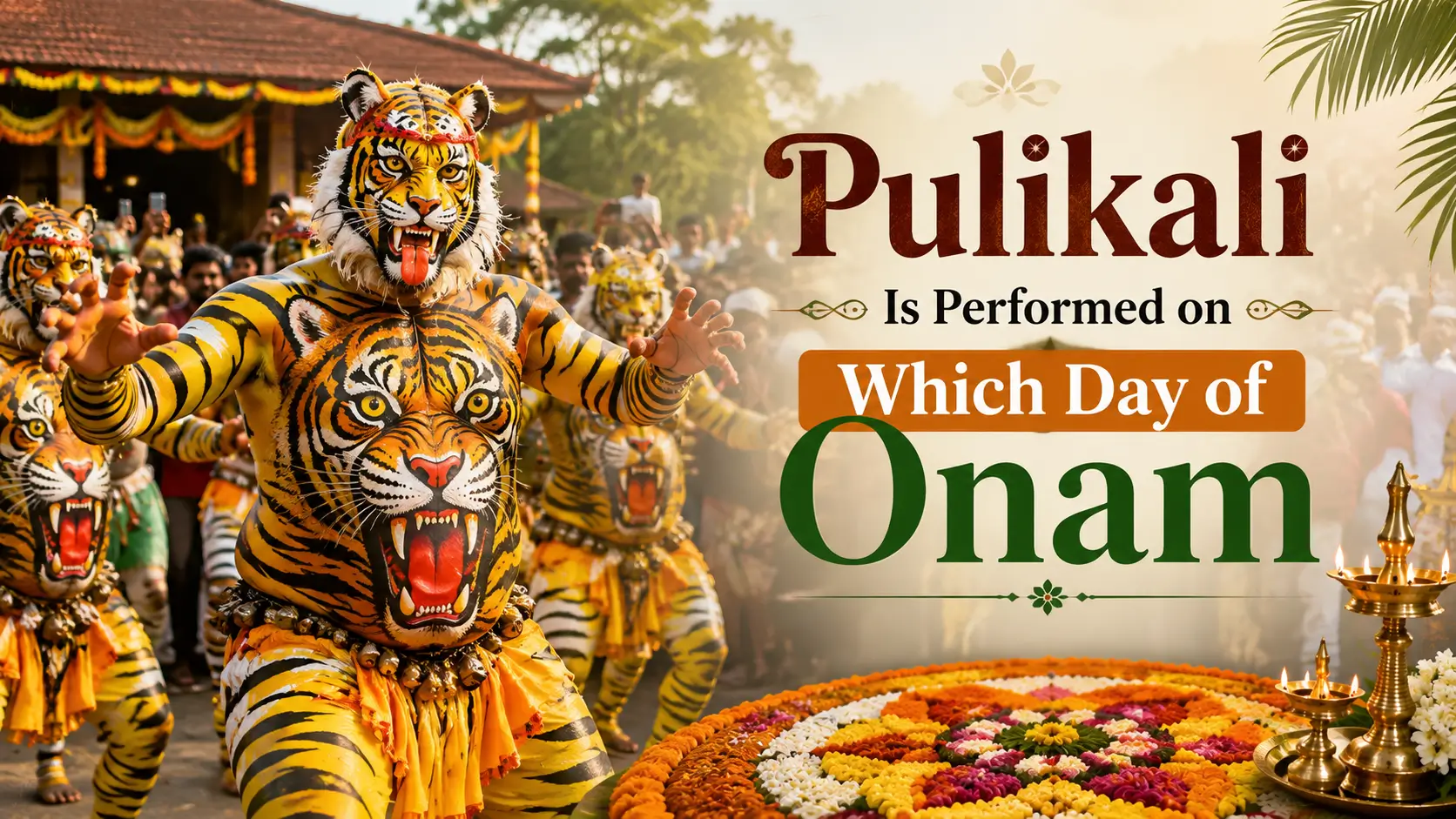
Onam, Kerala’s grand harvest festival, is celebrated with ten days of rituals, feasts, and cultural performances. Among its most striking highlights is Pulikali, the “Tiger Dance,” where performers paint themselves in vivid stripes and dance to the beats of traditional drums. The question often asked is: Pulikali is performed on which day of Onam? The answer is clear — Pulikali takes place on the fourth day of Onam (Naalaam Onam), primarily in Thrissur, making it one of the most awaited spectacles of the season.
As someone who has witnessed this tradition firsthand, I can say Pulikali is not just a performance but a living folk art that embodies Kerala’s spirit of community, rhythm, and color.
Pulikali and Its Timing
- Day of Performance: Fourth day of Onam (Naalaam Onam).
- Location: Swaraj Round, Thrissur, Kerala.
- Time: Afternoon to late evening, with processions starting around 4:30 PM.
- Significance: Marks the climax of Onam celebrations in Thrissur, even after other regions conclude festivities.
What Happens During Pulikali
- Body Painting: Performers paint themselves in tiger stripes of yellow, red, and black.
- Dance & Music: Dancers move to the beats of chenda, thakil, and udukku.
- Themes: Tiger hunting scenes enacted by performers playing both tigers and hunters.
- Community Participation: Troupes from different localities (deshams) compete, each fielding 35–50 performers.
Historical Background
- Origins: Pulikali dates back over 200 years, believed to have started under Maharaja Rama Varma Sakthan Thampuran of Cochin.
- Purpose: Designed as a folk art to entertain people during Onam.
- Cultural Roots: Reflects Kerala’s tradition of blending art, community, and devotion.
Pulikali vs Other Onam Highlights
| Event | Day of Onam | Main Attraction | Location |
|---|---|---|---|
| Pulikali | Fourth day | Tiger dance, body painting, percussion | Thrissur |
| Onam Sadya | All days, esp. Thiruvonam | Traditional vegetarian feast | Homes & temples |
| Vallamkali | Around Onam week | Snake boat races | Alappuzha & nearby rivers |
| Athachamayam | First day | Procession with folk art | Tripunithura |
Also Read: History of Onam in Kerala — Mythology, Agriculture & Cultural Evolution
FAQs
Ques1: On which day of Onam is Pulikali performed?
Ans: On the fourth day of Onam (Naalaam Onam).
Ques2: Where is Pulikali most famous?
Ans: Thrissur, Kerala, especially at Swaraj Round.
Ques3: How many performers take part?
Ans: Each troupe has 35–50 performers; overall, 350–400 “tigers” may participate.
Ques4: What makes Pulikali unique?
Ans: The combination of elaborate body painting, tiger hunting enactments, and traditional percussion music.
Personal Insight as a Festival Expert
Pulikali is more than a dance; it is Kerala’s heartbeat during Onam. I have seen Thrissur transform into a roaring jungle of stripes and drums, with families lining the streets to cheer their local troupe. The artistry of painting, the rhythm of drums, and the collective energy make Pulikali a cultural spectacle that embodies the joy of Onam.
Conclusion
Pulikali is performed on the fourth day of Onam, making Thrissur the cultural capital of Kerala during this time. It is a festival of color, rhythm, and tradition, where tiger dancers and drummers create an unforgettable spectacle. Pulikali is not just entertainment but a celebration of Kerala’s heritage, community spirit, and devotion.

I am Disha Sharma the founder and writer of Great Indian Festival with a passion for storytelling and a dedication to sharing knowledge, I create content that informs, inspires, and connects with readers. My writing reflects creativity, clarity, and a commitment to delivering valuable insights across topics that matter.