|
Getting your Trinity Audio player ready...
|
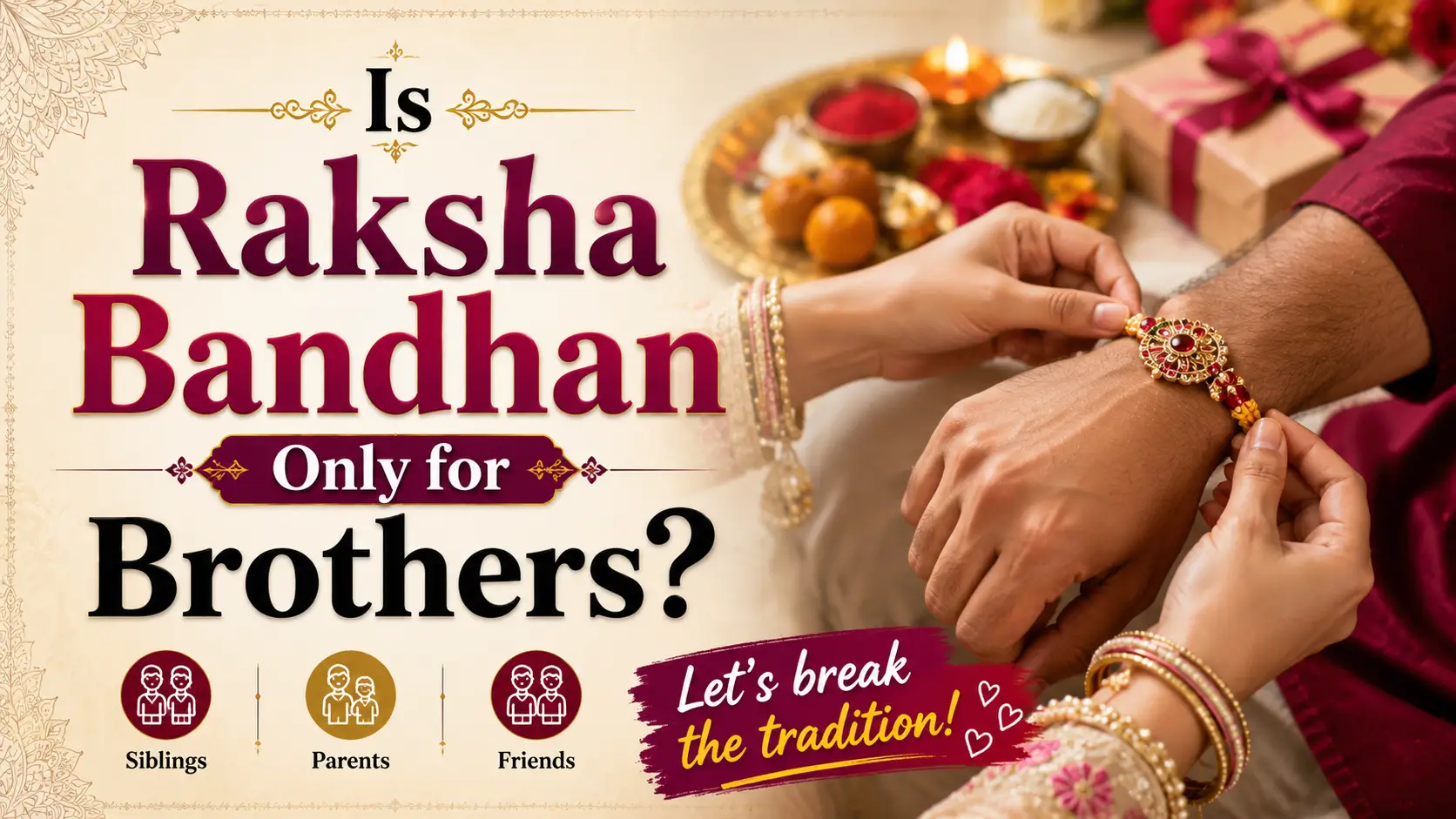
Raksha Bandhan is widely recognized as a festival where sisters tie a rakhi on their brothers’ wrists, symbolizing love and protection. But the deeper question often arises: is Raksha Bandhan only for brothers? The answer lies in its rich history and evolving cultural practices. While the brother-sister bond is central, Raksha Bandhan extends beyond blood relations, encompassing spiritual, social, and even political ties.
As a festival expert, I’ve seen Raksha Bandhan celebrated in diverse ways — sisters tying rakhis to cousins, friends, mentors, and even soldiers. This inclusivity reflects the festival’s essence: protection, respect, and unity.
Historical and Religious Context
Indra and Śacī
- In the Bhavishya Purana, Indra’s wife tied a protective thread on his wrist before battle.
- This shows Raksha Bandhan was not limited to siblings but symbolized divine safeguarding.
Krishna and Draupadi
- Draupadi tied a strip of cloth to Krishna’s finger, and he vowed lifelong protection.
- This bond was not of siblings but of devotion and duty.
Lakshmi and King Bali
- Goddess Lakshmi tied a rakhi to King Bali, creating a bond of obligation.
- Again, this was beyond the brother-sister relationship.
Modern Interpretations
Beyond Brothers
- Sisters tie rakhis to cousins, friends, and mentors.
- Women tie rakhis to soldiers, symbolizing gratitude and protection.
Social Bonds
- Raksha Bandhan is used to strengthen community ties.
- In some regions, priests tie rakhis to devotees, symbolizing spiritual safeguarding.
Gender Neutrality
- Today, sisters also receive promises of protection from sisters or female friends.
- The festival is evolving into a celebration of mutual respect and care.
Also Read: Brother Promise to Sister on Raksha Bandhan — Protection, Duty & Respect
Traditional vs Modern Practice
| Aspect | Traditional View | Modern Practice |
|---|---|---|
| Relationship | Sister and brother | Cousins, friends, mentors, soldiers |
| Symbolism | Brother’s vow of protection | Mutual respect and safeguarding |
| Ritual | Rakhi tied on brother’s wrist | Rakhi tied across genders and relations |
| Scope | Family-centered | Community and society-centered |
FAQs
Ques1: Is Raksha Bandhan restricted to brothers?
Ans: No, it extends to cousins, friends, mentors, and even soldiers.
Ques2: Can sisters tie rakhis to sisters?
Ans: Yes, in modern practice, sisters tie rakhis to sisters or female friends as a symbol of care.
Ques3: What is the deeper meaning of Raksha Bandhan?
Ans: It symbolizes protection, unity, and respect, transcending blood relations.
Ques4: How is Raksha Bandhan celebrated in communities?
Ans: Priests tie rakhis to devotees, and women tie rakhis to soldiers, reflecting broader social bonds.
Personal Insight as a Festival Expert
In my experience, Raksha Bandhan is evolving beautifully. I’ve seen sisters tie rakhis to cousins, friends, and even teachers. In villages, women tie rakhis to farmers and soldiers, acknowledging their role in safeguarding society. The festival’s essence lies not in limiting it to brothers but in celebrating bonds of protection and respect across relationships.
Conclusion
So, is Raksha Bandhan only for brothers? The answer is no. While the brother-sister bond remains central, Raksha Bandhan transcends family boundaries. It is a festival of protection, unity, and respect, celebrated across genders, communities, and professions. This inclusivity makes Raksha Bandhan timeless, relevant, and deeply meaningful.
I am Disha Sharma the founder and writer of Great Indian Festival with a passion for storytelling and a dedication to sharing knowledge, I create content that informs, inspires, and connects with readers. My writing reflects creativity, clarity, and a commitment to delivering valuable insights across topics that matter.
1 thought on “Is Raksha Bandhan Only for Brothers? — Tradition & Modern Meaning”