
|
Getting your Trinity Audio player ready...
|
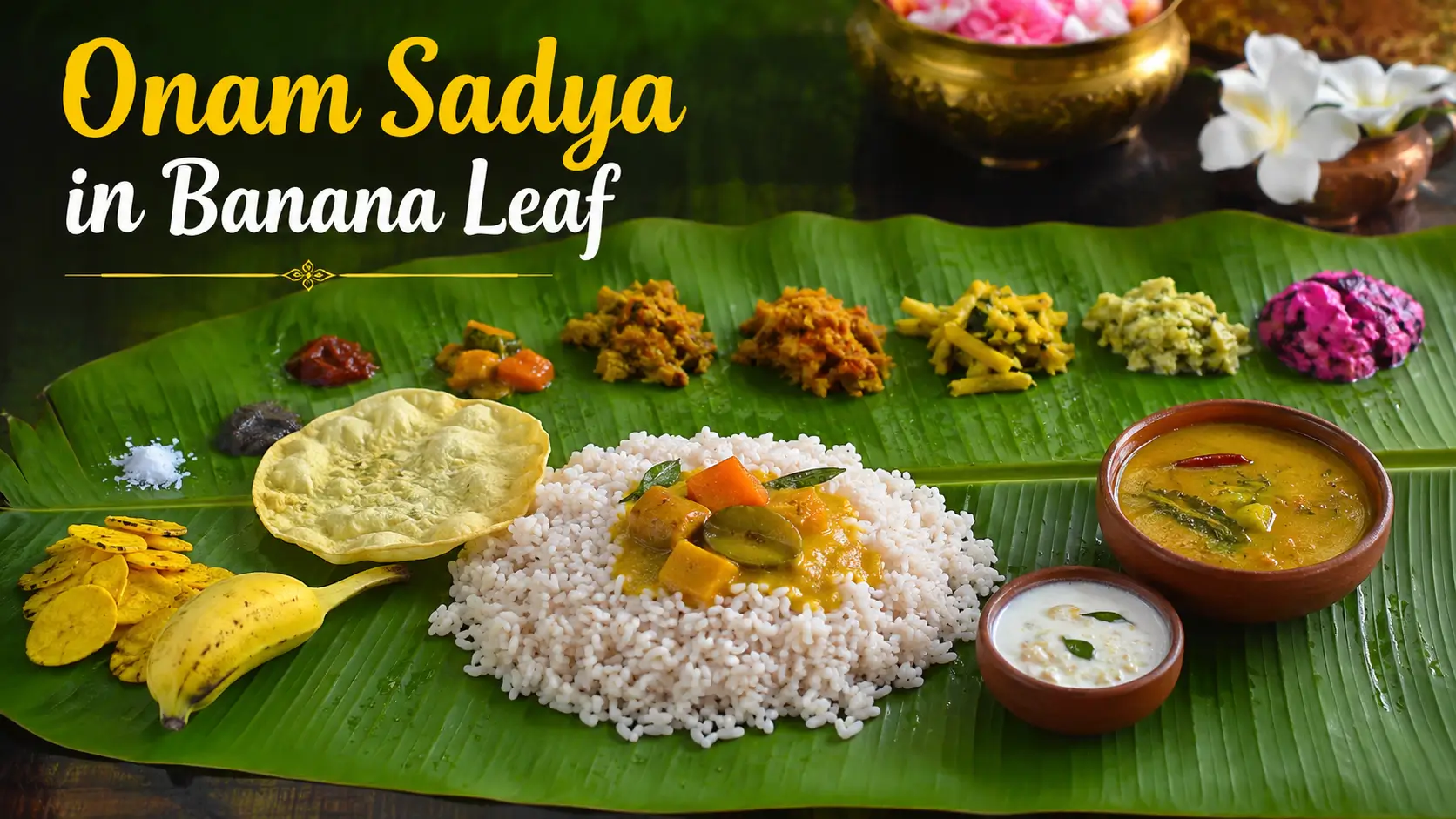
Onam, Kerala’s harvest festival, is incomplete without the grand Onam Sadya — a traditional vegetarian feast served on a banana leaf. More than just food, Sadya is a cultural symbol of abundance, gratitude, and community. The practice of serving Sadya on banana leaves reflects Kerala’s ecological wisdom, culinary heritage, and spiritual values.
As a festival expert, I’ve seen how families, offices, and communities prepare Sadya with devotion, ensuring every dish is placed in its rightful spot on the leaf. The experience of eating Sadya is as much about ritual as it is about taste.
Why Banana Leaf for Onam Sadya?
Eco-Friendly Tradition
- Banana leaves are biodegradable and sustainable.
- They add a subtle aroma to food.
Cultural Symbolism
- Represents prosperity and purity.
- Associated with rituals and temple offerings.
Health Benefits
- Banana leaves contain polyphenols with antioxidant properties.
- Hot food releases natural flavors from the leaf.
Placement of Dishes on Banana Leaf
Traditionally, each dish has a designated spot:
- Top Left: Pickles, salt, banana chips, sharkara upperi (jaggery-coated chips).
- Top Center: Thoran, avial, olan, mezhukkupuratti.
- Top Right: Pachadi, kichadi, erissery.
- Bottom Center: Rice with sambar, rasam, and parippu curry.
- Bottom Right: Payasam (dessert).
This arrangement ensures balance of flavors — sweet, sour, salty, bitter, and spicy.
Sadya in Banana Leaf vs Plate
| Aspect | Banana Leaf Sadya | Plate Sadya |
|---|---|---|
| Eco-Friendliness | 100% biodegradable | Reusable but less natural |
| Flavor | Leaf adds aroma | Neutral taste |
| Tradition | Deeply rooted in Kerala culture | Modern adaptation |
| Experience | Authentic and festive | Practical convenience |
FAQs
Ques1: Why is Sadya served on banana leaves?
Ans: For tradition, eco-friendliness, and added flavor.
Ques2: Can Sadya be served on plates?
Ans: Yes, but banana leaves are preferred for authenticity.
Ques3: How many dishes are in a Sadya?
Ans: Typically 20–26 dishes, depending on region and family tradition.
Ques4: Is Sadya only for Onam?
Ans: No, it is also served at weddings, temple feasts, and festivals.
Personal Insight as a Festival Expert
In my experience, eating Sadya on a banana leaf is a sensory journey. The aroma of hot sambar mixing with the leaf, the crunch of chips, and the sweetness of payasam create a harmony that no plate can replicate. Families often gather around long rows of banana leaves, symbolizing unity and abundance.
Conclusion
Onam Sadya in banana leaf is more than a meal — it is Kerala’s cultural heritage served with devotion. From eco-friendly tradition to culinary artistry, the banana leaf transforms Sadya into a spiritual and festive experience. Observing this practice keeps Kerala’s timeless values alive, making Onam a celebration of both taste and tradition.

I am Disha Sharma the founder and writer of Great Indian Festival with a passion for storytelling and a dedication to sharing knowledge, I create content that informs, inspires, and connects with readers. My writing reflects creativity, clarity, and a commitment to delivering valuable insights across topics that matter.