|
Getting your Trinity Audio player ready...
|
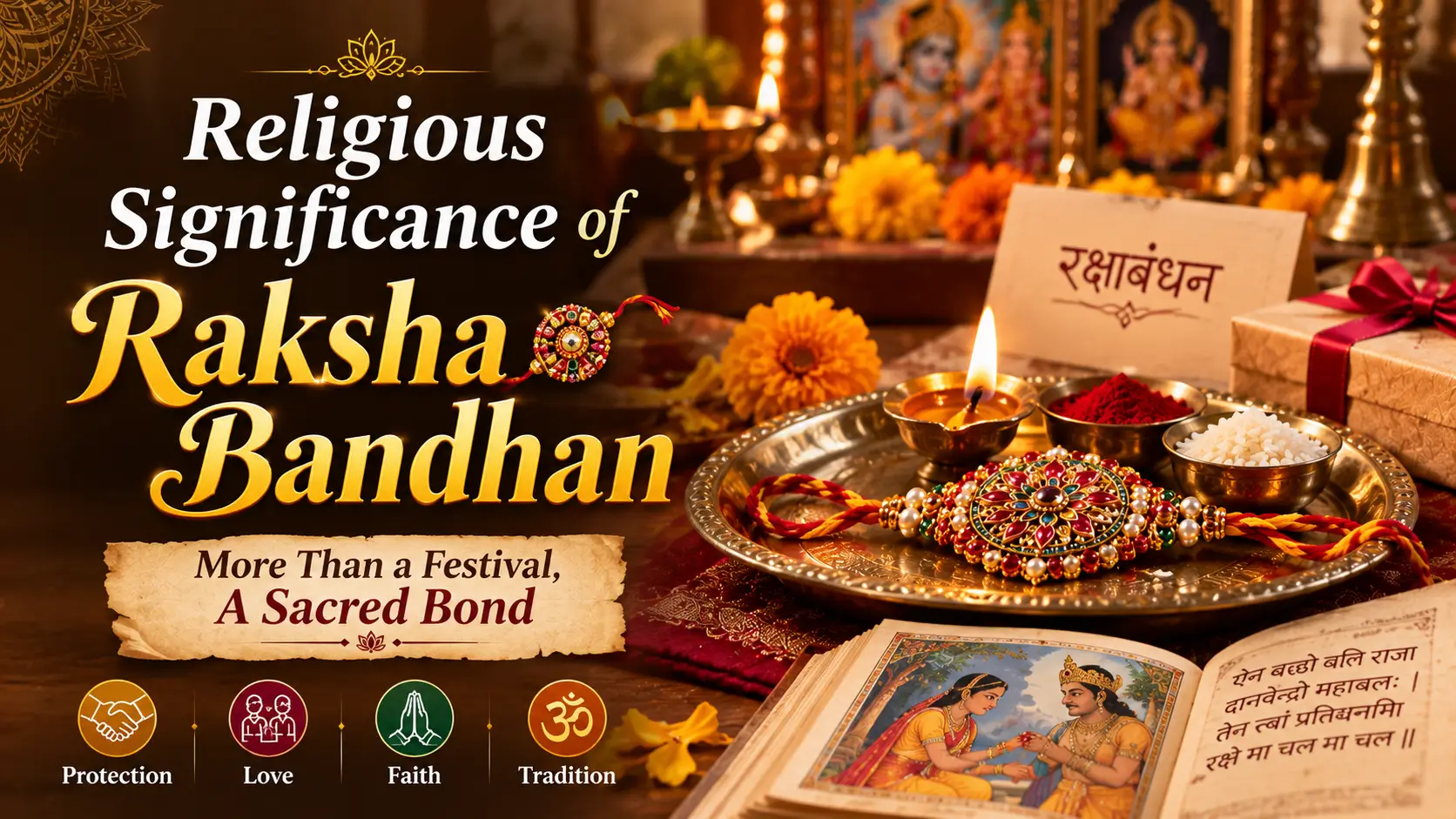
Raksha Bandhan, often celebrated as a festival of sibling love, carries profound religious significance in Hindu tradition. Beyond the tying of a rakhi, it is rooted in Vedic rituals, Puranic legends, and spiritual symbolism. The sacred thread represents protection, duty, and divine grace, making Raksha Bandhan not just a social celebration but a spiritual observance.
As a festival expert, I’ve witnessed how families narrate these stories during Raksha Bandhan, reminding children that the ritual is more than a bond of affection — it is a sacred vow of protection and dharma.
Vedic and Scriptural Roots
Protective Thread in Vedas
- The Atharva Veda mentions rakṣā-sūtra, protective threads tied to ward off evil.
- These threads were believed to invoke divine safeguarding.
Bhavishya Purana Reference
- Narrates how Indra’s wife Śacī tied a sacred thread on his wrist before battle.
- The rakhi empowered Indra to defeat the demon Vṛtra.
Sacred Thread Ceremony
- Raksha Bandhan coincides with Śrāvaṇa Pūrṇimā, when Brahmins renew their sacred thread (yajñopavīta).
- This connects Raksha Bandhan to spiritual purification and continuity of Vedic learning.
Mythological Narratives
Indra and Śacī
Śacī tied a rakhi to Indra, symbolizing divine protection during his battle with Vṛtra.
Krishna and Draupadi
Draupadi bound Krishna’s bleeding finger with her sari. In return, Krishna vowed lifelong protection, later saving her during the disrobing episode.
Lakshmi and King Bali
Lakshmi tied a rakhi to King Bali, creating a bond of obligation. This led to Vishnu’s release from Bali’s service, symbolizing devotion and duty.
Yama and Yamuna
Yamuna tied a rakhi to her brother Yama, who granted her immortality. He declared that brothers who honor rakhi would live long.
Also Read: Raksha Bandhan Importance in English | Tradition, Culture & Values
Religious Significance
- Protection: The rakhi is a talisman invoking divine safeguarding.
- Duty (Dharma): Brothers pledge lifelong protection, embodying righteousness.
- Unity: Historically, rakhis were tied to kings, priests, and allies, symbolizing social bonds.
- Spiritual Renewal: Raksha Bandhan coincides with Upakarma, marking renewal of sacred learning.
Ritual vs Symbolism
| Aspect | Ritual Practice | Religious Symbolism |
|---|---|---|
| Rakhi Thread | Sister ties on brother’s wrist | Protective talisman, divine grace |
| Brother’s Role | Offers gifts, pledges protection | Duty, dharma, lifelong safeguarding |
| Priest Ritual | Sacred thread renewal | Spiritual purification, Vedic continuity |
| Legends | Indra, Krishna, Lakshmi, Yama | Divine protection, moral obligation |
FAQs
Ques1: Is Raksha Bandhan only about siblings?
Ans: No, historically rakhis were tied to kings, priests, and allies, symbolizing protection and unity.
Ques2: Why is Raksha Bandhan celebrated on Śrāvaṇa Pūrṇimā?
Ans: It aligns with Vedic rituals of sacred thread renewal and mythological victories.
Ques3: What is the deeper philosophy of Raksha Bandhan?
Ans: It consecrates human relationships into channels of divine grace through duty and protection.
Ques4: Does Raksha Bandhan have regional variations?
Ans: Yes, in different parts of India, Raksha Bandhan is linked to local legends and rituals, but the core symbolism of protection remains.
Personal Insight as a Festival Expert
In my experience, Raksha Bandhan’s religious depth often surprises those who see it only as a sibling festival. The stories of Indra, Krishna, and Lakshmi show that rakhi is a sacred bond of protection, extending beyond family to society and spirituality. When sisters tie rakhi, they invoke divine safeguarding, and brothers accept a lifelong dharmic responsibility.
Conclusion
The religious significance of Raksha Bandhan lies in its Vedic origins, Puranic legends, and ritual practices. It is a festival of protection, duty, and divine grace, reminding us that relationships consecrated through ritual become sacred bonds. Raksha Bandhan is not just about siblings — it is about safeguarding values of unity, dharma, and devotion.
I am Disha Sharma the founder and writer of Great Indian Festival with a passion for storytelling and a dedication to sharing knowledge, I create content that informs, inspires, and connects with readers. My writing reflects creativity, clarity, and a commitment to delivering valuable insights across topics that matter.
1 thought on “Religious Significance of Raksha Bandhan — Vedic Roots & Mythological Stories”