
|
Getting your Trinity Audio player ready...
|
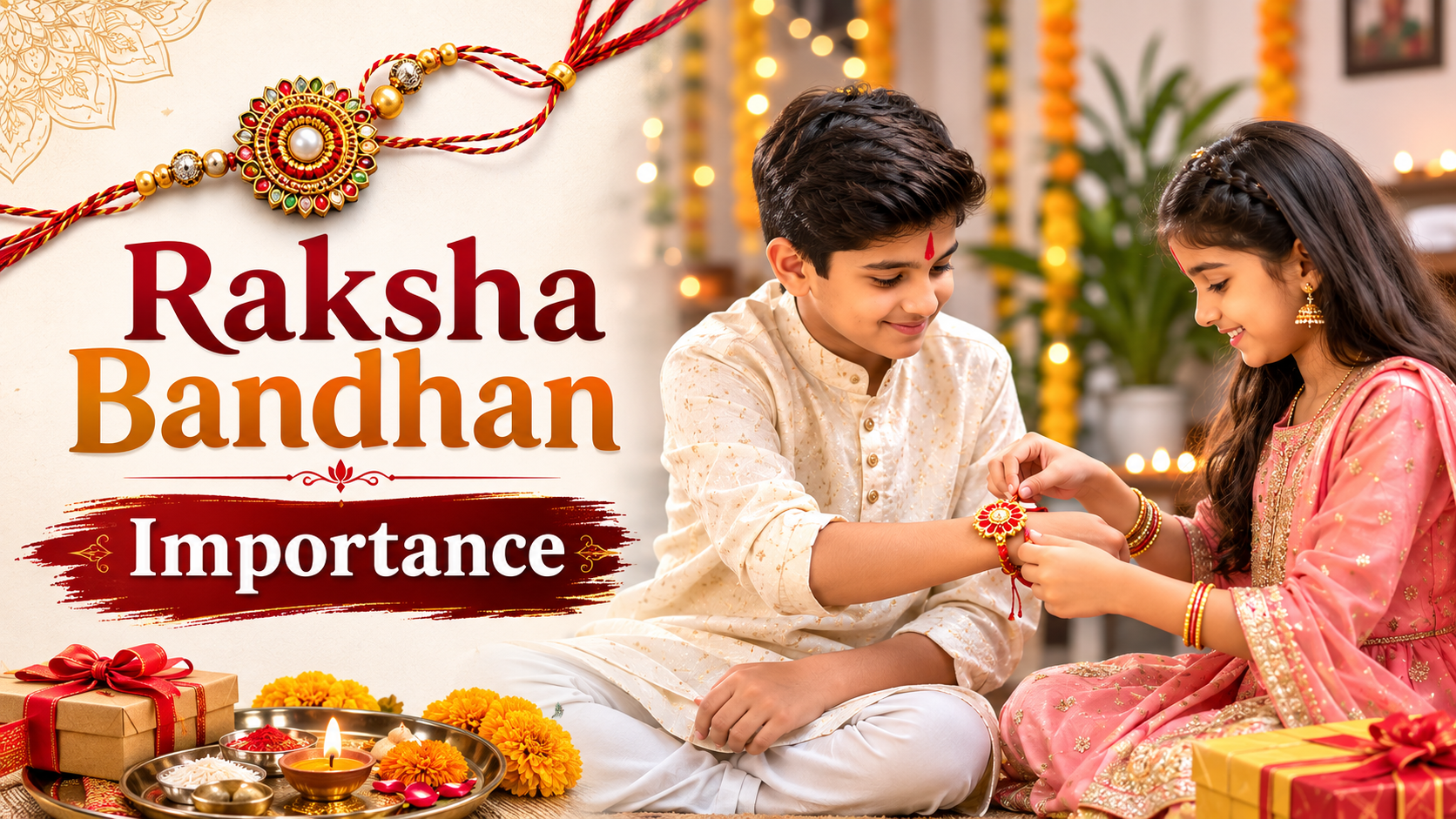
Raksha Bandhan is one of India’s most cherished festivals, celebrated on the full moon day of Shravana month (August). The name itself means “bond of protection.” Traditionally, sisters tie a rakhi (sacred thread) on their brothers’ wrists, and brothers promise lifelong protection. But the importance of Raksha Bandhan in English goes far beyond ritual — it embodies values of love, duty, respect, and unity.
As a festival expert, I’ve seen how Raksha Bandhan strengthens family ties, inspires cultural pride, and extends into social and spiritual dimensions.
Religious Importance
Vedic Roots
- The Atharva Veda mentions protective threads (rakṣā-sūtra) tied to ward off evil.
- Raksha Bandhan coincides with Upakarma, when Brahmins renew their sacred thread, linking the festival to spiritual purification.
Mythological Stories
- Indra and Śacī: Śacī tied a protective thread on Indra’s wrist before his battle with Vṛtra.
- Krishna and Draupadi: Draupadi tied a strip of cloth to Krishna’s finger, leading to his vow of lifelong protection.
- Lakshmi and King Bali: Lakshmi tied rakhi to Bali, symbolizing devotion and duty.
- Yama and Yamuna: Yamuna tied rakhi to Yama, who granted her immortality.
Cultural Importance
Family Bonds
- Sisters pray for their brothers’ well-being.
- Brothers reaffirm their role as protectors and supporters.
Community Bonds
- Priests tie rakhis to devotees, symbolizing spiritual safeguarding.
- Women tie rakhis to soldiers, expressing gratitude for protection.
Social Unity
- Raksha Bandhan transcends caste and religion.
- It is celebrated across communities as a symbol of unity and respect.
Emotional Importance
- Trust: The rakhi represents a bond of trust between siblings.
- Care: Sisters express love and prayers for their brothers.
- Respect: Brothers honor their sisters’ individuality and dignity.
- Gratitude: The festival reminds families to value relationships.
Also Read: About Raksha Bandhan in Kannada — Tradition, Rituals & Significance
Importance of Raksha Bandhan
| Aspect | Religious Importance | Cultural Importance | Emotional Importance |
|---|---|---|---|
| Ritual | Protective thread, Upakarma | Rakhi tying, gifts | Bond of love and trust |
| Mythology | Indra, Krishna, Lakshmi, Yama | Family and community rituals | Respect and gratitude |
| Symbolism | Divine safeguarding | Social unity | Emotional connection |
FAQs
Ques1: Why is Raksha Bandhan important?
Ans: It symbolizes protection, duty, respect, and unity.
Ques2: Is Raksha Bandhan only for brothers?
Ans: No, it extends to cousins, friends, mentors, and even soldiers.
Ques3: What is the religious link of Raksha Bandhan?
Ans: It coincides with Upakarma and is rooted in Vedic and Puranic traditions.
Ques4: How does Raksha Bandhan strengthen families?
Ans: By reinforcing bonds of trust, care, and respect between siblings.
Personal Insight as a Festival Expert
In my experience, Raksha Bandhan is more than a ritual. I’ve seen sisters prepare homemade sweets, brothers reaffirm vows of protection, and communities celebrate unity. The festival’s importance lies in its ability to blend mythology, family rituals, and social bonds into a timeless tradition.
Conclusion
The importance of Raksha Bandhan in English lies in its religious roots, cultural practices, and emotional values. It is a festival of protection, duty, respect, and unity, reminding us that relationships consecrated through ritual become sacred bonds. Raksha Bandhan is not just about siblings — it is about safeguarding values that transcend time.
I am Disha Sharma the founder and writer of Great Indian Festival with a passion for storytelling and a dedication to sharing knowledge, I create content that informs, inspires, and connects with readers. My writing reflects creativity, clarity, and a commitment to delivering valuable insights across topics that matter.
1 thought on “Raksha Bandhan Importance in English | Tradition, Culture & Values”