
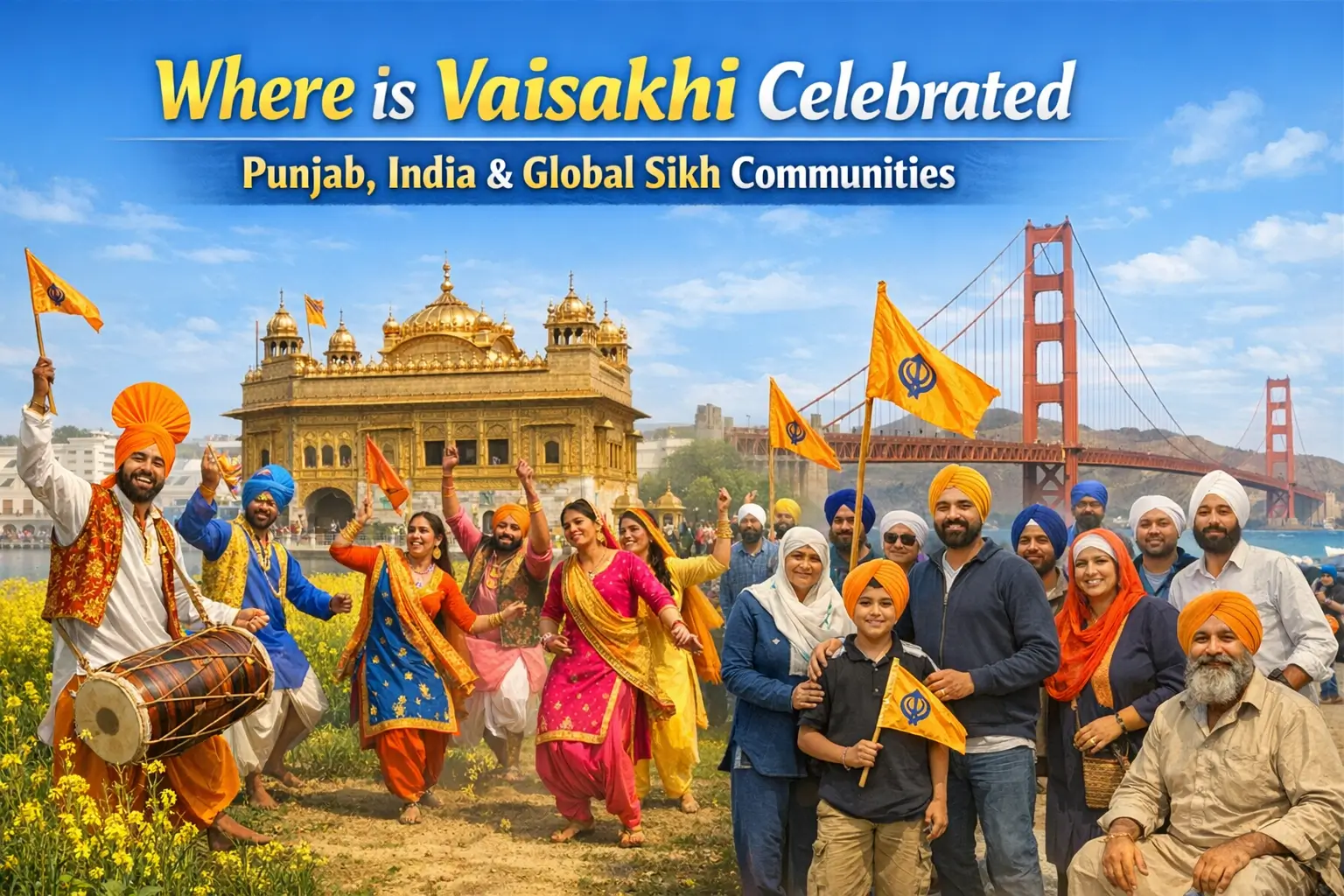
Vaisakhi (or Baisakhi) is one of the most important festivals in India, especially for Sikhs and Punjabis. Celebrated on 13 or 14 April every year, it marks both the spring harvest festival and the formation of the Khalsa Panth in 1699 by Guru Gobind Singh. While Punjab is the heartland of Vaisakhi celebrations, the festival’s significance has spread across India and the world, making it a truly global event.
Vaisakhi Celebrations in India
Punjab – The Epicenter
- Golden Temple, Amritsar: Thousands gather for prayers, kirtan, and langar.
- Villages & Towns: Farmers celebrate the wheat harvest with Bhangra and Gidda dances.
- Nagar Kirtans: Colorful processions with hymns, martial arts displays, and decorated floats.
Haryana & Himachal Pradesh
- Observed as a harvest festival with fairs, folk music, and traditional dances.
Delhi
- Major celebrations at Gurdwara Bangla Sahib and Sis Ganj Sahib, with large community gatherings.
Other States
- Tamil Nadu: Celebrated as Puthandu (Tamil New Year).
- Kerala: Coincides with Vishu, marking prosperity and renewal.
- Assam: Celebrated as Bihu, welcoming the spring harvest.
- West Bengal: Observed as Pohela Boishakh, the Bengali New Year.
Global Vaisakhi Celebrations
United Kingdom
- London, Birmingham, Southall: Grand processions and gurdwara events, reflecting the vibrant Sikh diaspora.
Canada
- Vancouver & Toronto: Parades, kirtans, and cultural programs attract thousands.
United States
- California, New York, New Jersey: Sikh communities organize fairs, prayers, and Nagar Kirtans.
Malaysia & Singapore
- Punjabi communities celebrate with gurdwara prayers, langar, and cultural performances.
Australia & New Zealand
- Vaisakhi is marked with community service, parades, and cultural showcases.
Significance of Vaisakhi
- Harvest Festival: Marks the ripening of wheat crops in Punjab and Northern India.
- Religious Importance: Commemorates the Khalsa Panth’s formation in 1699.
- Cultural Unity: Aligns with solar new year festivals across India (Puthandu, Vishu, Bihu, Pohela Boishakh).
- Community Spirit: Celebrated with fairs, langar (community meals), kirtan (devotional singing), and processions.
Also Read: Why Do We Celebrate Vaisakhi – Harvest Festival & Sikh Religious Significance
How Vaisakhi is Celebrated
- Gurdwaras: Special prayers, kirtans, and langar.
- Processions: Nagar Kirtans with hymns, martial arts displays, and floats.
- Fairs: Traditional dances like Bhangra and Gidda, folk music, and stalls.
- Agricultural Rituals: Farmers thank nature for the harvest and pray for prosperity.
Conclusion
Vaisakhi is celebrated primarily in Punjab and Northern India, but its reach extends across India and the world wherever Sikh and Punjabi communities live. It is both a harvest festival and a religious commemoration, symbolizing prosperity, unity, and spiritual renewal. From the Golden Temple in Amritsar to parades in London, Toronto, and California, Vaisakhi continues to unite communities in celebration of justice, equality, and gratitude for life’s blessings.

I am Disha Sharma the founder and writer of Great Indian Festival with a passion for storytelling and a dedication to sharing knowledge, I create content that informs, inspires, and connects with readers. My writing reflects creativity, clarity, and a commitment to delivering valuable insights across topics that matter.