
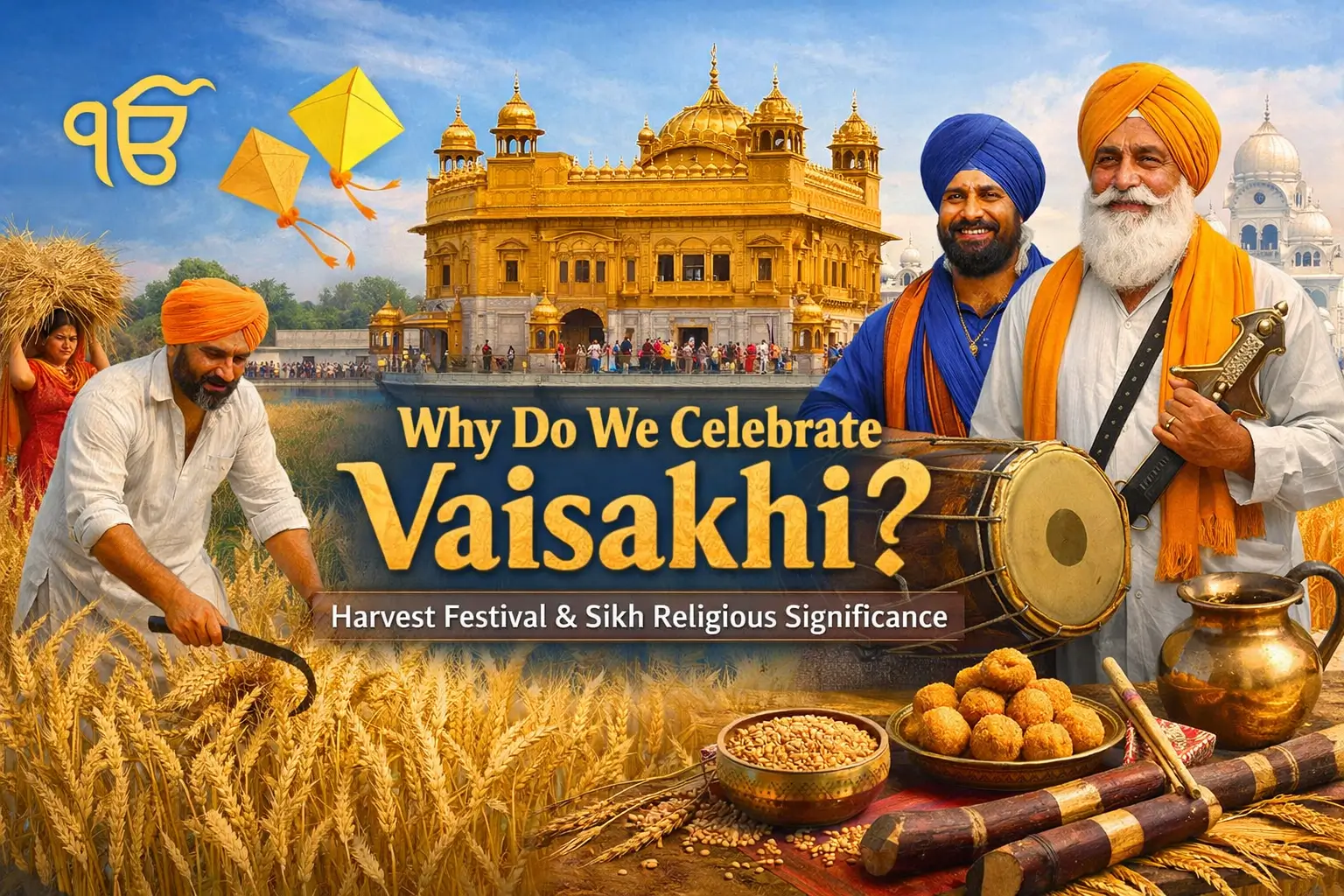
Vaisakhi (or Baisakhi) is one of the most significant festivals in India, especially for Sikhs and Punjabis. Celebrated on 13 or 14 April, it marks both the spring harvest festival and the religious commemoration of the Khalsa Panth’s formation in 1699 by Guru Gobind Singh. The celebration of Vaisakhi blends agrarian joy, spiritual devotion, and cultural unity, making it a festival of gratitude and renewal.
Historical Reasons for Celebrating Vaisakhi
- Agricultural Roots: Traditionally, Vaisakhi is the time when wheat crops in Punjab are harvested. Farmers celebrate abundance, thank nature, and pray for prosperity.
- Religious Importance: For Sikhs, Vaisakhi commemorates the day Guru Gobind Singh created the Khalsa Panth, a collective of initiated Sikhs committed to courage, equality, and devotion.
- Cultural Unity: Vaisakhi coincides with the solar new year in many regions of India—Tamil Nadu (Puthandu), Kerala (Vishu), Assam (Bihu), and Bengal (Pohela Boishakh).
Why Sikhs Celebrate Vaisakhi
- Formation of Khalsa Panth: On Vaisakhi in 1699, Guru Gobind Singh initiated the first five Sikhs, known as the Panj Pyare, and established the Khalsa Panth. This moment defined Sikh identity and values.
- Spiritual Renewal: Vaisakhi is a reminder of Sikh principles—faith, equality, courage, and service.
- Community Bonding: Sikhs gather at gurdwaras for prayers, kirtan, and langar, reinforcing unity and fraternity.
- Global Identity: For Sikhs worldwide, Vaisakhi is a celebration of heritage and spiritual pride.
Broader Cultural Celebration
- Harvest Festival: Farmers celebrate prosperity with Bhangra and Gidda dances, fairs, and rituals.
- Community Gatherings: Nagar Kirtans (processions) showcase hymns, martial arts, and decorated floats.
- Global Diaspora: Sikh communities in the UK, Canada, USA, Malaysia, and Singapore celebrate Vaisakhi with parades, cultural programs, and prayers.
Also Read: What is the Meaning of Vaisakhi – Harvest Festival & Sikh Religious Significance
How Vaisakhi is Celebrated
- At Gurdwaras: Special prayers, kirtans, and langar (community meals).
- In Villages: Agricultural rituals, fairs, and folk dances.
- Globally: Parades, Nagar Kirtans, and cultural showcases.
- Digital Tributes: Social media campaigns with Vaisakhi greetings, quotes, and hashtags.
Conclusion
We celebrate Vaisakhi because it represents both agrarian prosperity and spiritual renewal. For farmers, it is a thanksgiving festival for nature’s bounty. For Sikhs, it is a sacred day marking the birth of the Khalsa Panth and the values of courage, equality, and devotion. Globally, Vaisakhi unites communities in celebration of prosperity, faith, and cultural pride, making it one of the most meaningful festivals in the world.

I am Disha Sharma the founder and writer of Great Indian Festival with a passion for storytelling and a dedication to sharing knowledge, I create content that informs, inspires, and connects with readers. My writing reflects creativity, clarity, and a commitment to delivering valuable insights across topics that matter.